-
News | 2024.07.11
Leptospirosis: understanding why some fresh water bacteria are virulent
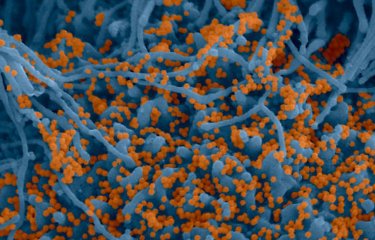
Leptospirosis is an emerging bacterial disease that occurs worldwide. In two recent studies, the Institut Pasteur revealed several characteristics of the most virulent species, some of which are in circulation in France. The expert team at the Institut Pasteur also manages the National Reference Center (CNR) for Leptospirosis. Health authorities can seek advice from the CNR or request an...
-
News | 2024.07.18
Studying aging with cerebral organoids back from a space flight
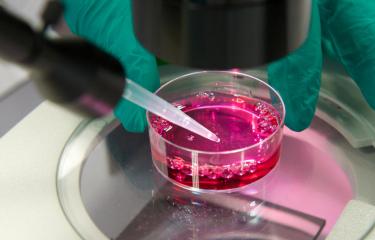
Cerebral Ageing is an experiment conducted aboard the International Space Station (ISS). Astronauts have succeeded in maintaining cultures of cerebral organoids in space for the very first time. The samples returned to Earth in excellent condition to study the effects of the space flight environment. Their analysis has begun and will help push the frontiers of knowledge in biology, particularly...
-
News | 2024.07.19
Paris 2024: Nathalie Denoyés carrying the torch and upholding the values of the Olympic movement
Throughout this special Paris Games , we are pleased to present some of the Institut Pasteur staff who are playing a special role in this global event – whether in their capacity as an Institut Pasteur staff member, a volunteer or a sports person. We hope that these profiles will showcase the fantastic diversity of the Institut Pasteur community. This week, we want to shine a light on the...
-
Vidéo | 2024.07.23
"We'll have to learn to live with the tiger mosquito"
Anna-Bella Failloux, head of the Arbovirus and Insect Vectors Unit at the Institut Pasteur, tells you all about the tiger mosquito:Its characteristicsHow it has become established in France, particularly as a result of global warmingHow it is monitoredWhat preventive measures each of us can take to limit the risksCopyright: Datagif & Olivier Roux
-
Vidéo | 2024.07.23
“Be careful when restarting showers and air conditioners”
Carmen Buchrieser, microbiologist and Legionella bacterial specialist at Institut Pasteur, tells you all about Legionella:Why do we need to be careful with Legionella?How is it transmitted?How can we combat this bacteria?Copyright: Jeanne Fenouil/ Institut Pasteur
-
News | 2024.07.25
Xavier Carré: volunteer with the Red Cross at Paris Games 2024
Throughout this special Paris Games, we are pleased to present some of the Institut Pasteur staff who are playing a special role in this global event – whether in their capacity as an Institut Pasteur staff member, a volunteer or a sports person. We hope that these profiles will showcase the fantastic diversity of the Institut Pasteur community. This week, we want to shine a light on Xavier Carré...
-
News | 2024.07.25
Paris 2024: Olinda Alegria-Prévot gearing up for the “Marathon for all”
Throughout this special Paris Games, we are pleased to present some of the Institut Pasteur staff who are playing a special role in this global event – whether in their capacity as an Institut Pasteur staff member, a volunteer or a sports person. We hope that these profiles will showcase the fantastic diversity of the Institut Pasteur community. This week, we want to shine a light on Olinda...
-
News | 2024.07.30
Paris 2024: ready, set, go for the Institut Pasteur's volunteers involved in the Games!
Throughout this special Paris Games, we are pleased to present some of the Institut Pasteur staff who are playing a special role in this global event – whether in their capacity as an Institut Pasteur staff member, a volunteer or a sports person. We hope that these profiles will showcase the fantastic diversity of the Institut Pasteur community. This week, to mark the official opening of the...
-
Document de presse | 2024.08.19
Mpox outbreak: "We are ready to test and vaccinate"
On Wednesday August 14, in response to the active circulation of clade 1 monkeypox virus (MPXV) in Central Africa and the recent expansion of a subtype (1b) thought to be more lethal and transmissible in East Africa, the World Health Organization (WHO) declared a public health emergency of international concern (PHEIC), paving the way for enhanced coordination between regional health systems and...
-
Vidéo | 2024.09.04
What happens when a mosquito bites us?
Institut Pasteur researcher Valérie Choumet explains what happens when a mosquito bites you! (in french)