-
Document de presse | 2022.07.13
Light shed on SARS-CoV-2 replication in bat cells
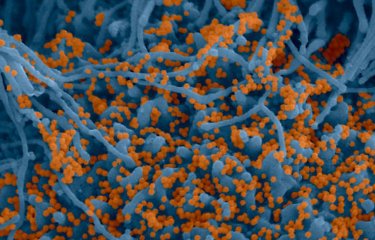
Bats are reservoir species for numerous viruses including coronaviruses. Given that they do not appear to be affected by diseases transmitted by these viruses, there is potential benefit in understanding how their immune system regulates infection. Scientists at the Institut Pasteur and the CNRS studied SARS-CoV-2 replication in bat cells, which involved using real-time imaging techniques for the...
-
News | 2022.07.19
A successful first edition of Pasteur Innov Day
The first Pasteur Innov Day, held on campus on July 7 and organized by the Department of Technology, the Technology Transfer and Industrial Partnership Department (DARRI) and the management team at the institut Pasteur Microbes & Santé, was attended by around a hundred industrial and academic partners. "There is no innovation without technology" was the motto of a day that provided plenty of...
-
Document de presse | 2022.07.21
SARS-CoV-2 hijacks nanotubes between neurons to infect them
COVID-19 often leads to neurological symptoms, such as a loss of taste or smell, or cognitive impairments (including memory loss and concentration difficulties), both during the acute phase of the disease and over the long term with "long COVID" syndrome. But the way in which the infection reaches the brain was previously unknown. Scientists from Institut Pasteur and CNRS laboratories have used...
-
Document de presse | 2022.07.22
Meningref trial shows better protection against meningococcal infection in hematopoietic stem cell transplant recipients
The team in the Hematology Department at Henri Mondor AP-HP Hospital, coordinated by Dr. Christine Robin, and scientists from the Institut Pasteur (the Invasive Bacterial Infections Unit led by Professor Muhamed-Kheir Taha) recently studied protection against meningococcal infection in patients who had received hematopoietic stem cell transplantation.The results of this trial (NCT03509051),...
-
News | 2022.08.24
ZIKAlliance project: Zika vector competence data reveals risks of outbreaks
A publication published this summer looks back at the contribution of the European ZIKAlliance project, launched in 2016 following the Zika epidemic in the Pacific Islands and America. A global analysis of the competence of potential vectors was carried out, the most comprehensive study of vector competence to date using the same protocols. This study reminds us that vector-borne diseases are...
-
News | 2022.08.25
Autism: how genetics influences symptoms
Scientists at the Institut Pasteur demonstrated in 2003 that there is a genetic component in autism. The same team has now studied the impact of various mutations on the symptoms of the disorder. Although autistic individuals experience social communication difficulties and restricted, stereotyped interests, these symptoms can vary in intensity and there is not one single form of autism....
-
Document de presse | 2022.08.30
New therapeutic prospect for preeclampsia
Preeclampsia is a condition that affects the placenta during pregnancy and is dangerous for both the fetus and the mother. Scientists from the Institut Pasteur, Inserm and the CNRS have proposed a new therapy, tested in two rodent models, that corrects the defects identified in placental cells, and restores placental and fetal weight. The treatment successfully lowers blood pressure in the mother...
-
News | 2022.08.24
ILC3s: "gatekeeper" cells for intestinal immunity
The intestinal mucosa is a key site for interaction and exchange with the external environment. It is therefore under constant surveillance from the immune system. Using an animal model, scientists from the Institut Pasteur and Inserm discovered how a set of cells involved in innate immunity – group 3 innate lymphoid cells – help monitor and maintain this barrier.Our digestive tract contains...
-
News | 2022.09.05
COVID-19: we are looking for volunteers to improve our understanding of immunity
We are looking for volunteers to take part in the CORSER-5 study. The study was launched in March 2022 to compare the immunity of COVID-19-positive individuals at the very beginning of their infection period ("cases") with that of non-infected individuals ("controls"). The results could be used to establish a booster vaccination strategy for SARS-CoV-2 on the basis of patients' antibody...
-
Webform | 2022.09.08
Download the exhibition "From Louis to Pasteur: 1822-1895"
Download the exhibition "From Louis to Pasteur: 1822-1895"