

The Institut Pasteur has numerous collaborations in Brazil and has two key strategic partners in particular: the Oswaldo Cruz Foundation (Fiocruz) and the University of São Paulo (USP).
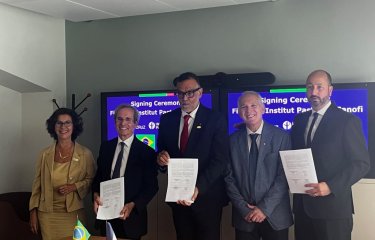
Since 2015, a tripartite agreement between USP, Fiocruz, and the Institut Pasteur has structured and supported research projects among the three partners. With total co-funding over two years amounting to €90,000 per year, equally shared among the three institutions (€30,000 each), the agreement promotes the development of projects jointly conducted by teams from USP, Fiocruz, and the Pasteur Network.
This initiative aims to facilitate high-level, long-term collaboration among researchers from the partner institutions in strategically important fields, promote academic mobility, encourage the publication of joint research articles, and support the submission of future research projects.
This year, the call for proposals focused on two topics:
- Artificial intelligence applied to neuroscience and/or vaccination
- The impact of climate change on health, with a focus on vector-borne diseases
Two projects have been selected and will begin in January 2026.
- “The role of increasing temperature on the nation-wide effectiveness of Wolbachia deployment for dengue mitigation in the next decades” led by Rafael Maciel de Freitas (Fiocruz), Anna-Bella Failloux (Institut Pasteur de Paris) and Maria Anice Mureb Sallum (USP).
The control of the dengue mosquito vector, Aedes aegypti, using the bacterium Wolbachia represents a promising alternative to traditional strategies to reduce dengue transmission. This project evaluates the impact of thermal conditions on the stability and efficacy of two Wolbachia strains in order to optimize their long-term deployment. About 100 million people are infected with dengue virus each year, and limitations of vaccines make Aedes aegypti control essential. Conventional entomological strategies have failed due to insecticide resistance and vector ecological resilience, prompting the development of biological approaches. The endosymbiont Wolbachia, artificially introduced into Ae. aegypti, reduces vector competence by inhibiting arboviral replication and spreads via cytoplasmic incompatibility, with wMel and wAlbB as leading strains. However, the long-term stability and epidemiological impact of Wolbachia-based interventions depend on host fitness effects that are strongly influenced by thermal conditions, wAlbB showing greater heat tolerance than wMel.
- “AI-based proteomic discovery of pancreatic cancer secretome neoantigens for mRNA vaccines” led by Lucas Blanes (Fiocruz), Helder Takashi Imoto Nakaya (Institut Pasteur de São Paulo) and Eduardo M. Reis (USP).
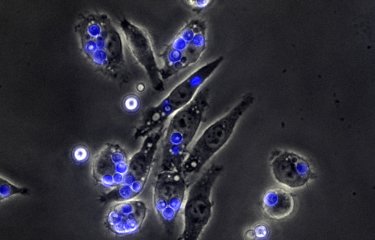
Pancreatic cancer is a highly aggressive disease, usually diagnosed at advanced stages and associated with limited therapeutic options. mRNA vaccines represent a promising strategy to stimulate antitumor immune responses by targeting tumor-specific antigens. This project proposes the development of a miniaturized pancreas-on-a-chip that faithfully recapitulates the pancreatic tumor microenvironment. Secreted molecules from cancer cells will be characterized using advanced proteomics and integrated with patient-derived transcriptomic, proteomic, and noncoding RNA datasets. Artificial intelligence will be used to identify molecular fingerprints and prioritize novel antigens for mRNA vaccine design while fostering collaboration between Fiocruz, Institut Pasteur, and USP.
These two projects align perfectly with the strategic priorities of France–Brazil cooperation in research, while also reflecting the scientific and institutional orientations of the partners involved.
They also address the major pillars of the Pasteur 2030 Strategic Plan, presented last January by Professor Yasmine Belkaid, President of the Institut Pasteur, which notably identifies climate change and the rising incidence of cancer as major challenges requiring ambitious and coordinated scientific responses at the international level.
Consult the details of the call (2025)
See the Application form (2025)