

In 2025, several early-career scientists were selected to lead new research groups at the Institut Pasteur, and Sarah Merkling was one of them. She has led the Insect Infection and Immunity five-year group (G5) since January 2026.
This article is part of a series presenting the research projects of the scientists selected in 2025 by the Institut Pasteur to launch their 5-year research group (G5). You can find the other articles here:
Spyros Lytras - Predicting viral evolution with AI
Morgane Thion - How the brain's sentinels and walls cooperate from the embryonic stage
What I'm researching
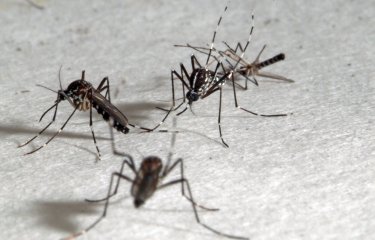
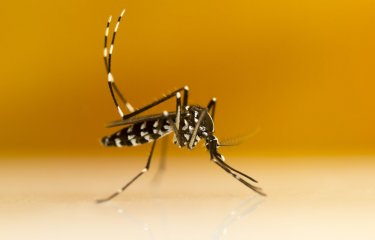
My research involves studying the interactions between mosquitoes and viruses. When a mosquito bites us, it takes some of our blood to produce its eggs. The blood which has entered the mosquito's body can be contaminated with a virus if the person who was bitten was infected. The virus may then be transmitted to another person who is bitten by the infected mosquito. But we know hardly anything about what happens in the mosquito's body in between the two bites. How does the virus enter the body? How does it spread from one organ to another? What immune responses are triggered? It's all a complete black box!
How I go about it
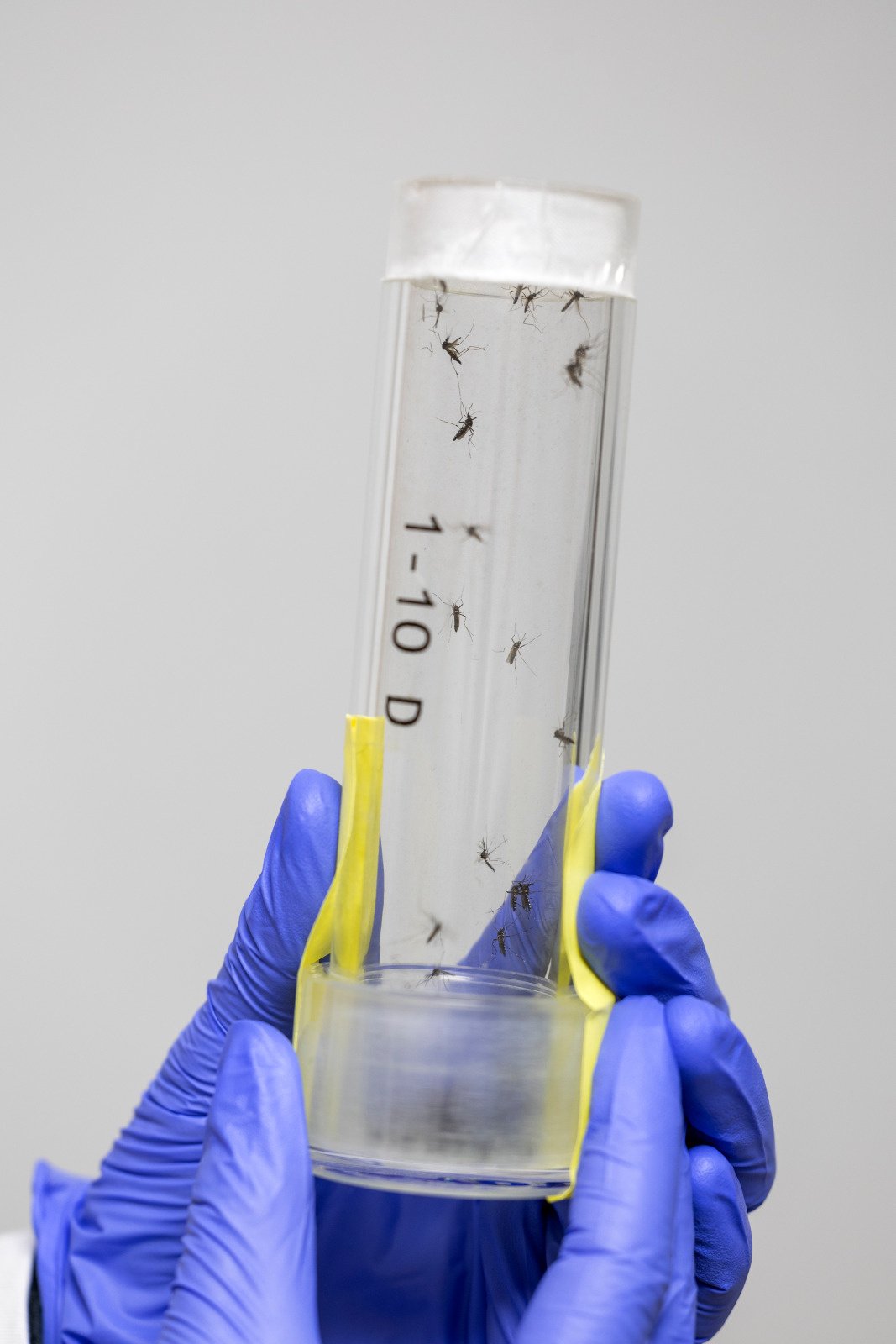
We freeze a whole previously infected mosquito and then slice it into ultrathin sections. With highly advanced imaging techniques, we zoom in to the cellular scale to track the virus' progress in the body. In the meantime, we use algorithms to analyze the vast reams of data produced to try to understand why, within the same species, some mosquitoes are carriers and others are not.
What the purpose is
From a fundamental perspective, the purpose is to help better understand how pathogens interact with their hosts, whether humans or insects. From an applied perspective, the idea is to pinpoint the mechanisms the virus uses to circulate in the mosquito's body to try to block it, and in so doing, curb spread of the disease. If we can identify the molecule that facilitates circulation, we will be able to develop a vaccine to stimulate the production of antibodies to target it in humans. When it bites us, the mosquito will suck up the antibodies, and these antibodies will block viral spread and transmission by mosquitoes.
Why do this at the Institut Pasteur?
The Institut Pasteur has all the expertise needed for this project, and the Pasteur Network provides direct contact with local teams who have in-depth knowledge of mosquitoes and can help us understand mosquito ecology and epidemiology. Plus, at the Institut Pasteur, we are surrounded and supported by a community of passionate people who take risks and invest 100% of their energy into advancing science.
A word of advice for tomorrow's scientists
In a world as competitive as academic research, it is easy to have "imposter syndrome" and feel out of place. But it is a wonderful world with a vibrant, internationally-minded community. My advice to future scientists would simply be to go for it! Researchers come from all disciplines and backgrounds. They are often seen as exceptional, but they are above all exceptional in their diversity and humanity!