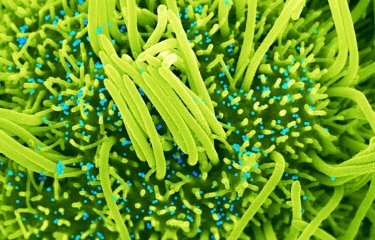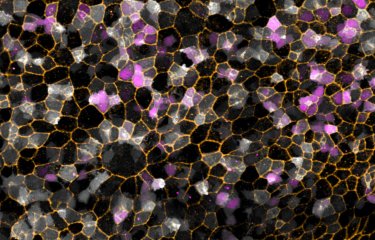


In psoriasis and other inflammatory skin diseases, chronic itching or pruritus is a particularly distressing symptom for patients which remains difficult to treat today. Scientists at the Institut Pasteur are shedding new light on the biological mechanisms behind this persistent itching, highlighting a novel circuit linking the immune system, the skin microbiota, and the skin's sensory nerves.
Psoriasis is a chronic inflammatory skin disease that affects nearly 125 million people worldwide, according to the World Health Organization. While red patches and scales are its most visible manifestations, chronic itching (or pruritus) is one of the most common and debilitating symptoms, still poorly understood despite its major impact on quality of life.
The research conducted by the Meta-organism unit led by Professor Yasmine Belkaid, also President of the Institut Pasteur, in collaboration with Michel Enamorado's team at the Icahn School of Medicine at Mount Sinai (New York), shows that during inflammation, an excessive immune response directed against the skin microbiota—that is, the microorganisms living on the skin—can profoundly reshape the skin's innervation.
The researchers identified a novel neuro-immune mechanism in mice: the cytokine IL-17A, produced as part of the immune response directed against skin bacteria such as Staphylococcus aureus, acts directly on sensory neurons. "This signal then triggers a proliferation of sensory nerve endings, thereby amplifying the sensation of itching," explains Nicolas Bouladoux, a researcher in the unit.
This discovery establishes a new link between the immune system, the skin microbiota, and nerves. It offers hope: by specifically targeting this mechanism, future treatments could better relieve chronic pruritus in inflammatory skin diseases like psoriasis.
It should be noted that the World Health Organization (WHO) officially recognized skin diseases as a global health priority in 2025, complementing its earlier recognition of psoriasis as a disease in 2014. "This marks the beginning of a long awaited recognition for patients, caregivers, and committed associations," states the WHO and aims to advance efforts to combat prejudice and discrimination, improve access to care, and strengthen research.
** This text was translated using an AI-powered translation tool **
Source
Maladaptive immunity to the microbiota promotes neuronal hyperinnervation and itch via IL-17A, Proc Natl Acad Sci (PNAS).
Dec 30;122(52):e2525146122. PMID: 41428888.
Jeremie Delaleu et al., unité Méta-organisme, Institut Pasteur