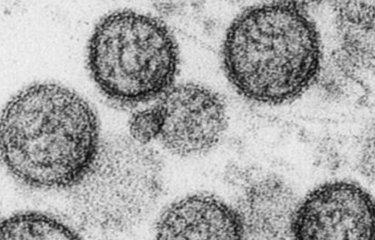


An avian influenza outbreak is currently circulating among birds, and sometimes also among farm mammals. What exactly do we know about this disease? What measures are being taken to contain it? What is the Institut Pasteur doing? Read on to find out more.
Updated on December 19, 2025.
Since 2022, the world has been grappling with a severe epizootic of avian influenza, affecting birds and sometimes also farmed mammals, primarily caused by the influenza A(H5N1) virus. Some sporadic cases have been observed in humans, but so far these have only been people who have come into close contact with infected animals. The H5N1 virus is circulating worldwide, except in Australia. And the notable event of this ongoing epidemic is the transmission of avian influenza to dairy cattle, confirmed by the WHO in May 2024.
More than 300 avian flu outbreaks have already been identified in poultry farms across Europe this season (data from October-November 2025, source: Avian Flu Data Portal), including around sixty in France (source in French: Avian Influenza: the situation in France | French Ministry of Agriculture), a higher level than previous years, although still far from the thousands of farms affected during the last epizootic peak in 2022 with tens of millions of poultry culled.
What is avian influenza?
The term avian influenza actually refers to several related phenomena. First, it indicates an infection in birds with an influenza type A virus. This infection can take various forms. Certain viruses are responsible for outbreaks in domestic poultry, with a very high fatality rate. These episodes, previously identified as "fowl plague," are now known as avian influenza (or "bird flu"). Human infection with a strain of influenza virus originating in animals, including birds, is termed zoonotic influenza. But when the original host is birds, the term avian influenza is sometimes also used to refer to these zoonotic episodes.
Check out our fact sheet on avian influenza.
This fact sheet looks at zoonotic influenza (human infections)
caused by influenza viruses of avian origin.
Did a child really die from avian influenza in Mexico?
Sadly, yes. The child presented with the first symptoms – fever, fatigue and vomiting – on March 7, 2025. She was admitted to hospital on March 13 for respiratory failure and died on April 8 from respiratory complications, despite being transferred to intensive care and starting antiviral treatment as soon as she was hospitalized. Subsequent analyses revealed infection with avian influenza virus A(H5N1). Source: WHO
A first death caused by the A(H5N1) virus had already been reported in the United States, in Louisiana, in January 2025, in an adult with comorbidities.
We call it avian influenza, or bird flu. How does avian influenza virus H5N1 spread to humans?
Influenza A(H5N1) virus mainly circulates in birds, but in rare cases it can infect humans. The source of infection is often direct contact with infected animals or highly contaminated environments, but sometimes the origin is not identified. Humans can also be infected if they come into contact with infected mammals, like dairy cows in the United States, where an H5N1 virus has been circulating in cattle for more than a year.
The Mexican authorities were unable to determine exactly how the child (a young girl) who died in April 2025 contracted avian influenza A(H5N1). But the same virus was identified in sick poultry in the state of Durango, suggesting that she may have been infected through direct contact with birds carrying the A(H5N1) virus or exposure to a contaminated environment.
As of early May 2025, at the time of writing this news article, an inquiry is still under way.
Is there a high risk of humans contracting avian influenza?
According to the World Health Organization (WHO), the general risk for the population remains low, as there are no cases of human-to-human transmission – no human has yet transmitted influenza A(H5N1) to another human. Only sporadic cases of the virus spreading from animals to humans have been observed, and the risk for people who work in agriculture is considered low to moderate.
WHO is continuing to monitor the situation closely and recommends stepping up vigilance and strengthening global surveillance systems to detect the spread of avian influenza viruses as quickly as possible. Source: WHO
Which regions are affected by the avian influenza epidemic in 2025?
Influenza A(H5N1) has spread globally among wildlife populations. Only Australia has been spared; the virus has even been detected in the French Southern Lands. A large number of wild bird species are affected, with several outbreaks in domestic poultry and many cases of transmission to mammals.
In the United States is particularly severe: more than 168 million poultry birds have been culled since 2022, and over 1,700 outbreaks have been identified. Virus A(H5N1) is now circulating among cattle, with more than a thousand farms affected in 17 US states. The transmission of the avian influenza virus from birds to dairy cattle in the USA was confirmed by the WHO during an experts' conference held on May 1, 2024.
The high number of cases in the United States is likely explained, in part, by this unexpected event of the virus spreading to cattle. Contact between cows and humans is closer (especially in the agricultural sector) compared to contact with poultry. The United States is also a country with a highly organized surveillance system, similar to Europe, with effective detection of emerging cases. This is not the case in other less developed countries where the virus also circulates widely, but case counting may be less complete or precise.
Are there cases of avian influenza in France?
The global epidemic that we are currently witnessing has also affected France. Wild birds have been heavily affected, with sometimes massive mortalities, such as in the case of gannets (over 20,000 deaths on the Breton islands during the summer of 2022). Outbreaks in domestic poultry farms from wild fauna have been observed, particularly in Brittany and in Southwest France.
In 2023, duck farms in Southwest France were contaminated with the A(H5N1) virus. France conducted culling operations in 2022 to contain avian influenza in farms. In total, 40 million poultry have been culled in France since 2015, with 32 million since 2022. The vaccination of ducks, initiated in autumn 2023, has been effective and halted the epidemic in French farms. However, the virus continues to circulate in wild fauna in France.
The situation is being actively monitored (see below) and there have been no cases of animal-to-human transmission in France or Europe, except for one case in the United Kingdom that was successfully treated.
What is the risk for someone traveling to a world region with a high prevalence of avian influenza?
Travelers are advised to take specific precautions; these include avoiding live animal markets, farms, abattoirs and environments at risk of contamination, and adopting strict hygiene measures.
WHO has not yet issued any specific travel restrictions and is simply encouraging people to remain vigilant.
A general recommendation to everyone is to be aware that bird carcasses can contain viruses. They should be avoided, and these carcasses should never be handled, for example, bird carcasses on the beach, even with the intention of cleaning up the area. Additionally, it is important to ensure that children do not approach them.
How many human cases of avian influenza have there been since 2024, and how many deaths?
The WHO has observed an increase in human cases over the past two years. There have been 91 human cases worldwide from 2024 to 2025.
Among these cases, a significant number are in North America:
- 70 cases in the USA (including 1 death);
- 1 case in Mexico (deceased);
- and 1 case in Canada.
Additionally, there has been 1 case in the United Kingdom.
The remaining cases are in Southeast Asia:
- 13 cases in Cambodia (including 4 deaths);
- 3 cases in Vietnam (including 2 deaths);
- and 2 cases in India (including 1 death).
Most human cases observed in the United States are mild. Surveillance remains active because the A(H5N1) virus can have severe consequences in patients seeking care too late or in vulnerable patients. It can cause serious illnesses, pneumonia, and respiratory failure.
What prevention and control measures have been taken to deal with avian influenza?
In light of the threat represented by avian influenza, some local health authorities, for example in Mexico, have introduced strict measures to monitor, prevent and control the spread of the disease. This involves thorough investigations, heightened surveillance of respiratory diseases, and awareness campaigns for the public and people working on farms.
The scientific community and public health leaders warn against direct contact with sick or dead animals and recommend cooking poultry thoroughly. Workers coming into contact with poultry are also urged to adopt stringent protection measures including wearing personal protective equipment.
Vaccination of livestock is effective. There are also vaccines available for humans, although vaccination is not currently recommended in France.
How is avian influenza being monitored in France?
French Agency for Food, Environmental and Occupational Health & Safety (ANSES) is responsible for monitoring influenza A(H5N1) in poultry (especially chicken) and pig farms. It also analyzes samples taken from wildlife species.
The Institut Pasteur serves as the reference laboratory for the WHO on human H5 viruses. It also houses the French National Reference Center (CNR) for Respiratory Viruses, responsible for analyzing human samples in France. No cases of transmission to humans have been reported in recent years.
How is influenza A(H5N1) diagnosed?
A specific PCR test exists, particularly for the clade circulating worldwide in 2025. In France, the National Reference Center (CNR) at the Institut Pasteur has developed a protocol for this diagnostic test and made it available to French hospitals.
Are developed countries ready to face a potential pandemic?
The current avian influenza situation shows the importance of vigilance and international coordination. Strict adherence to control and prevention measures can limit the spread of the disease and protect both human and animal health.
Developed countries have already prepared to face a potential pandemic. The WHO provides proposals for vaccine strains, updated every six months. Europe, including France, has stockpiled vaccines and antivirals in case of need.
In France, Santé publique France and the French Health Directorate (Direction Générale de la santé) elevated the level of surveillance in humans in March 2025.
Authorities worldwide must keep informed and take a proactive approach to tackle this constantly developing threat.
Are avian flu viruses and seasonal flu viruses similar?
Yes and no.
Yes, they are related because they are all viruses of the Influenza genus.
But no, they are not the same: an avian Influenza virus is most of the time unable to infect mammals; although some isolated cases of transmission from birds to cattle have been detected in North America and Asia.
Furthermore, avian flu viruses have many subtypes (H5N1, H7N9, H9N2...) whereas seasonal flu only exists as types H1N1 and H3N2.
Since the two flu viruses differ, here are two major consequences:
- They target different hosts:
- Seasonal flu is adapted to humans and transmits easily from one human to another.
- Avian flu is adapted to birds; transmission to humans is rare and difficult (only through direct contact with infected animals)
- The severity of the diseases they cause is not the same:
- Seasonal flu: most cases are mild (mortality <0.1%)
- Avian flu: it can be more severe when it infects humans (H5N1 mortality: approximately 50%)
If I’m vaccinated against the flu, am I protected against avian flu?
No. The seasonal flu vaccine does not protect against avian flu.
Moreover, having had seasonal flu does not protect against avian flu either. This is called "non-cross" immunity between the two types of viruses.
Note that avian flu (subtypes H5N1, H7N9, H9N2) is distinct from seasonal flu (subtypes H1N1, H3N2).
Is there a vaccine against avian flu that protects animals? And which animals?
Yes, there are veterinary vaccines that protect poultry by preventing infection. In France, ducks are particularly vaccinated.
However, their effectiveness depends on the strain of avian flu that is circulating.
Can I be infected with avian flu virus if I consume meat or milk from a contaminated animal?
No problem if the meat is well cooked (minimum 70°C) or pasteurized (milk). Cooking or pasteurization destroys the virus.
The risk from consuming meat or milk remains, in any case, very low.
In Europe, milk is not contaminated because there is no transmission of the virus to cattle in European territory.
Furthermore, there is little or no virus in the meat (but rather in the feathers and viscera), so the risk from consuming raw meat is extremely low.
Note that in the USA, cattle farms are affected: it is therefore recommended not to consume raw milk produced locally.
Is there a vaccine against avian flu virus for humans?
Yes, some countries (including France) have stockpiles of pre-pandemic vaccines (H5N1).
They are not used routinely, only in case of emergency.
Are there antiviral treatments against avian flu virus for humans?
Yes, some countries (including France) have stockpiles of antivirals. In France, this is Oseltamivir (Tamiflu®).
To be effective, the treatment must be administered quickly (at the latest 36 hours after symptom onset).
Oseltamivir can be administered to prevent the appearance of symptoms after contact with a person carrying the virus (post-exposure prophylactic treatment).
For more information, please visit