Guillemette Masse-Ranson: the scientist breaking down barriers within vaccine research

A childhood shaped by science and empathy
Guillemette Masse-Ranson was born in northern France before moving to Greater Paris when she was five. She was raised in an environment where science and empathy naturally went together. Her mother, a registered pharmacist, created a space for patients where they could sit comfortably and take the time to chat and share their needs in an informal setting.
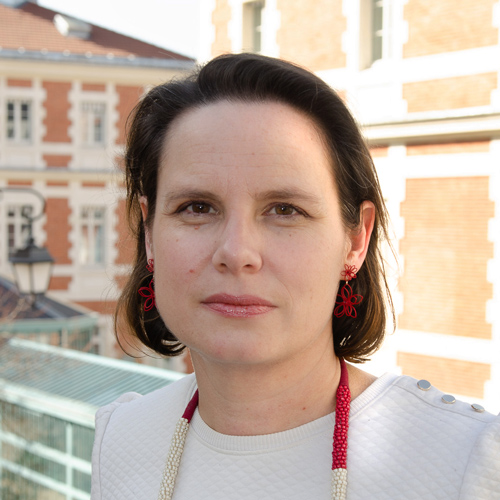
Aged just five, I learned to read from labels on medicine packets. I would go to the back of the pharmacy, Mum would say: "Rhinathiol," and although it was a difficult word to read I would manage to find the right cough syrup.
Alongside the pharmacy consultations, Guillemette's family also ran a two-hundred-year-old ceramics factory that ultimately closed down. This eclectic childhood instilled in her both her father's economic pragmatism and her mother's natural compassion and empathy. She was surrounded by dogs, cats, tortoises, chinchillas and doves and dreamed of becoming a vet or a doctor. But her vocation as a caregiver ended up taking her in a different direction.
A scientist treading the path between academia and industry
Guillemette turned her attention to biology and genetics and discovered a passion for immunology. Her new knowledge fed into her natural curiosity. Immunology is a discipline that links many fields – virology, microbiology, parasitology, and also neurology and metabolism. The possibilities are endless. She completed a first internship at the Institut Pasteur in 2001 with parasitologist Gordon Langsley. The team was studying Theileria, a parasite found on cattle farms. During her time at the Institut Pasteur she met James Di Santo, who went on to be her PhD supervisor from 2003 to 2007. Guillemette's career took her from basic immunology to applied virology, with a postdoctoral fellowship on HIV at the Institut Cochin. She continued her work at a startup within the Gustave Roussy Institute, where she focused on developing vaccines for human and animal health. She joined James Di Santo's team again in 2013, working on new projects in virology and vaccinology.
"I have always wanted to be involved in science that serves human health."
The major turning point came in 2020, in the midst of the COVID-19 pandemic, when she joined Moderna in Boston to head up a research team. Her team developed preclinical models to test vaccine efficacy. She also worked on using RNA technology with stem cells to treat rare diseases.
Boston: Off we go!
"It was brilliant from a personal and professional point of view – my career really took off," she shares. In the States, she was immersed in the American "can-do" attitude and was involved in characterizing messenger RNA technology
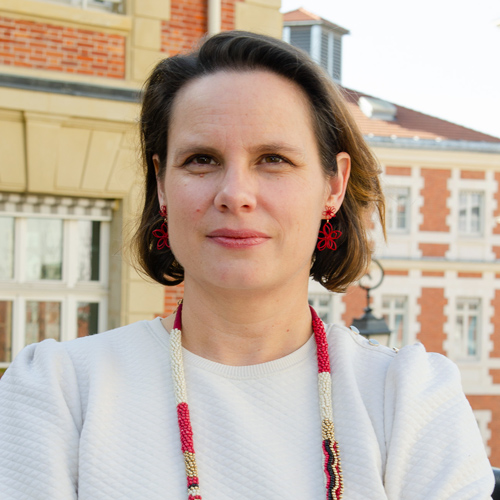
RNA technology seemed like a novel approach for vaccines, even though it first emerged back in the 1990s. No one was really daring to dip their toe in the water, but some companies never lost hope and decided to go for it. This technology accelerated vaccine science, and we are also seeing how it is revolutionizing immuno-oncology and raising new hopes for treatments for rare diseases.
Breaking down barriers to encourage innovation
For around the past year and a half, Guillemette has been Deputy Director of the Institut Pasteur Vaccinology and Immunotherapy Center (CVI) alongside James Di Santo, who established the center. She is determined to break down silos.
The CVI supports teams working on vaccine candidates at different stages of maturity. The Institut Pasteur's scientists are targeting a wide range of pathogens – chikungunya, malaria, plague, Shigella, and many other candidates at earlier stages of research.
The CVI's ambitions go beyond France's borders – it wants to connect the Institut Pasteur with European and international networks, facilitate relations with regulatory agencies, and above all bridge the infamous "valley of death between preclinical and clinical research." With new funding under its belt, the Institut Pasteur is well placed to tackle future pandemics.
Drawing on her experience in industry, Guillemette insists on the importance of developing "collaboration between scientists and support staff, like the Department of Applications of Research and Relations with Industrials at the Institut Pasteur, which plays a key part in the maturation of translational research (research that bridges the gap between basic knowledge and patients' clinical needs)."
She dreams of "helping to develop simple, effective vaccines that you can administer yourself with a nose spray or a patch that you stick on your arm.
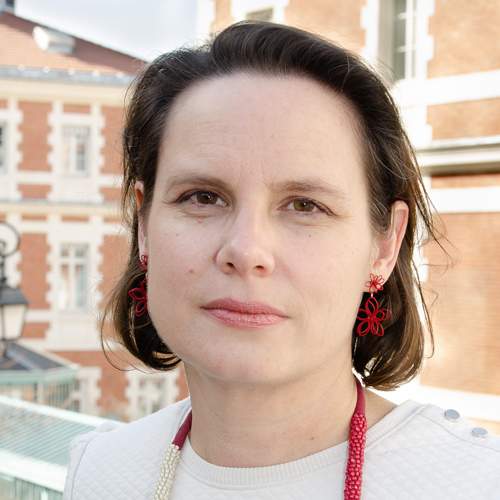
Protecting mucous membranes closes the door to certain viruses and bacteria and also restricts transmission." Many people, both children and adults alike, are scared of needles.
With her pragmatic energy and natural desire to build bridges, Guillemette Masse-Ranson embodies a new generation of scientists capable of fostering a dialog between basic research and therapeutic innovation.
Guillemette Masse-Ranson: Key Dates
Since January 2025: Deputy Director of the Center for Vaccines and Immunotherapies (CVI), Institut Pasteur, Paris, France
August 2020 – June 2024 – Moderna, Cambridge, United States:
2023 – 2024: Scientific Director – Infectious Disease Immunology, supervised by Galit Alter
2022 – 2023: Associate Scientific Director – Infectious Disease Immunology, supervised by Galit Alter
2020 – 2022: Associate Scientific Director – Platform Immunology, supervised by Rodrigo Mora
2013 – 2019: Senior Researcher, supervised by James DI Santo
2010 – 2013: Project Manager (HIV-1, latency), Viroxis SA – Institut Gustave Roussy / CNRS UMR 8122 (Villejuif), supervision: Thierry Heidmann
2007 – 2009: Postdoctoral Researcher (HIV vaccine strategies), INSERM U567 – Institut Cochin, Paris, France, supervised by Stéphane Emiliani.