


Molly Ingersoll has been head of a research team at the Institut Pasteur in Paris since 2012. This unfailingly optimistic microbiologist and immunologist is committed to revolutionizing our approach to health. She is currently exploring the differences between women and men in their immune response to disease. The focus of her research is how the symptoms and consequences of urinary infections differ between the sexes. Her ultimate goal is to demonstrate the urgent need for gender-specific medical treatments. An unprecedented clinical trial for women's and men's health.
From science fiction to the Institut Pasteur in Paris
At the age of twelve, Molly came across a science fiction novel in which a female scientist was cloned by her scientist colleagues so that the multiple clones could all make scientific discoveries. Molly was captivated by the story, and at that moment she instantly knew that she wanted to be a scientist when she grew up. When she was just 17, the ambitious teenager completed a research internship at Cornell University during her summer vacation. She went on to study at Cornell and graduated in microbiology. She then decided to pursue a PhD in New York and Berlin, a city that she has been fond of ever since. Molly returned to the United States for two postdoctoral fellowships, in St. Louis and New York, where she began to specialize in immunology, the study of the body's defense mechanisms. In 2012 she had the opportunity to move to Paris, initially joining a team and then gradually building her own group at the Institut Pasteur.
Women and men: divergent immune responses to disease
Molly's research explores various diseases, including urinary infections, which she uses a model. Virtually all women will be affected by a urinary infection at some stage in their life, and for some it will become a chronic condition. But research in this area is largely underfunded. "Unfortunately this has always been the case, and it continues to be the case for women's diseases," she regrets.
Molly's research has revealed striking differences: women contract frequent urinary infections but they generally eliminate the bacteria effectively and even develop a protective immune memory. However, some women do suffer from constant relapses. Men are affected much less often and they react in radically different ways, with persistent infections over several weeks, sometimes accompanied by severe complications such as the spread of infection to other organs – although some men can also be asymptomatic carriers.
Above all, the research conducted by Molly Ingersoll and her team demonstrates the decisive role played by hormones such as testosterone and estrogen in immune responses.

For decades, drugs have mainly been tested on men
On the pretext that women of reproductive age needed to be "protected." And when women take these treatments that have never been tested on female subjects, it can leave them open to unexpected – sometimes even fatal – side effects. Molly is constantly calling for gender-specific therapeutic protocols and dosage guidelines.
Pursuing a scientific career: invisible but persistent obstacles
After living in France for 14 years, Molly has witnessed some progress but also stubborn inequalities. She has discovered that male and female scientists with the same level of experience are not always assessed in the same way or paid the same salary. What's more, the most dangerous period is the decade between the age of 30 and 40. "You need to be extra productive, publish a huge amount and secure funding – while maybe trying to start a family at the same time."
Molly has consistently called for funding for positions that enable women to pursue their research during their maternity leave. She also welcomes the "zero tolerance" policy against harassment introduced by the Institut Pasteur's management team. "It makes such a difference to know that the Institut Pasteur is supporting each individual and looking out for their well-being."
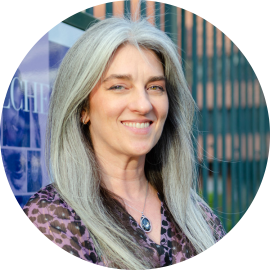
There are thousands of differences between women and men. We can no longer pretend we are just a smaller version of men, or the "weaker sex," as we have been told again and again! For far too long, these stereotypes have prevented us from improving health care for women and excluded them from public, political and intellectual life.
An unprecedented clinical trial for women's and men's health |
|
A large-scale study conducted by the Institut Pasteur over a ten-year period on a cohort of a thousand people has revealed surprising variations in steroid hormones (including cortisone, estrogens, androgens and progestogens). These molecules regulate metabolism, the immune system, reproduction and resistance to stress. The study, based on an analysis of 17 steroids, revealed that genetics, sex and age have a major influence on our hormone balance, and that lifestyle (factors such as smoking and diet) also plays a decisive role, with a long-term impact on health. These data represent an important benchmark in understanding hormones and their medical implications for women and men. |
*Study conducted by Molly Ingersoll, Head of the Mucosal Inflammation and Immunity Joint Unit (with the Institut Cochin), and Darragh Duffy, Head of the Translational Immunology Unit.
-------------------------------------------
Key dates in Molly Ingersoll's career
POSITIONS AND ROLES
September 2021–present: Research Director, Institut Cochin, Paris
January 2018–April 2021: Head of the Mucosal Inflammation and Immunity team, Institut Pasteur, Paris
April 2022–present: Leader of the Immunology Axis, Institut Cochin, Paris
April 2021–present: Research Director, Institut Pasteur, Paris
Member: Department of Immunology
January 2018–April 2021: Head of the Mucosal Inflammation and Immunity team, Institut Pasteur, Paris, France
January 2018–April 2021: Group leader, Institut Pasteur, Paris
January 2017–April 2021: Full researcher/Expert Research Associate – Institut Pasteur, Paris
September 2007–December 2011: Postdoctoral fellow, Mount Sinai Medical Center, New York
September 2005–August 2007: Postdoctoral fellow, Washington University School of Medicine, St. Louis
QUALIFICATIONS
July 2016: Accreditation to supervise research (HDR), Paris Diderot University, Paris
July 1999–July 2005: PhD in microbiology – New York University School of Medicine and Max Planck Institute for Infection Biology, Berlin
September 1994–May 1998: Bachelor's degree in biology, specializing in microbiology – Cornell University, Ithaca, New York
PRIZES AND AWARDS
2025: Pasteur Vallery-Radot Prize
SUPERVISION
Supervisor of a total of 53 students and researchers