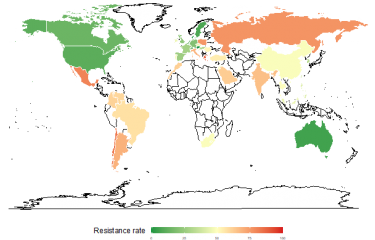


A study by the Institut Pasteur and Pasteur Network Institutes, published in JAMA Network Open, reveals a rapid decline in the effectiveness of antibiotics against urinary tract infections in six African countries. At this rate, more than 90% of cases could be resistant to certain key molecules by 2050.
Urinary tract infections are the most common infections in the world. Two bacteria are mainly involved: Escherichia coli and Klebsiella pneumoniae.
Why is Africa particularly vulnerable?
To combat these infections, doctors have several “lines” of antibiotics at their disposal: simple, inexpensive drugs as first-line treatment, followed by more powerful treatments, and finally so-called “last-resort” antibiotics, reserved for critical cases.
In Africa, several factors are accelerating resistance to these treatments: inappropriate use of antibiotics, insufficient biological diagnostics, and underfunded healthcare systems. Due to a lack of long-term studies, the true extent of the phenomenon remains poorly understood.
What does this 10-year study reveal?
Scientists from the Institut Pasteur and the Pasteur Network analyzed 44,367 urine samples collected between 2010 and 2022 in six countries: Benin, Cameroon, the Central African Republic, Madagascar, Morocco, and Senegal.
Conducted as part of the SARA project (Surveillance of Antibiotic Resistance in Africa), this study - funded by the Ministry for Europe and Foreign Affairs - is the first to track these trends over more than a decade, focusing exclusively on urinary tract infections.
The findings are alarming.
- Amoxicillin, the most accessible and least expensive first-line treatment, is now ineffective in more than 85% of cases against E. coli, and in up to 96% of cases in Benin.
Resistance also affects fluoroquinolones and third-generation cephalosporins, two major classes of antibiotics used to treat urinary tract infections:
- Fluoroquinolones show resistance rates exceeding 60 to 75% in Senegal, the Central African Republic, and Benin.
- Third-generation cephalosporins, meanwhile, have resistance rates exceeding 45% in most of the countries studied.
Are last-resort antibiotics still effective?
This is the most concerning signal. Carbapenems, used only for the most severe infections when all other treatments have failed, have until now been an effective last-resort treatment. But in Madagascar, resistance to ertapenem - one of these antibiotics - has already reached 28%. This is a very alarming situation, given the lack of alternative treatments.
A last-resort antibiotic that begins to fail marks the loss of the last line of defense of a healthcare system. Ignoring this warning today amounts to accepting that a cystitis will become, in a few years, a deadly disease.
What do the projections for 2050 indicate?
If current trends continue without intervention, the study’s mathematical models are unequivocal: resistance to cephalosporins and carbapenems could exceed 90% in most countries by 2050. For fluoroquinolones in Senegal or the Central African Republic, this critical threshold could be reached as early as 2030–2035.
A urinary tract infection, which is common today, could evolve into forms with dangerously limited treatment options.
Strengthening surveillance of antibiotic resistance, gaining a better understanding of the mechanisms that allow bacteria to adapt, and developing new therapeutic strategies are now scientific and public health priorities at the heart of the research conducted by the Institut Pasteur.
Source: Antimicrobial Resistance Trends in Urinary Tract Infections in 6 African Countries (2010–2022). Bich-Tram Huynh, Sylvain Brisse, and colleagues, on behalf of the SARA Study Group. JAMA Network Open, July 9, 2026.