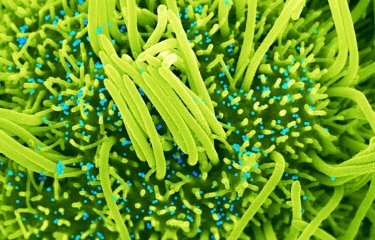


In many vertebrates, brain stem cells produce neurons throughout life. A team of scientists has revealed for the first time the molecular mechanisms by which adult neural stem cells communicate with one another and maintain a form of equilibrium that allows them to produce neurons over the long term.
**AI-assisted translation**
Within our bodies are cells of a very special kind: stem cells. Capable of dividing to produce other stem cells, they can also generate daughter cells that specialize into specific functions: muscle cells, blood cells, and so on. Stem cells play an essential role in cell renewal and repair.
In the adult brain of many vertebrate species, neural stem cells (NSCs) can give rise to new neurons, a process known as neurogenesis. At the Zebrafish Neurogenetics Laboratory, led by Laure Bally-Cuif, scientists are studying this model organism to elucidate the mechanisms that enable adult neurogenesis. The zebrafish is indeed an excellent model organism because, unlike in humans, NSCs are present in many regions of its brain, and neurogenesis occurs uniformly throughout its lifetime.
Stem Cells and Neuron Production: A Delicate Balance
For neuron production to be consistent and long-term, a delicate balance is essential between the neural stem cells (NSCs) that renew themselves and those that produce neurons. Too much specialization into neurons depletes the “stock” of NSCs, which later jeopardizes the production of nervous system cells; too little specialization compromises optimal short-term neuron production.
How is this delicate balance maintained in the brain? It involves a “dialogue” between neural stem cells, which takes the form of molecular signaling systems: one cell sends a signal, a neighboring cell receives it and adapts its behavior accordingly.
Notch 3: A Dialogue Between Neighboring Neural Stem Cells Whose Spatial and Temporal Dynamics Are Now Understood
In neural stem cells (NSCs), one of the main communication pathways is the Notch3 signaling pathway. However, “how interactions involving Notch3 are controlled in time and space between neural stem cells in the adult brain remained unknown,” says Laure Bally-Cuif.
Nicolas Dray, a researcher within Laure Bally-Cuif’s team, explains the biological characteristics of the zebrafish—an animal capable of repairing its brain thanks to its numerous neural stem cells. Copyright: Institut Pasteur / Jeanne Fenouil. (video in French, English subtitles available)
“We have developed new zebrafish transgenic lines that allow us to directly measure Notch3 signaling in vivo in each CSN, within the intact brain itself. This was never achieved before in a vertebrate,” explains Laure Bally-Cuif. The scientists discovered that the intensity of Notch3 signaling between neighboring stem cells is organized spatially in a non-random manner. The researchers also identified the molecular mechanisms underlying this organization, particularly the signals that control the intensity of Notch3 signaling in each CSN.
These recently published results provide a better understanding of how brain stem cells are organized in time and space, and how the balance of this cell population is maintained. This is an important step, particularly for better deciphering the mechanisms at work in contexts where this balance is disrupted, such as in brain tumors.
Source : Jagged-mediated lateral induction patterns Notch3 signaling within adult neural stem cell populations, Nature communications, March 14, 2026
Sara Ortica, Miguel Martinez Herrera, Louis Degroux, Bastian Rochette, Nicolas Dray & Laure Bally-Cuif
Institut Pasteur, Université Paris Cité, CNRS UMR3738, Zebrafish Neurogenetics Unit, F-75015 Paris, France