

Since March 2026, an Ebola outbreak caused by the rare Bundibugyo species has been striking the Democratic Republic of Congo (DRC) and spreading to Uganda. With more than 827 confirmed cases and 194 deaths as of June 16, this outbreak — one of the most severe in history — poses a high risk to the region. No vaccine or specific treatment exists against this strain, and the late detection of the first cases is now complicating the public health response. What do we know about this outbreak, and how is the Institut Pasteur taking action?
Updated on July 17, 2026
Two months after the official declaration of the outbreak, the situation has worsened considerably. As of July 15, 2026, the WHO has recorded more than 2,100 confirmed cases and more than 800 deaths, making this outbreak the third-largest Ebola epidemic ever recorded (read the news article Ebola 'spreading faster than any previous outbreak' in DR Congo, WHO warns - France 24). The outbreak continues to spread to new areas, while treatment centers are operating at full capacity. In the face of this unprecedented spread, the French NGO Médecins Sans Frontières (French for Doctors Without Borders) is calling for an urgent strengthening of the international medical response (in French), denouncing the still-insufficient resources to curb transmission.
Our article published in June 2026 is reproduced below in its original version.
**AI-assisted translation**
An Ebola outbreak is currently striking the Democratic Republic of Congo (DRC) and is now spreading to Uganda. The cause: the Bundibugyo species, a little-known species of the Ebola virus against which no vaccine or specific treatment is currently approved.
The situation is alarming health authorities. The outbreak had been circulating for several weeks before being detected. It is affecting a region marked by security instability, population displacement, and limited access to healthcare. These factors are severely complicating the management of the outbreak and the care of suspected cases.
A large-scale outbreak
As of June 16, 2026, the toll stands at 827 confirmed cases and 194 deaths in the DRC and Uganda (source: WHO). This has led the WHO to declare a Public Health Emergency of International Concern.
In just a few weeks, this outbreak has become one of the largest Ebola epidemics ever recorded. It already represents the second largest outbreak observed in the DRC since the discovery of the virus in 1976, across all species combined.
Why was the outbreak detected so late?
The first cases are believed to date back to March 2026, but the responsible strain was not officially identified until mid-May.
The late detection of the outbreak is due in particular to limited access to healthcare in the Ituri region and to diagnostic tools primarily adapted to the Zaire species of the Ebola virus.
Analyses carried out in reference laboratories ultimately made it possible to identify the Bundibugyo species. This silent circulation of the virus over several weeks partly explains the scale already reached by the outbreak at the time of its official declaration.
What is the Bundibugyo species?
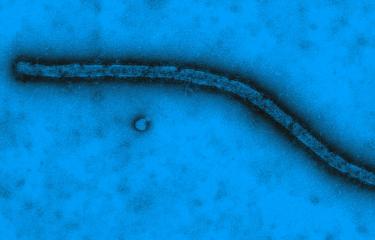
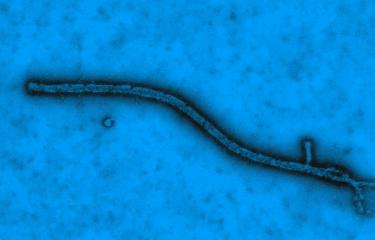
The Bundibugyo species of the Ebola virus was first identified in 2007 in Uganda. The viruses causing Ebola virus disease belong to the Filoviridae family. The current outbreak represents only the third documented outbreak involving this species, following those observed in Uganda in 2007 and in the DRC in 2012.
From a genetic standpoint, Bundibugyo is very distant from the Zaire strain; the differences between the two species reach approximately 40%. This limits the effectiveness of existing tools, which are primarily focused on the Zaire species, responsible for the major historical epidemics.
This genetic distance has concrete consequences. Treatments based on monoclonal antibodies, and especially vaccines developed against Ebola Zaire, cannot be automatically transposed to Bundibugyo.
The historical fatality rate of this strain is currently estimated at around 25%. It is lower than that observed during certain outbreaks caused by the Zaire strain, but remains high enough to constitute a major public health threat.
Why is there no vaccine?
To date, no vaccine or treatment has been specifically approved against the Bundibugyo strain.
The response therefore relies on conventional public health measures: rapid case detection, patient isolation, contact tracing, and interruption of transmission chains.
This situation also highlights the need to develop medical countermeasures capable of protecting against multiple Ebola strains. In particular, the most appropriate response to the threat posed by these viruses would be to develop a vaccine capable of protecting against all Filoviruses (Ebola Zaire, Sudan, Bundibugyo, Taï Forest, and Marburg virus) and to administer it preventively to at-risk populations.
What role does the Institut Pasteur play?
In France, the National Reference Center for viral hemorrhagic fevers, coordinated by the Institut Pasteur and based in Lyon, ensures the surveillance and reference diagnosis of Ebola virus infections.
In the event of a suspected imported case on French or overseas territory, the French National Reference Center carries out reference analyses:
- diagnostic confirmation,
- virus detection,
- and genetic sequencing of the strain.
At the same time, the Institut Pasteur contributes to the international response to the outbreak through its Outbreak Investigation Task Force (OITF), which mobilizes experts from its response reserve to support health authorities and international organizations in the field.
Social sciences are also essential for understanding population perceptions and adapting public health measures to local realities. The Institut Pasteur brings this expertise through its Anthropology and Ecology of Disease Emergence unit, which has notably conducted studies in the Ituri region, now affected by the outbreak.
Finally, the Emerging Viral Infections unit is developing vaccines against all viral hemorrhagic fevers, particularly Filoviruses such as Ebola.
At this stage, the risk for France and its overseas territories remains considered low. Protocols for managing suspected cases are fully operational.