How the brain's sentinels and walls cooperate from the embryonic stage
- #Cerveau

This article is part of a series presenting the research projects of the scientists selected in 2025 by the Institut Pasteur to launch their 5-year research group (G5). You can find the other articles here:
Sarah Merkling - Mosquitoes: unlocking the black box of virus transmission
Spyros Lytras - Predicting viral evolution with AI
What I'm researching
Picture the brain as a very sensitive city, criss-crossed by several roads (blood vessels), which in turn are protected by solid walls (the blood-brain barrier) that control what can enter the city. Each neighborhood is patrolled by sentinels, immune cells known as microglia.
The aim of my project is to understand how these sentinels and walls work together from the moment they are formed during pregnancy. What role do microglial cells play in the development of the brain's roads and walls, and conversely how do these roads and walls guide the development and positioning of microglial cells? This all happens at a critical moment, when the embryo is entirely dependent on its maternal environment.
How I go about it
We mainly study these interactions in mice. For example, we can remove the microglia to see what impact this has on the formation of blood vessels and the blood-brain barrier, or we can genetically modify them to identify the pathways involved in these processes. We also observe what happens to the embryo when we modify the mother's ecosystem. What makes our approach original is that we study brain development as a whole, considering how our cells, brain and body are linked and taking into account the influence of the maternal environment.
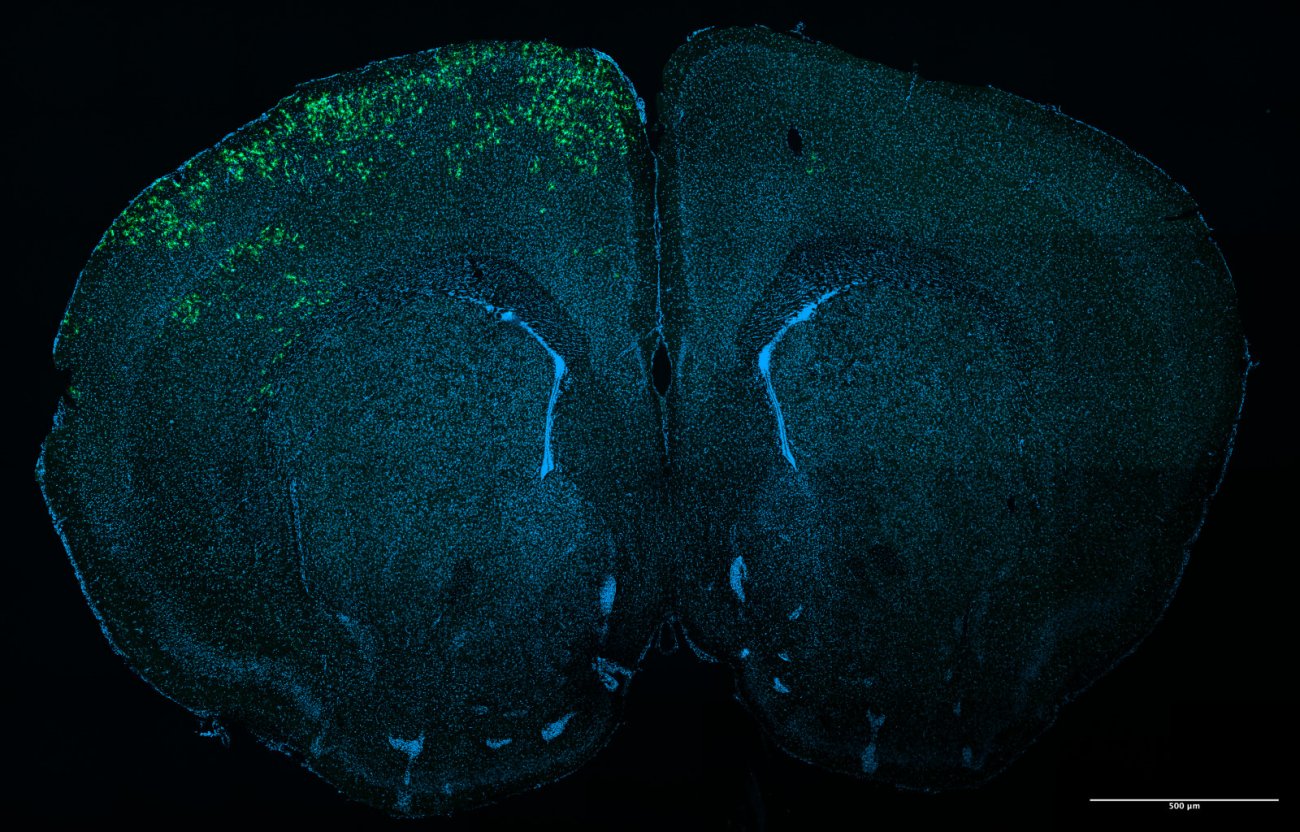
Copyright : Institut Pasteur/Inès Bouteau et Michiel Van Der Zwan
What the purpose is
In terms of basic research, our work helps elucidate the source of neurological vulnerabilities by examining the biological origins of development. Understanding these interactions can enable us to protect the developing brain and improve maternal health, especially in contexts with poor environmental and nutritional conditions.
Why do this at the Institut Pasteur?
The Institut Pasteur is an outstanding research environment that particularly lends itself to a multidisciplinary project like mine, which combines immunology, neuroscience, development and microbiology. The proximity of other research teams studying these topics is a huge advantage – not to mention the potential for scientific interactions, the state-of-the-art core facilities and the possibility of developing new tools and models.
A word of advice for tomorrow's scientists
Although being a scientist brings great intellectual freedom, it also means accepting that we won't understand everything straight away, embracing uncertainty and complexity, giving ourselves permission to get things wrong. So many major discoveries emerged out of mistakes!