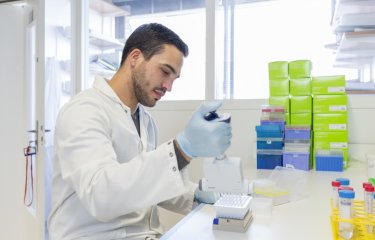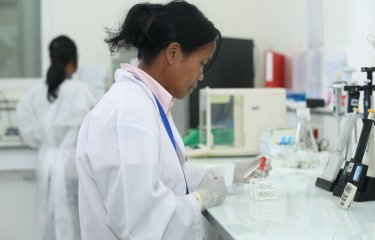


Malaria has the ability to silently resurface in the same communities, again and again. The PvSTATEM project, coordinated at the Institut Pasteur (Paris), is working to change that — testing a targeted strategy to break the cycle of Plasmodium vivax malaria relapses across 48 remote villages in Ethiopia and Madagascar. We spoke to three members of the team about what that looks like in practice.
|
Key points
|
How many times per year do you get sick with a cold? Maybe twice? You feel tired and unwell, but if you have a healthy immune system, you’re feeling better within a few days. You might accidentally pass on the virus to a couple of people in your family, your office or on public transport, but how far you can spread it is limited by how far you travel.
Malaria, on the other hand, is different. Because the parasites that cause malaria are transmitted via the ever-present mosquito, the disease can be transmitted from person to person without an ill person ever leaving their home. This makes the cycle of transmission extremely difficult to break, and in communities where malaria is rife, one person can have an active malaria infection ten times per year, or even more.
Plasmodium vivax: the hidden parasite driving malaria relapses
There are five parasites capable of causing malaria in humans, all within the Plasmodium genus. While Plasmodium falciparum is the most common cause of malaria worldwide, the second-most common, Plasmodium vivax, is widespread in Asia, Central America, the Horn of Africa and Madagascar.
The issue with P. vivax in particular is that once someone has been infected and recovered, they often have malaria ‘relapses’ weeks or even months later. This is because the parasite, unbeknownst to the patient, travels deep inside the liver where it becomes dormant until conditions are right for it to reawaken, replicate and surge through the bloodstream once again. Of course, this means that once one person in the community relapses, the parasite will re-enter the mosquito population and cause another outbreak.
A targeted blood test to break the cycle of malaria transmission
The situation is further complicated by the remoteness of some of these communities, where access to effective drugs and medical care can be many hours away. This means that the disease is often left untreated and relapses are more likely. To address these problems, a diagnostic test was developed by current Institut Pasteur Paris scientist Dr Michael White and the team of Professor Ivo Mueller at the Walter and Eliza Hall Institute in Australia. This test is a simple blood test which can identify who is most likely to be carrying dormant P. vivax parasites capable of causing a relapse infection, so that treatment can be targeted. This targeting is important because the drugs capable of eliminating the dormant liver pathogens can have negative side effects, so it would be preferable to minimise these by only treating those who need it. If successful, this treatment program would break the cycle of malaria continually ripping through the same communities.


From Paris to the field: a global team working with local communities
To develop the strategy required for a large-scale intervention and check that the proposed strategy works safely in real communities where P. vivax malaria is a constant problem, a multidisciplinary team from across the world has been assembled, co-ordinated at Institut Pasteur in Paris. Two areas were identified for the study, one in rural Ethiopia and one in rural Madagascar, and collaborations with local scientists familiar with the environment and needs of the communities were established. The involvement and buy-in of the local communities were of utmost importance, and the success of the intervention requires a co-ordinated effort by patients, local healthcare workers and community leaders alongside the scientists behind the project.

A 5-year, 9-institute project tackling malaria from every angle
In total, scientists from 9 institutes are involved in this wide-ranging, 5-year project, encompassing:
- epidemiology,
- diagnostics,
- digital health,
- predictive disease modelling
- and social sciences.

But what do the people working on such a large, varied project like this actually do on a day-to-day basis?
Three members of the team, based at two Pasteur Network members (Paris and Madagascar), pull back the curtain on their jobs for us…
|
 Dr Michael White (Lead Scientist, Institut Pasteur Paris)
During Michael’s postdoctoral research post in Australia, he worked on the development of the blood test to detect if someone is likely to be a carrier of dormant P. vivax parasites in their liver. Following his move to Institut Pasteur Paris, he now leads a team of scientists and gets to come up with the big-picture ideas for projects like this. His job involves the supervision of PhD students and postdocs, and he says that one of the best parts of his job is helping them develop their skills and careers, and hearing about what they’ve found in their research. With such a varied project as this, every day is different- whether it’s interpreting the data coming in from the field, applying for future project funding, or liaising with international collaborators, everything goes into creating the ideal environment for each member of the team to be able to do their job to the best of their ability. While initial results look promising, the team won’t know exactly how successful the intervention has been until all the analysis has been completed so that all the pieces of the puzzle can be assembled. For Michael as lead scientist, this is both daunting and exciting, and the whole team is looking forward to the full picture becoming clearer over the coming months. |
|
 Eliharintsoa (Mirana) Rajaonarimirana (PhD student, Institut Pasteur Madagascar)
Having grown up in Madagascar and trained as a mathematician, joining the PvSTATEM project for her PhD was a logical next step for Mirana. Field scientists and health workers often travel many hours to the remote communities taking part in this project to take blood samples from participants and with around 12,000 participants having already taken part in the study coming from 48 villages (24 in Ethiopia, 24 in Madagascar), there are large volumes of data to be analysed. When this data reaches her office at Institut Pasteur Madagascar, she performs statistical analyses that give clues about the epidemiology of P. vivax malaria and the efficacy of the program of intervention, both of which are necessary to bring together the overall picture of the success of the project. Based on samples collected from asymptomatic individuals, her analysis showed that P. vivax was the predominant Plasmodium species in the study area, whereas P. falciparum predominates among cases detected at health centers. For Mirana, the best part of her job is getting to work with great scientists from around the world, allowing her to learn from them as she works towards defending her PhD in December 2026. |
|
 Kelly Prifti (Project Manager, Institut Pasteur Paris)
The overarching theme of Kelly’s job as project manager is to take care of facilitating the running of the project behind the scenes so that the scientists can focus on the science. It’s an extremely varied job, from dealing with permits, approvals and bureaucracy across multiple countries, to helping with the logistics of transporting scientific supplies to remote locations. Being the point of contact for any questions from the team, she has to either know the answer, find out, or find the person who will know. Liaising with members of the team with deep local knowledge of Ethiopia and Madagascar has been invaluable, allowing the project to pause or work around important local events such as the harvest and monsoon seasons. Alongside ironing out day-to-day snags, the job of project manager involves communicating deliverables to the funding body, writing periodic progress reports and ensuring the project complies with all necessary regulations. Working with the Grants Office, the project manager is vital to provide the support for such a multifaceted project to keep running as a well-oiled machine. |