3 min read
Our scientific expertise
Scientists at the Institut Pasteur make sense of the living world with the sole aim of driving scientific progress to protect human life.
Research at the Institut Pasteur is structured around 12 scientific departments, enabling major public health challenges to be met. Each department deploys teams of experts tackling major biological and health issues with the common goal of improving understanding to improve care.
12 departments, one mission: protecting human life
True to its heritage and recognized long-standing microbiological expertise, the Institut Pasteur has developed know-how in cutting-edge fields of modern biomedical science such as immunology, structural biology, computational biology, genetics, genomics and neuroscience.
Our 12 scientific departments drive research at the Institut Pasteur, from basic discoveries to real-world medical applications based on four key strengths:
- research conducted at all levels of life, from molecules to individuals and populations;
- a multidisciplinary and independent approach: from bioinformatics to biophysics, chemistry and nanotechnologies;
- a cutting-edge technological facility: the Institut Pasteur owns one of the world's most powerful microscopes (Titan Krios) enabling its scientists to observe microbes or proteins at extremely high (atomic) resolution by freezing them at very low temperatures.
- a unique international network of 32 institutes spanning five continents.
These resources are vital for tackling the major health challenges of our time such as antibiotic resistance and healthy aging.
Our research helps improve the prevention, diagnosis and treatment of a whole host of diseases including infectious diseases (Ebola, malaria, AIDS, tuberculosis, Zika), neurodegenerative diseases (Alzheimer's and Parkinson's disease), cancer (uterine, liver, etc.), autism and many others.
Want to find out more about our departments?
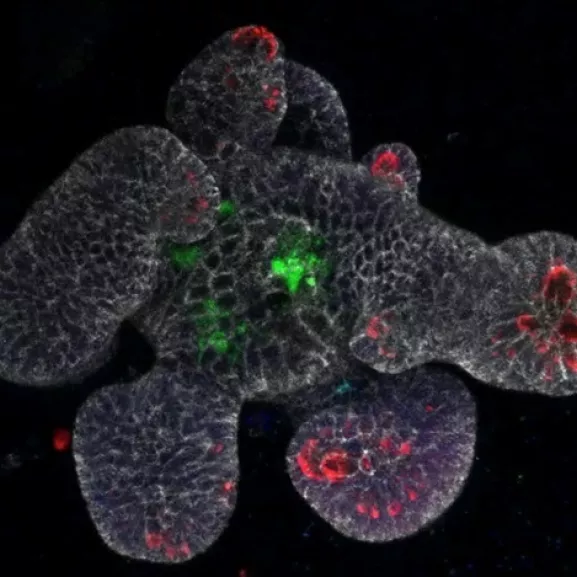
Cell Biology and Infection
The department studies fundamental mechanisms of cell biology in the context of infections, cancer and neurodegenerative diseases.

Computational Biology
We live at a time when biology is producing vast reams of data, which means that mathematical modeling, statistics and computing are increasingly vital.
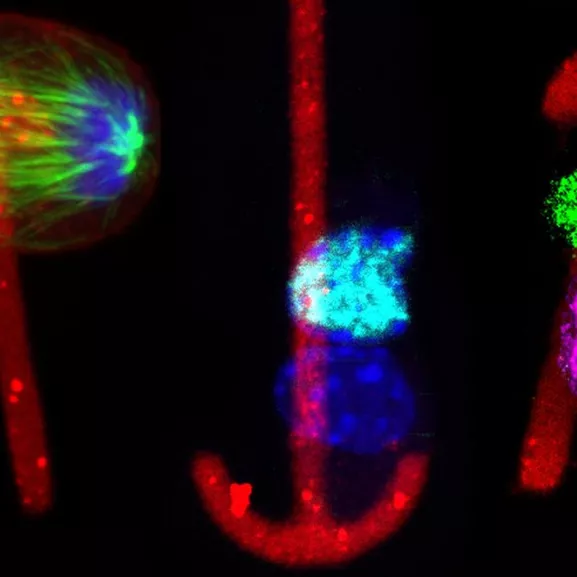
Developmental and Stem Cell Biology
How do cells acquire their identity? How are organs formed? Little is known about the mechanisms by which animals, including human beings, are "built".

Structural Biology and Chemistry
Observing life at atomic level, because chemistry is the driving force behind life.

Genomes and Genetics
Exploring the genomes of bacteria, yeast, insect vectors and ultimately humans.
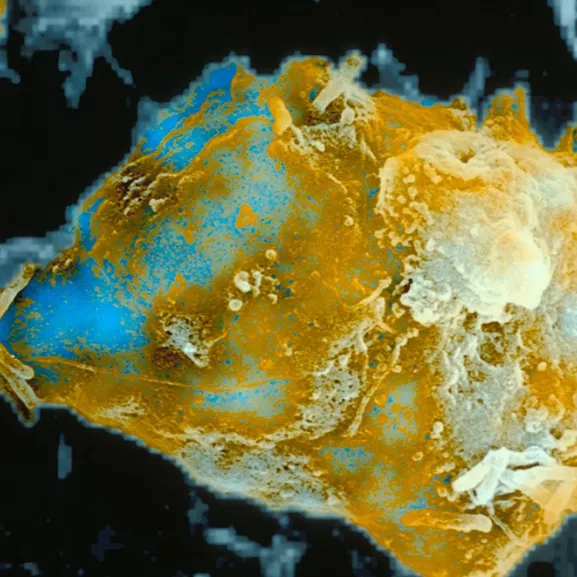
Immunology
The complexity of the immune system is a never-ending source of fascination for scientists.
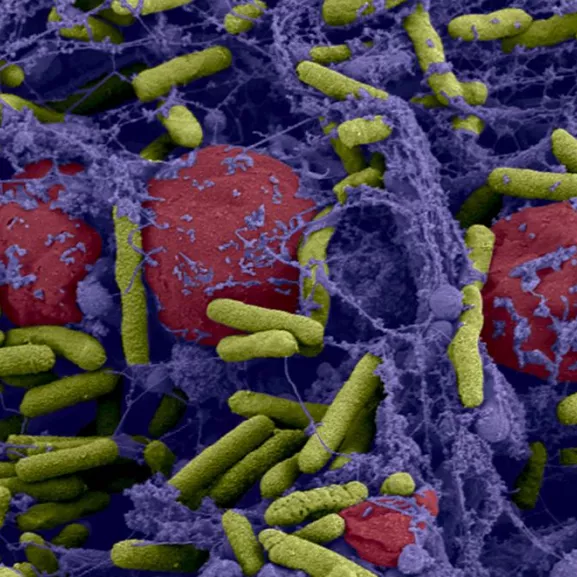
Microbiology
Several prokaryotic microbes (bacteria, archaea and their viruses) are known to cause diseases, but these microorganisms also provide invaluable models for exploring the mechanisms of living systems.
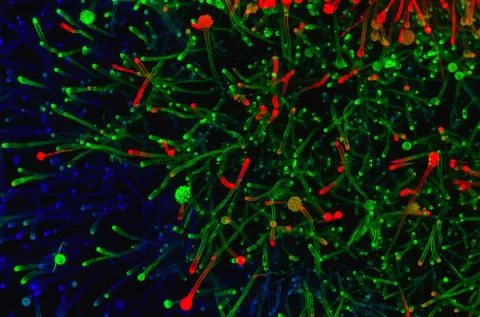
Têtes aspergillaires d'Aspergillus fumigatus en milieu aérien
Mycology
Mycoses have been a major public health concern since the early 1980s.
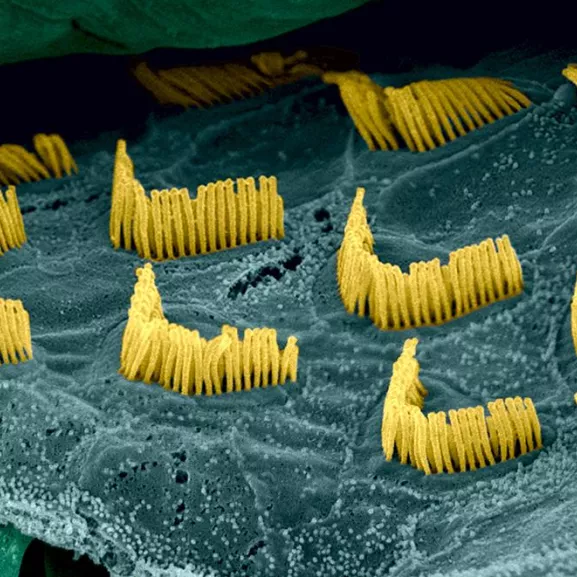
Neuroscience
The nervous system still has plenty of secrets for us to discover.
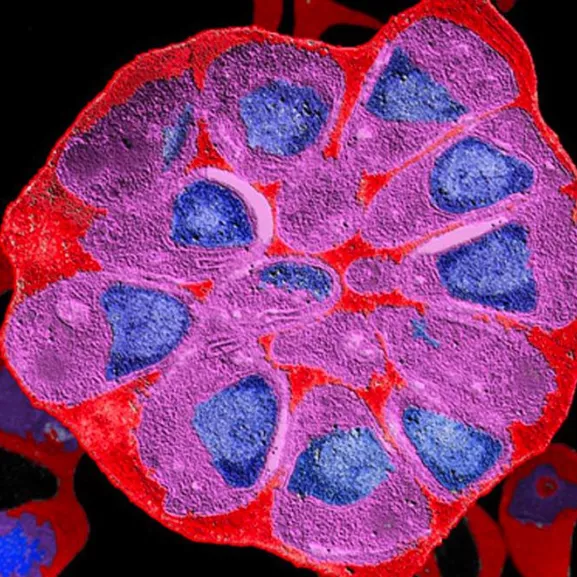
Parasites and Insect Vectors
Parasitic diseases are all too often neglected. However, they affect close to 700 million people worldwide.
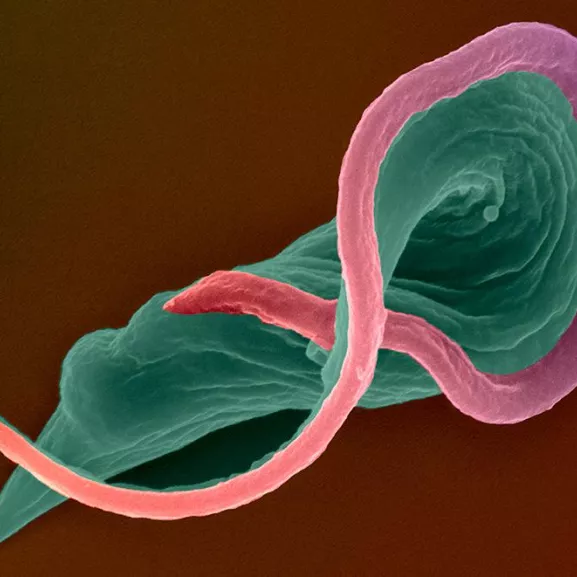
Global Health
The main objectives of the Department of Global Health are to study infectious diseases and tackle the emergence of new pathogens.
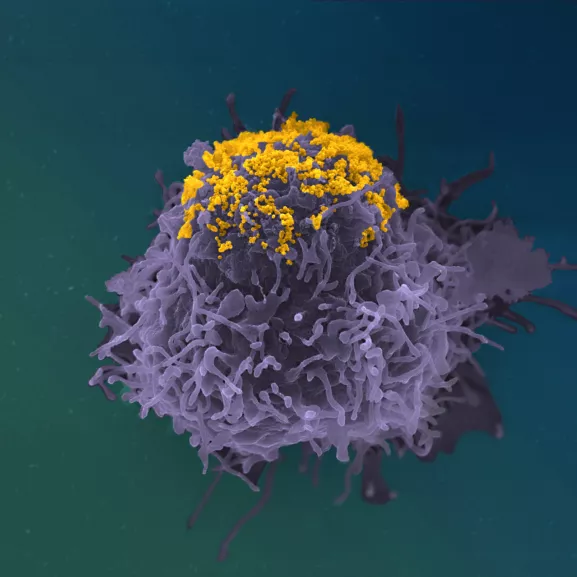
Accumulation de particules de VIH à la surface d’une cellule infectée
Virology
Fighting viral infections that affect human health.