Structural Biology and Chemistry

The structure of a molecule is intricately linked to its function. The units and technological platforms in the Department of Structural Biology and Chemistry focus their research on the 3-dimensional organization, dynamics and functions of macromolecular complexes and machineries in vitro and in cells. In addition, the department is involved in the synthesis of small molecules and biomolecules for applications, especially those relevant for human diseases, and developing transdisciplinary approaches and original methods with a focus on AI. This interdisciplinary research reveals vital information for the development of new therapeutics, diagnostics and vaccines. The research carried out in the department includes antimicrobial resistance, emerging infectious diseases, cancer and neurodegenerative diseases.
Our main recent publications
Elucidation of the corynebacterial cell cycle
Joint work between the Institut Pasteur in Paris and Institut Pasteur de Montevideo led to a breakthrough in the understanding of the bacterial cell cycle vital for some bacterial pathogens, offering new potential tools to combat infectious diseases like tuberculosis, leprosy or diphtheria. The discovery shows that a metabolic protein conserved in all organisms acquired new functions in those pathogens to link the essential cell division and growth machineries, showcasing life's remarkable adaptability.
Nature Microbiology, September 7, 2023.
Artificial codons for DNA synthesis
Polymerases are enzymes involved in DNA replication during which nucleotides, the building blocks of DNA, are added one by one by these enzymes. In this article, we explored the possibility of synthesizing modified DNA three-by-three using artificial trinucleotides. This approach is very promising to synthesize therapeutic oligonucleotides in a more efficient and sustainable manner and for applications in synthetic and chemical biology.
Chemical Communications, November 15, 2023.
Molecular basis for proofreading by family-D DNA polymerases (or PolD)
Reliable, heat-stable DNA polymerases are required for PCR, a technique widely used in human health research. The team led by Ludovic Sauguet is investigating PolD, a DNA polymerase isolated in ocean hot springs. In collaboration with New England Biolabs, the scientists have determined the structure of PolD at atomic level, revealing a novel fidelity mechanism which paves the way for the design of new biotechnological tools.
Nature Communications, December 14, 2023.
Molecular motors to feed bacteria
Molecular motors use chemical energy to transport the nutrients key to the survival and pathogenicity of bacteria. Through a combination of structural biology and microbiology, this study has revealed their dynamics for the very first time. The findings have the potential to unlock new antimicrobial and biotechnological possibilities.
Nature communications, January 6, 2024.
Advancing Cryo-EM Structural Modeling with EMMIVox
EMMIVox is a novel computational method that translates cryo-electron microscopy data into accurate structural models, balancing data accuracy with realistic physics. It captures structural variations often missed by other methods, improving model quality and helping scientists better understand complex biological structures and functions.
Plos Computational Biology, July 15, 2024.
Nos principaux travaux en 2025
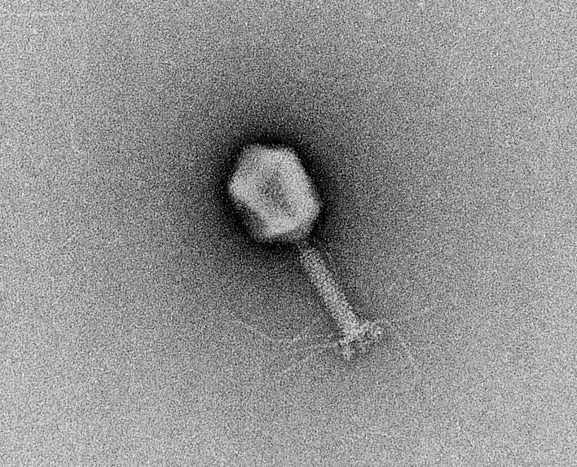
Structure et fixation du phage à son hôte
Nous étudions la structure et la fonction du bactériophage flagellotrophique à l’aide de la cryomicroscopie électronique et de l’apprentissage automatique. Nous avons mis en évidence le noyau structurel hautement ordonné du phage ainsi que les fibres flexibles de la capside qui interagissent avec les flagelles de son hôte. La phagothérapie est une alternative émergente pour traiter les agents pathogènes résistants aux antibiotiques.
Communications biology, 6 décembre 2025
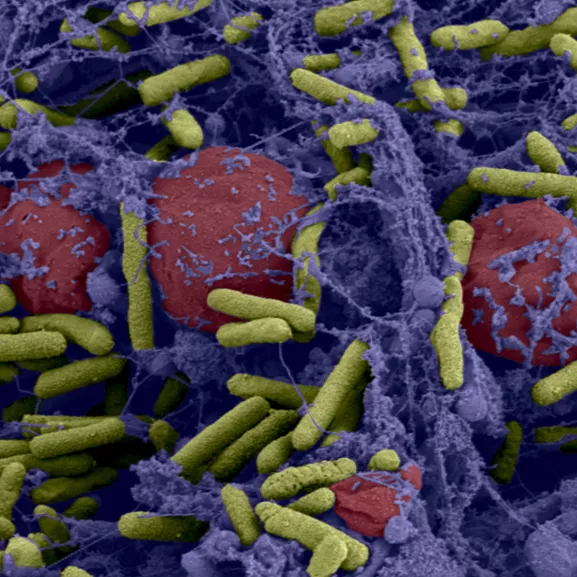
Interactions entre les effecteurs de Pseudomonas au sein des cellules
Pseudomonas aeruginosa est un agent pathogène opportuniste majeur chez l’être humain. À l’aide d’une « seringue moléculaire », la bactérie injecte des effecteurs dans les cellules hôtes afin de favoriser l’infection. Nous avons mis en évidence que ces effecteurs interagissent entre eux à l’intérieur des cellules hôtes et avons découvert un mécanisme inattendu qui permet à la bactérie d’ajuster avec précision le processus d’infection.
Nature communications, 2 décembre 2025
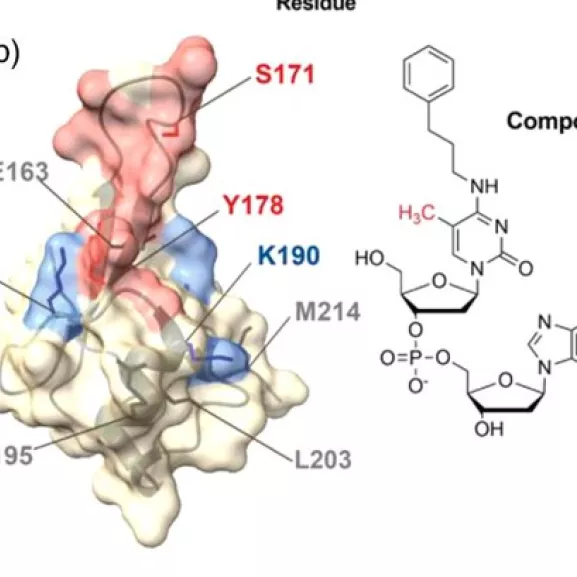
Détourner les lecteurs d’ADN méthylé pour cibler les gènes silencieux
La méthylation de l’ADN est un « post-it chimique » apposé sur l’ADN, indiquant si les gènes doivent être lus. La protéine MBD2 lit ces marqueurs et inhibe l’expression de certains gènes, notamment les suppresseurs de tumeurs dans le cancer. En associant la chimie organique à des essais biophysiques, nous avons mis au point les premiers composés bloquant la liaison de la protéine MBD2 à l’ADN méthylé, ouvrant ainsi la voie à de nouvelles approches thérapeutiques.
Angewandte Chemie International Edition, 24 avril 2025
Nos principaux travaux précédents
En 2024
Des moteurs moléculaires pour nourrir les bactéries
Des moteurs moléculaires utilisent l'énergie chimique pour transporter des nutriments clés à la survie et la pathogénicité des bactéries. Cette étude révèle pour la première fois, leur rouages dynamiques en combinant la biologie structurale et la microbiologie. Les résultats ouvrent des perspectives antimicrobiennes et biotechnologiques.
Nature communications, 6 janvier 2024.
Faire progresser la modélisation structurale par cryo-microscopie électronique avec EMMIVox
Nouvelle méthode computationnelle, EMMIVox convertit les données de la cryo-microscopie électronique en modèles structuraux affinés, alliant précision des données et physique réaliste. Cette approche permet de capturer les variations structurales qui ont souvent échappé à d’autres méthodes, améliorant ainsi la qualité des modèles et aidant les scientifiques à mieux comprendre les structures et fonctions biologiques complexes.
Plos Computational Biology, 15 juillet 2024.
En 2023
Mieux comprendre le cycle cellulaire des corynébactéries
Les travaux communs entre l’Institut Pasteur de Paris et celui de Montevideo ont permis de progresser dans la compréhension du cycle cellulaire des bactéries, vital pour certaines bactéries pathogènes, offrant de nouveaux outils potentiels de lutte contre des maladies infectieuses telles que la tuberculose, la lèpre ou la diphtérie. Leur découverte montre qu’une protéine métabolique conservée dans tous les organismes a acquis, dans ces pathogènes, de nouvelles fonctions de liaison des mécanismes essentiels de division et de croissance cellulaires, démontrant ainsi la remarquable adaptabilité de la vie.
Nature Microbiology, 7 septembre 2023.
Des codons artificiels pour la synthèse de l’ADN
Les polymérases sont des enzymes impliquées dans la réplication de l’ADN, au cours de laquelle elles ajoutent un par un par les nucléotides. Dans cet article, nous avons exploré la possibilité de synthétiser de l’ADN modifié par triplet en utilisant des trinucléotides artificiels. Cette approche se révèle très prometteuse aux fins de la synthétisation plus efficace et durable des oligonucléotides thérapeutiques et d’applications de biologie de synthèse et chimique.
Chemical Communications, 15 novembre 2023.
Base moléculaire de la relecture des ADN polymérases de la famille D (ou PolD)
La PCR, qui est largement utilisée en recherche sur la santé humaine, nécessite des ADN polymérases fiables et thermostables. L’équipe dirigée par Ludovic Sauguet étudie PolD, une ADN polymérase isolée dans des sources chaudes océaniques. En collaboration avec l’entreprise New England Biolabs, les scientifiques ont déterminé la structure de PolD à l’échelle atomique, révélant un mécanisme de fidélité inédit qui permettra de concevoir de nouveaux outils biotechnologiques.
Nature Communications, 14 décembre 2023.