Developmental and Stem Cell Biology

The department of Developmental & Stem Cell Biology aims to gain mechanistic insights in the fields of developmental biology, epigenetics and stem cell biology, with relevance to human health. Using a wide range of methods – molecular, genome-wide, single-cell, imaging-based, computational, etc. – and different models (including C. elegans, fly, fish, avian, murine embryos, human cells, organoids), we are focusing on three key areas:
- Regulation of gene expression & epigenetics: we study the core mechanisms whereby the (epi)genome responds to and transmits information through mitosis and generations, at the cellular and organism levels, as well as during stress.
- Morphogenesis & cell fate transitions: we investigate the collective rules driving cell fate decisions, self-organization and the regulation of tissue and organ shape and size.
- Stem cell biology: we explore how adult stem cells are generated and contribute to tissue maintenance and regeneration, in healthy conditions, ageing organisms or during pathological conditions such as tumors and infections.
Our key research in 2025
Cancer cells tighten the belt around their neighbors
Cancerous cells can expand in our tissues by killing neighboring healthy cells through a process named mechanical cell competition. Léo Valon and Alexis Matamoro-Vidal (Cell Death and Epithelial Homeostasis unit) found a new mechanism used by cancer cells to kill their neighbors by corralling and squeezing them up to death through a contractile belt.
Current Biology, 9 October 2025
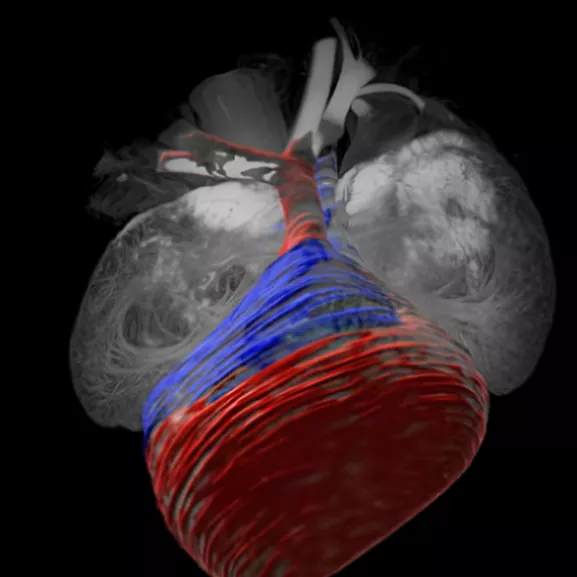
Plasticity of ventricles in heterotaxy syndrome
The heart functions in two parallel but asymmetric circulations, driven by the right and left ventricles. In heterotaxy syndrome, abnormal left-right patterning leads to severe heart defects, including ventricle malposition. Audrey Desgrange and her colleagues uncovered unexpected plasticity of ventricle position during heterotaxy development, identifying a novel step of heart morphogenesis.
Science Advances, 19 September 2025
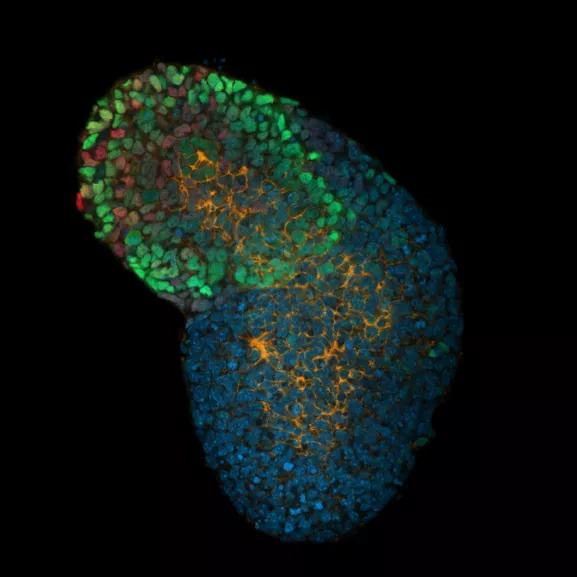
The role of mechanics in shaping early embryonic tissues
Arthur Michaut and his colleagues show that the tension generated by the outward migration of the early embryo’s border results in a morphological transition. Columnar cells are elastically stretched into a squamous morphology. Notably, this reversible transition coexists with irreversible tissue fluid flows shaping the early body axis. This study reveals novel mechanical behavior in which embryonic tissues can respond simultaneously as both fluid and a solid, depending on the type of forces exerted upon them.
Current Biology, 21 April 2025
Our previous key research
In 2024
Nr5a2, a master regulator of morula development
Early embryogenesis is driven by transcription factors (TFs). Using mouse models, Festuccia et al. show that the TF NR5A2 controls expression of lineage-specifying TFs and genes involved in mitosis, telomere maintenance and DNA repair. NR5A2 coordinates proliferation, genome stability and lineage specification ensuring correct morula development.
Science, 4 October 2024
Life on land: a pivotal evolutionary shift
Neck muscles evolved by repurposing ancestral muscle groups in fish to support the skull as it detached from the shoulder girdle for life on land. We propose that subtle shifts in embryonic development enabled this innovation, offering insights into the evolutionary transition to land and the origins of head and neck developmental disorders.
Nature communications, 4 December 2024
In 2023
A new stem cell model to study gonad formation in humans
Anu Bashamboo and collaborators in Ken McElreavey’s unit have created a new in vitro model of human gonad formation. Using human pluripotent stem cells, they devised protocols to generate somatic gonad cells. These were used to understand how a genetic variant can lead to testicular disease. This model provides a powerful tool for understanding gonad development and its disorders, and a scaffold for in vitro gametogenesis.
Science Advances, 4 January 2023
A spatiotemporal exploration of gene regulation
Gene regulation requires the physical encounter of different genetic elements, but what happens when they are far away from each other on the same chromosome? Coupling high-precision microscopy to provide real-time visualization of gene transcription and physical models of the 3D dynamics of the DNA molecule, Thomas Gregor and his colleagues showed that gene regulation is less sensitive to genomic distance than anticipated, allowing rapid contacts over long distances.
Science, 29 June 2023
Genetic and embryological origin of a rare cardiac malformation
Sigolène Meilhac and her team, in collaboration with Necker-Enfants Malades hospital, investigated a rare congenital heart disease of unknown origin, called crisscross heart, where the inflow streams of the two ventricles cross. Identifying the first murine model of the disease, they have shown that the Grebl1 gene is involved in this malformation. This research sheds light on the developmental mechanisms transforming the embryonic heart tube into a four chambered heart.
Developmental Cell, 6 November 2023