Cell Biology and Infection

The Department of Cell Biology and Infection develops an integrated approach to study the basic mechanisms underlying cell physiology during infection by various microbes and in other pathologies such as cancer and neurodegenerative diseases. Through a multidisciplinary approach, our goal is to achieve a comprehensive characterization of cellular processes in physiological and pathological conditions, at multiple scales. The department has 14 research teams, along with 3 state-of-the-art technology-centered facilities. Collectively, our research focuses on the 3 following main areas:
- Quantitative and integrative cell biology in physiological & pathological conditions
- Tissue & cell biology
- Emerging & re-emerging infections
Our key research in 2025
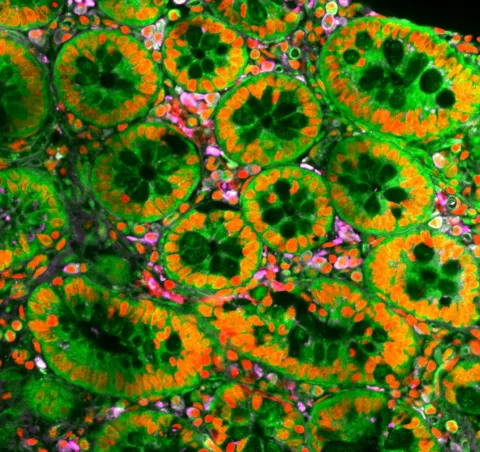
NK immune cells learn to fight against bacteria
JúliaTorné and her colleagues present the first single cell analysis of NK cells following infection with the bacterium Streptococcus pneumoniae. They show that NK cells undergo transcriptional and functional reprogramming giving rise to new cell populations and a more effective secondary response to infection.
Mucosal Immunology, 28 November 2025
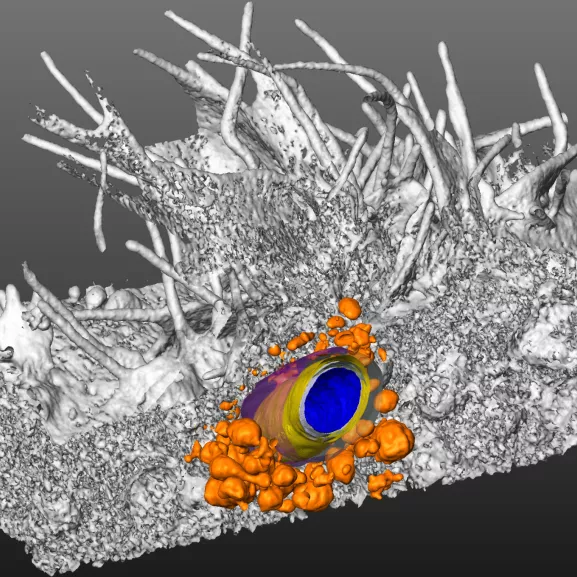
Bacterial mechanoporation and host membrane damage
Endomembrane breaching is used by pathogens to access the nutrient-rich cytosol. Using in-cell correlative light and electron microscopy, Léa Swistak and her colleagues imaged the transient steps preceding cytosolic access of enteroinvasive Shigella. They propose a new model where host membrane damage is induced through mechanoporation that involves a bacterial secretion system.
Plos Biology, 1 May 2025
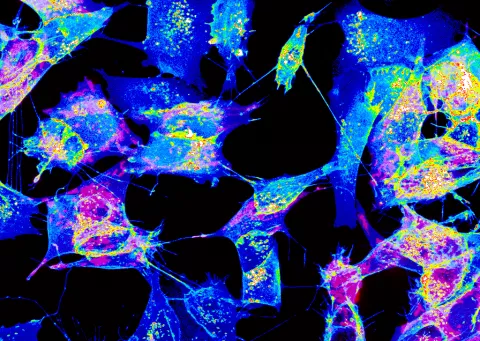
Tunneling nanotubes enable intercellular transfer in zebrafish embryos
Olga Korenkova, Shiyu Liu and their colleagues demonstrate the presence of open-ended connections, known as tunneling nanotubes (TNTs), in live zebrafish embryos by showing that they facilitate material transfer between cells. Their findings suggest a functional role for TNTs in living organisms, broadening our understanding of intercellular communication during development.
Developmental Cell, 24 February 2025
Our previous key research
In 2024
Listeriosis outbreak linked to vegan cheese
Genome sequencing analysis of clinical isolates of Listeria monocytogenes showed for the first time that an outbreak of listeriosis in Europe was associated with the consumption of vegan plant-based cheeses. Overall, this study highlights the need to consider the microbiological risks associated with vegan cheese substitutes, as with dairy products and any other ready-to-eat products.
The New England Journal of Medicine, 17 April 2024
Compounds to potentiate tuberculosis therapy
Mistretta et al. developed an imaging strategy to screen for pheno-tuning compounds that increase Mycobacterium tuberculosis stress response and decrease cell-to-cell variation, making it more susceptible to anti-TB drugs. Thus, phenotypic variation offers a path to tackle pathogens. The lead compound has now entered the ERA4TB’s progression pipeline.
Nature communications, 16 May 2024
In 2023
An immune memory against bacterial infection
Mélanie Hamon and her team uncover a new role for specific cells of the immune system during a bacterial infection. Studying infection by Streptococcus pneumoniae (also known as pneumococcus), they showed that Natural Killer (NK) cells directly detect bacteria and retain a memory of previous encounters to help protect against secondary infections through mechanisms depending on cytotoxic molecules. This study offers new insights on antibacterial responses to pathogens.
PLOS Pathogens, 24 July 2023
A key protein to form functional cellular cilia
The unit led by Arnaud Echard has identified a key role for a protein called MiniBAR in the formation of primary cilia. These protrusions, present on the surface of most of our cells, are involved in the reception of chemical and mechanical signals, particularly during development. Depletion of MiniBAR in vivo in a zebrafish model leads to the formation of non-functional cilia and kidney cysts and disrupts the left-right asymmetry that normally emerges during development, all characteristic signs of ciliopathies in humans.
Developmental Cell, 23 October 2023
The formation of intercellular nanotubes elucidated
Tunneling nanotubes (TNTs) are long membranous channels formed between cells to transport material, including amyloid proteins in neurodegenerative diseases, over distances of dozens of microns. Combining biophysical approaches and cutting-edge microscopy, Chiara Zurzolo's team has uncovered key molecular players driving the assembly of actin, an essential component of these structures. Their research sheds light on how actin forms elongated communicating protrusions and could lead to insights for treating diseases involving TNTs.
EMBO Journal, 27 November 2023