More Than 70 Years of Medical Mycology Training at the Institut Pasteur
- #Teaching
- #Mycology

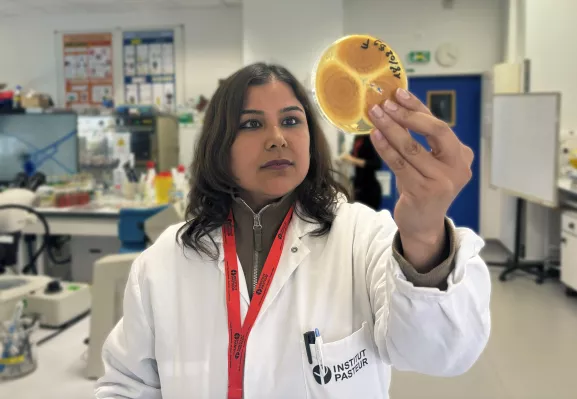
A Scientific Legacy That Continues to Evolve
Today, the Medical Mycology Pasteur Course combines scientific heritage, educational innovation, and an international outlook through a free of access online course (MOOC) and collaborations across the Pasteur Network.
Since its creation in 1953, the course has continually evolved to keep pace with advances in medical mycology and meet the needs of a growing international scientific and medical community. From its first sessions in Paris to its international expansion and the creation of the Medical Mycology MOOC, discover the key milestones in the course’s history and the changes that have shaped it to this day.
A Pioneering and Rapidly Evolving Field
Although medical mycology is fundamental to human health, it is a relatively recent discipline. In the 19th century, university-level teaching on pathogenic fungi was virtually nonexistent, and physicians had very few resources available to identify and treat fungal infections.
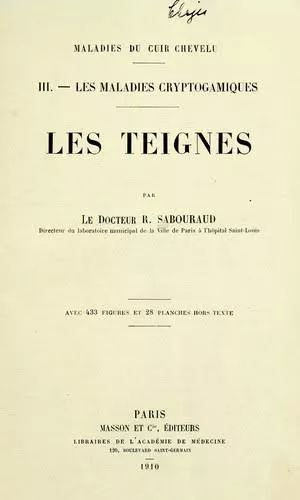
In France, Raymond Sabouraud (1864–1938), who trained at the Institut Pasteur under Émile Roux and later at Saint-Louis Hospital, was a pioneer of medical mycology. His “Laboratoire des Teignes” (Ringworm Laboratory) quickly became a leading center for dermatologists and mycologists from around the world. His scientific legacy helped lay the groundwork for the creation of the Medical Mycology Pasteur Course in 1953.
Considered the father of medical mycology, Raymond Sabouraud trained several generations of scientists who went on to advance the field worldwide, including Chester Emmons, Norman F. Conant, Libero Ajello (USA), and Pablo Negroni (Argentina). [1]
It was not until the mid-20th century that the field gained widespread international recognition. In 1954, the founding of the International Society for Human and Animal Mycology (ISHAM) in Paris, during the 8th International Botanical Congress, marked a major milestone in establishing medical mycology as a distinct branch of microbiology. Several physicians and scientists from the Institut Pasteur were among its founding members, notably Gabriel Segretain, Édouard Drouhet, and François Mariat, who would play a major role in advancing the field scientifically and educationally.
The Origins of the Medical Mycology Pasteur Course (1953–1980s)
In 1953, three mycologists at the Institut Pasteur, François Mariat, Gabriel Segretain, and Édouard Drouhet, established an annual postgraduate course in medical mycology for physicians, pharmacists, veterinarians, and biologists.
This marked the birth of the Medical Mycology Pasteur Course.

At the time, each session welcomed 24 participants, two-thirds of whom came from France and one-third from other parts of the world, mainly Europe, Latin America, and Africa. The program combined comprehensive theoretical and practical instruction, delivered in French, covering all pathogenic fungi, with examinations and a diploma awarded by the Institut Pasteur.
The teaching philosophy was based on a specialized approach: each microorganism was studied with an expert whose work was directly connected to research and clinical diagnosis. The Pasteur Course quickly became a reference for mycology training in France and internationally, helping establish medical mycology as a discipline in its own right, at a time when it was still scattered across fields such as botany, parasitology, and internal medicine.
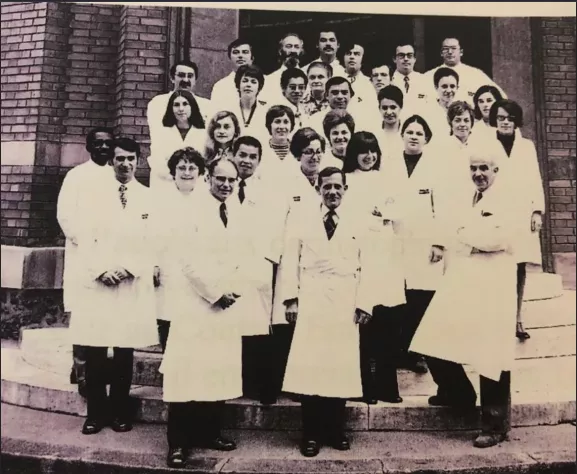
This development continued in 1972, when Édouard Drouhet founded the National Reference Center for Mycoses and Antifungals, further strengthening the Institut Pasteur’s commitment to research and training in medical mycology. This initiative shows that, from the outset, the Pasteur Course was part of a broader strategy to establish medical mycology as a field in its own right within medicine, encompassing pathophysiology, diagnosis, and treatment, as well as global public health.
The Evolution and Modernization of the Course (1980s–2010s)
Over the decades, the Medical Mycology Pasteur Course has continually evolved to keep pace with scientific and medical advances and meet the needs of an ever-growing international community. Claude De Bièvre took over as course director in 1987, followed by Patrick Boiron and Oumaima Ibrahim-Granet from 2000 to 2004, and then Françoise Dromer and Olivier Lortholary from 2005 onward, alongside Dea Garcia-Hermoso, who was responsible for the practical sessions.

The course format itself gradually evolved: from an eight-week program in its early years, the course was shortened to six weeks and then to approximately one month, adapting to the constraints faced by healthcare professionals and researchers while maintaining its high scientific standards.
In 2012, the course reached a major milestone by becoming fully taught in English. This marked a real turning point in its history: whereas two-thirds of participants had been French in its early years, the course now welcomed a majority of international students from all five continents, further strengthening its global reach.
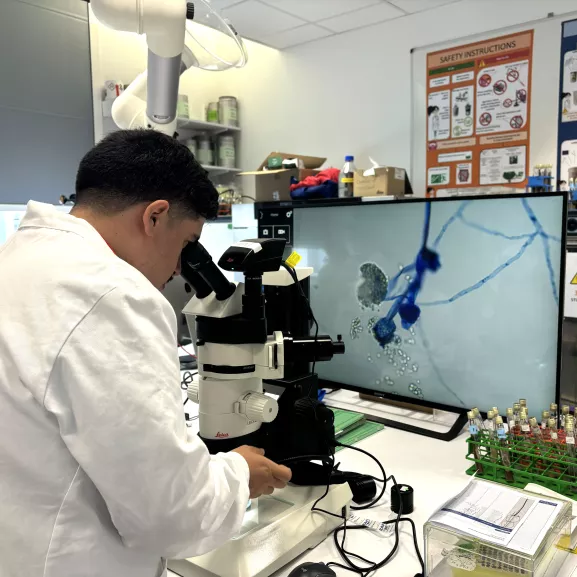
At the heart of this evolution, practical training plays a central role. It is complemented by introductory clinical mycology seminars led by European experts selected by the course’s co-directors. This diversity of instructors gives students access to a particularly rich range of expertise, which they value throughout their training.
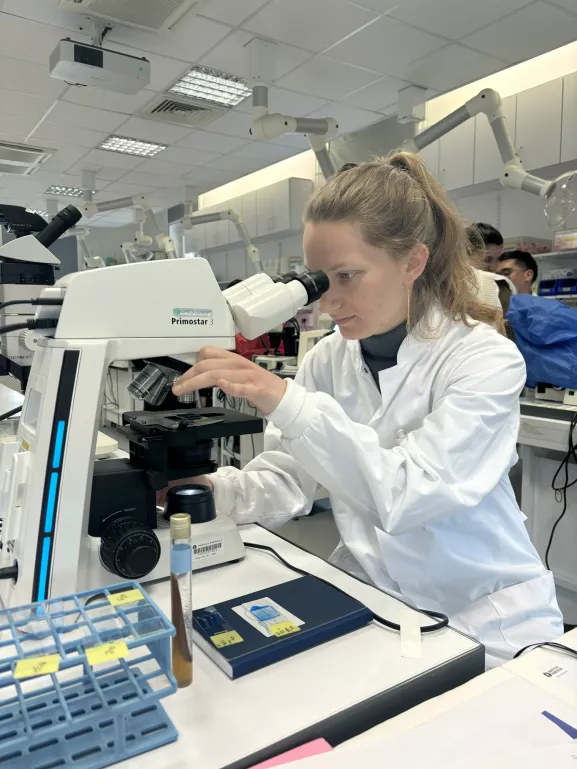
During the practical sessions, students work directly with a wide range of fungal species and develop the skills needed to identify them, combining morphological observation with current diagnostic methods. A hands-on approach that is essential to understanding the diversity and complexity of fungal infections.
Practical training is at the heart of our course. It gives participants a unique opportunity to work with a wide range of fungal species. By combining traditional morphological observation with the latest molecular techniques, they develop the skills needed to accurately identify and diagnose pathogenic fungi.
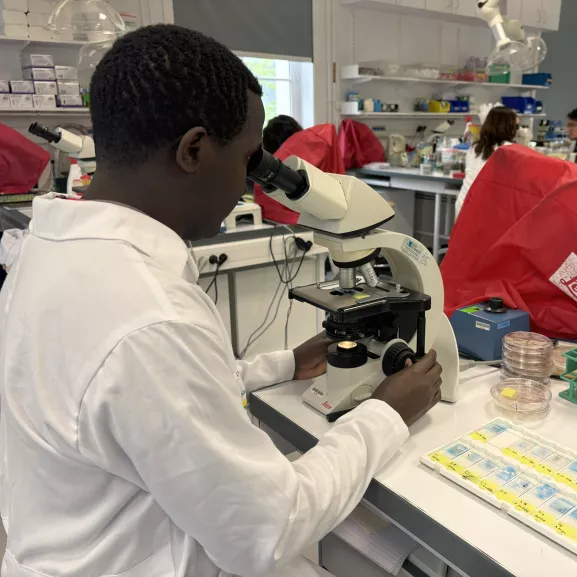
Behind these practical sessions lies a major collective effort. In Paris, the course is hosted at the Institut Pasteur Education Center, where theoretical instruction and practical sessions take place in facilities specifically designed for hands-on training. Scientists, educational coordinators, and technical teams combine their expertise to prepare, several weeks in advance, the cultures, equipment, and workshops that enable participants to learn in conditions closely reflecting day-to-day clinical and academic practice in France and internationally.
Finally, ongoing exchanges between students and French, European, and international specialist instructors allow participants to compare practices, discover different diagnostic approaches, and build a lasting network of medical biologists and scientists. It is this combination of academic excellence, hands-on training, and international outlook that continues to underpin the course’s reputation today.
International Reach and Current Perspectives (2017–Present)
The Medical Mycology Pasteur Course is no longer limited to Paris, thanks in particular to the Pasteur Network, an alliance of more than 30 institutes across 25 countries and five continents, fostering a dynamic and diverse community of knowledge and expertise. Since 2017, the course has alternated between the French capital and other sites within the network, including the Institut Pasteur de Dakar, the Institut Pasteur d’Algérie, and the University of Cape Town. At the latter, the program focuses primarily on fungal infections complicating HIV infection, in partnership with the London School of Hygiene & Tropical Medicine and the University of Exeter, providing training tailored to both local and international contexts.
The scientific and public health impact is considerable: the course trains experts equipped to address global challenges, including opportunistic infections in immunocompromised patients and neglected fungal diseases.
Since 2019, the course has been co-directed by Olivier Lortholary, a clinician-scientist at Necker–Enfants Malades University Hospital, who is actively involved in clinical practice and research in medical mycology, and Dea Garcia-Hermoso, Expert Research Engineer, responsible for the microbiology of pathogenic filamentous fungi at Institut Pasteur in Paris. Together, they contribute to both hospital medicine and research and serve as deputy directors of the National Reference Center for Invasive Mycoses, headed by Fanny Lanternier.
The program continues to evolve to incorporate the latest advances in medical mycology, from new diagnostic methods and emerging infections to antifungal resistance and advances in research on the biology of pathogenic fungi. True to the course’s longstanding tradition, it also draws on a team of internationally recognized experts in their respective fields, from Institut Pasteur as well as other French and European institutions. Each instructor brings specialized expertise, ensuring that the course reflects the latest developments in research and clinical practice.

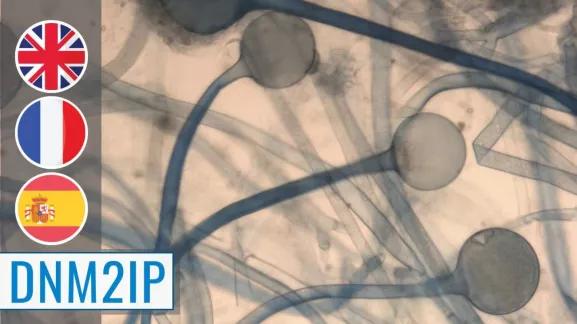
This commitment to making knowledge accessible to as many people as possible also took shape with the creation, in 2021, of the Pasteur MOOC Medical Mycology. Free and accessible worldwide, this online course, overseen by the two co-directors, provides an introduction to the fundamentals of fungal taxonomy, ecology, and diseases.
As of 2026, it has attracted more than 9,600 enrollments.
Complementing the Medical Mycology Pasteur Course, this MOOC significantly expands access to medical mycology training. It enables students, biologists, clinicians, and healthcare professionals to acquire foundational knowledge wherever they are, while extending Institut Pasteur’s expertise to an ever-growing international community.
The Medical Mycology MOOC is unique worldwide. From its launch in 2021, the international community embraced this training resource and helped spread the word, particularly across Latin America and Africa. Today, it provides professionals around the world with free access to high-level training in medical mycology.
Discover the MOOC
Training Experts to Meet Tomorrow’s Challenges
Since its creation, more than 1,200 mycologists have been trained through the course. The Medical Mycology Pasteur Course combines scientific heritage, hands-on expertise, and innovation: it maintains its high scientific standards and intensive practical training while adapting to today’s educational needs, further establishing its position as an international benchmark for mycologist training.
The landscape of invasive fungal infections has changed profoundly over the past several decades. The growing number of immunocompromised populations and the rise of antifungal resistance have contributed to the emergence of previously overlooked pathogens and disrupted established treatment strategies. Climate change, by expanding the geographic range of endemic mycoses, adds another layer of complexity to this ever-evolving epidemiological landscape.
Faced with these challenges, recognized by the World Health Organization in its first Fungal Priority Pathogens List, published in 2022, medical mycology training is more essential than ever. Rigorous training for clinicians, biologists, and researchers, such as that historically provided by Institut Pasteur, is fundamental to our ability to identify these emerging pathogens, understand their resistance mechanisms, and respond to them effectively.
By continuing its commitment to training, Institut Pasteur is helping prepare the specialists who will address the current and future challenges of medical mycology.
[1]: Chapter by E. Drouhet, “Historical Introduction: Evolution of Knowledge of the Fungi and Mycoses from Hippocrates to the Twenty-First Century,” in Topley and Wilson’s Microbiology and Microbial Infections, 9th ed., Vol. IV, Medical Mycology. Editors: L. Ajello and R. Hay. Arnold, London, 1998.


