Education Partners

A network of partners of excellence

Partners in pre-doctoral programs
The Institut Pasteur offers several programs that allow middle and high school students and univeristy students to discover research, gain initial laboratory experience and develop their scientific project in an international environment.
These programs are based on partnerships with universities, associations, foundations and institutions committed to training through research.
European and International Partners
-
Amgen Scholars: The Amgen Scholars Program, developed in partnership with Amgen France and the Amgen Foundation, enables undergraduate students from European universities to undertake an eight-week research internship with a team at Institut Pasteur.
-
Erasmus+: Through the Erasmus+ program, Institut Pasteur welcomes students from European universities for research internships and international mobility opportunities.
- Ludwig-Maximilians-Universität München (LMU) – Munich, Germany: A partnership within the STEP program, integrated into the MD-PhD program.
- Monash University – Melbourne, Australia: A dedicated collaboration established to foster research internship opportunities and international mobility experiences.
National Partners
-
Médecine-Sciences Program (ENS): In partnership with École normale supérieure (ENS), Institut Curie, and ENS/PSL, this integrated curriculum, part of Institut Pasteur’s MD-PhD Program, offers an interdisciplinary pathway combining medicine and science. It enables students to develop dual expertise and gain early exposure to research. Institut Pasteur welcomes students as part of their scientific training and research internships, thereby contributing to the training of future physician-scientists.
- Mines Paris – PSL: This partnership enables Institut Pasteur research teams to host engineering students and master’s students for research internships and biomedical engineering projects addressing key challenges in biology and health.
- L’Arbre des Connaissances Association: This partnership was established as part of the Apprentis Chercheurs Program, which aims to introduce middle and high school students to science and scientific research.

Partners in Doctoral Programs and Graduate Schools
Institut Pasteur hosts more than 370 PhD students in its laboratories each year. These doctoral training pathways are developed in collaboration with universities, doctoral schools, Graduate Schools, and healthcare institutions in France and internationally.
These partnerships provide PhD students with an international scientific environment and access to recognized doctoral training, while enabling them to develop their research projects within Institut Pasteur’s research teams.
Universities and Doctoral Schools
- Université Paris Cité
- Sorbonne Université
- Université Paris-Saclay
- Université PSL
- Doctoral Schools
Graduate Schools
- One Health Emerging Infectious Diseases (1H-EID)
- Antimicrobial Resistance (AntiREs)
- Genetics and Epigenetics: Nouvelle École (G.E.N.E)
Hospital and Scientific Partners
- AP-HP, notably through the MD-PhD Program
- Institut Imagine, through the Imagine International Doctoral Program (PPU Imagine)
International University Partners
- University of Oxford, through the Oxford International Doctoral Program (PPU Oxford)
- University of Szeged, through the MD-PhD International Doctoral Program (PPU MD-PhD)
These collaborations enable researchers hosted at Institut Pasteur to pursue their PhDs through recognized doctoral training programs and develop international career paths combining research, education, and mobility. They also provide strategic benefits for Institut Pasteur’s research teams by facilitating access to competitive doctoral fellowship and PhD contract opportunities, while fostering the integration of early-career researchers into their research projects.
Discover
European University Alliances
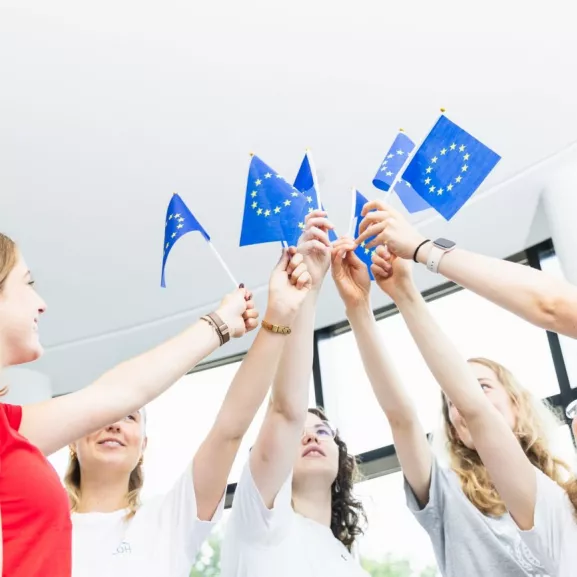
Institut Pasteur is a member of two European University Alliances, which promote mobility, academic collaboration, and the development of new educational programs across Europe.
EUGLOH – European University Alliance for Global Health
Institut Pasteur is EUGLOH’s first official “Core Partner”, within the European University Alliance for Global Health. This partnership aims to develop joint activities and training programs in global health, as well as new mobility opportunities for students and graduates wishing to pursue further studies in life sciences and health.
This collaboration builds on existing links with several EUGLOH member universities, including Université Paris-Saclay, the University of Szeged, and Ludwig-Maximilians-Universität München. It spans several areas, including undergraduate education, doctoral training, international mobility, and research.
→ Discover the EUGLOH Partnership
Circle U.
Institut Pasteur is also a member of Circle U., a European University Alliance that promotes collaboration between higher education institutions in research, education, and European citizenship.
This collaboration builds in particular on Institut Pasteur’s close partnership with Université Paris Cité.

Partners in Strategic Education Projects
Institut Pasteur participates in national, European, and international projects aimed at strengthening scientific and public health expertise, developing new training programs, and promoting knowledge sharing.
These projects bring together universities, research organizations, public health institutions, and international organizations.
European Centre for Disease Prevention and Control (ECDC)
Institut Pasteur is a consortium partner in the GenEpi-BioTrain program, led by the European Centre for Disease Prevention and Control (ECDC), which contributes to strengthening expertise in genomic epidemiology and bioinformatics for public health.
→ Discover the GenEpi-BioTrain Program
CAIDERA (Central African Infectious Disease and Epidemics Research Alliance)
Institut Pasteur is involved in CAIDERA, an educational consortium dedicated to infectious diseases and the development of innovative training approaches.
Funded by the German Academic Exchange Service (DAAD), the project is led by the University of Tübingen and brings together several international academic and scientific partners. Key consortium leaders include the University of Tübingen, Institut Pasteur, the Centre de Recherches Médicales de Lambaréné (CERMEL), and the Pasteur Network. The consortium also includes the Central Africa Clinical Research Network (CANTAM) and the University of Health Sciences of Libreville, Gabon.
Central Africa bears a disproportionate burden of infectious diseases, while local training for researchers and healthcare professionals remains a major bottleneck. Within the CAIDERA consortium, Institut Pasteur in Paris plays a central role by contributing its expertise in online education. Drawing on more than ten years of experience, its Digital Education Hub offers free online courses (MOOCs) in English and French, reaching nearly 30,000 learners each year and providing certification opportunities. It has notably developed a course on neglected tropical diseases and updated its course on malaria, both priority health challenges for the region.
Through these advanced training resources, Institut Pasteur contributes to the long-term strengthening of scientific and healthcare capacity in Central Africa.
→ Discover the CAIDERA Project
Open Medical Institute (OMI)
Since 2015, Institut Pasteur has collaborated with the Open Medical Institute (OMI), a non-profit organization dedicated to international medical education and knowledge exchange among healthcare professionals.
This collaboration has notably led to the development of international OMI–Pasteur courses for physicians from around the world.
Training programs developed through this partnership include:
→ Pandemics: Origin, Response, and Preparedness
FEXTE CAP-Salud
The CAP-Salud program is a French-Cuban scientific partnership involving Institut Pasteur (Paris and Guadeloupe), the Pedro Kourí Institute (IPK), and Cuba’s National Institute of Hygiene, Epidemiology and Microbiology (INHEM).
The program aims to train Cuban teams in the use of new laboratory equipment and to jointly design research projects of mutual interest. CAP-Salud follows a One Health approach, integrating human, animal, and environmental health. Its activities will strengthen Cuba’s research and diagnostic capacities in addressing emerging pathogens.
Projects focus on biobanking, pathogen sequencing and molecular surveillance, vector-borne diseases, antimicrobial resistance, environmental and food surveillance, and epidemic preparedness.
Training will take place in France, Guadeloupe, and Cuba through courses, mobility opportunities, and expert mentoring.
The program therefore deepens scientific collaboration between France and Cuba and paves the way for more ambitious partnerships.
OpenAIRE
Institut Pasteur collaborates with OpenAIRE to develop training activities in Open Science, notably through the OpenPlato learning platform, targeting students, PhD candidates, and early-career researchers.
→ Learn More About the OpenAIRE Partnership
Other Projects and Collaborations
Institut Pasteur also contributes to several strategic projects with national, European, and international partners, including:
- French Development Agency (AFD): In particular, through the international Alliance SHS Afrique project, which includes the development of the Social Sciences and Epidemic Management MOOC.
These collaborations contribute to capacity building, educational innovation, and the dissemination of scientific knowledge in France and internationally.

University and Scientific Partners of Pasteur Courses
The Pasteur Courses are part of a collaborative network involving universities, Graduate Schools, and research and healthcare institutions. These partnerships help integrate selected Pasteur Courses into university curricula, offer academic modules, degrees or certifications, and develop joint training programs.
Several major university partners are involved in different Cours Pasteur, depending on the discipline and training pathway.
- Université Paris Cité: Université Paris Cité is a key partner of the Cours Pasteur, with collaborations covering microbiology, virology, genomics, molecular and cell biology, immunology, neuroscience, and public health.
- Sorbonne Université: Collaborations with Sorbonne Université, another major partner, cover microbiology, genomics, molecular and cell biology, immunology, and infectious diseases.
- Université Paris-Saclay: Université Paris-Saclay partners with the Cours Pasteur in areas including molecular and cell biology, genetics, genomics, and immunology.
- Université PSL and École normale supérieure (ENS): Collaborations with PSL and ENS include training in biology, genomics, molecular biology, and neuroscience.
- Graduate Schools: Graduate Schools also provide an important framework for partnerships and for integrating the Cours Pasteur into research-oriented training pathways. Depending on the discipline and training pathway, the Cours Pasteur are associated with the G.E.N.E., AntiREs, and 1H-EID Graduate Schools.
- Cnam and EHESP: Institut Pasteur works with Cnam and EHESP to develop degree-awarding programs, notably the Specialized Master’s in Public Health – Global Health Specialization, Pasteur-Cnam-EHESP, a training pathway designed for professionals.
Other Scientific and Educational Partners
Some courses are also developed in collaboration with scientific institutions, medical organizations, and international networks, including:
- Institut de l’Audition / IHU Reconnect, for the Cours Pasteur Hearing: From Mechanisms to Restoration Technologies.
- Institut Curie, through collaborations in education and research, including the Cours Pasteur Molecular Biology of the Cell and Molecular Genetics and Epigenetics.
- University of Geneva, Swiss Biobank Platform, and HSeT Foundation, for the course Biobanking.
- Université Paris Cité’s Graduate School Innovative Therapies in Cancerology, for the online course Immunological Therapeutics: Antibodies – Cytokines – Vaccines – Transplantation and Cell Therapy.
- PROMISE, Université de Limoges, and Université de Tours, for the university diploma (DU) Antimicrobial Resistance and the One Health Approach.
- WHO, WOAH (formerly OIE), FAO, GARC, Pasteur Network, the Universities of Lausanne and Glasgow, and the HSeT Foundation, for the International Course on Rabies Surveillance and Control.
- École normale supérieure (ENS), for the Cours Pasteur Fundamental Immunology.
Partnership and accreditation arrangements may vary depending on the training program. Partners contributing to a specific course or providing targeted support may be listed directly on the relevant course webpage.
Discover

Partners and Supporters of Institut Pasteur’s Digital Education Initiatives
The development of MOOCs, webinars, online training programs, and digital learning resources relies on collaborations with academic, institutional, and private-sector partners.
These partnerships help develop new educational content, expand its reach, and make scientific resources accessible to a broader audience in France and internationally.
Among the partners and supporters involved in these initiatives are:
- Fondation IPSEN, which has supported several MOOCs, including some of Institut Pasteur’s earliest online courses, as well as the development of the Institut Pasteur Digital Diploma in Infectious Diseases (DNM2IP).
- Fondation Veolia, notably in connection with the Water-Borne Infectious Diseases MOOC.
- France 2030 and the EID Graduate School, for the following MOOCs: Viral Outbreaks and Pandemics: A One Health Approach, Vaccinology, Viral Hepatitis, Medical Entomology, and Biobanking.
- Pasteur Network, notably for the MOOCs Rabies, Social Sciences and Epidemic Management, and Research Management in Outbreak Preparedness and Response.
- Ministry for Europe and Foreign Affairs (MEAE), particularly in connection with the Tuberculosis and Biobanking MOOCs, as well as through exchanges with science attachés at French embassies abroad and with the Ministry to promote Institut Pasteur’s educational activities.
- France 2030 and the PROMISE consortium, for the Resistance to Antibacterial Agents MOOC.
- GSK, for the Vaccinology MOOC and the Malaria MOOC.
- Institut Imagine, for the Epigenetics MOOC.
- DAAD, through the CAIDERA project, notably for the Neglected Tropical Diseases and Malaria MOOCs.
- Labex IBEID, in connection with the Emerging and Re-emerging Viruses, Clinical Trials in Infectious and Tropical Diseases, and Malaria MOOCs.
- The Institut Pasteur Alumni Association (AAEIP), a long-standing partner in the education webinar series.
Depending on the project, these organizations contribute as scientific or educational partners, funders, or supporters of content production and dissemination.
Discover
Partners, Financial Supporters, and Tailored Services
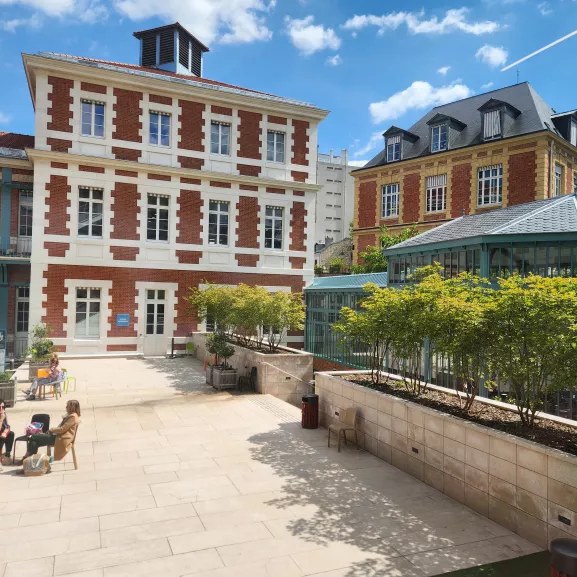
The development of education at Institut Pasteur also benefits from the support of foundations, institutions, and private-sector partners.
These contributions help fund student scholarships, training programs, digital learning projects, and educational initiatives, while promoting access to high-quality educational opportunities.
Transcription
Transcription
Transcription
Tailored Training Services
Institut Pasteur’s Education Department also supports companies and private organizations in developing their teams’ skills through continuing education programs tailored to their specific needs and challenges.
Looking to develop a training program? Contact us to discuss your project.
Transcription
Support Education
Accommodation and Housing Partners
Accommodation for students, PhD candidates, interns, and training participants is facilitated through partnerships with specialized housing providers.
These collaborations help improve the experience of those coming to Institut Pasteur, particularly participants in international programs and mobility schemes.
- Cité internationale universitaire de Paris
- Nexity Studéa
A Community of Partners Supporting Education
Through these collaborations, Institut Pasteur is building a learning ecosystem that embraces research, innovation, and international engagement.
Universities, healthcare institutions, research organizations, European alliances, international institutions, foundations, and companies each contribute to the development of educational programs that enable students, PhD candidates, researchers, and professionals to enhance their skills and prepare for the major scientific and public health challenges of tomorrow.