Pasteur 2030
Since its inauguration in 1887, the Institut Pasteur has been pushing forward medical research and using its expertise to protect human health in the long term.
The Institut Pasteur draws on all its resources to face a growing range of health risks, including infectious diseases, antimicrobial resistance, aging, climate disruption and neurodegenerative diseases.

Pasteur 2030: our strategy for protecting global health
Infectious diseases still cause around 15 million deaths per year, while bacterial antimicrobial resistance (i.e. bacteria that are resistant to treatment) could cause 39 million additional deaths by 2050. As for climate disruption, this is redrawing the map of outbreaks and already exposes 80% of the world's population to mosquito- and tick-borne diseases. Chronic diseases and cancer are constantly gaining ground, with cancer alone accounting for 10 million deaths every year worldwide.
Through Pasteur 2030 – our strategic plan for 2030 – we are structuring our scientific approach around the key health threats of our times and restating our ambition to be at the forefront of fighting infectious diseases, while also speeding up responses to new health and societal challenges.
A scientific vision to meet key public health challenges
We are guided by four key principles: scientific excellence, interdisciplinary research, scientific freedom and long-term support for current and future scientists.
A global outlook and willingness to take risks are two further factors essential for fostering innovation and identifying meaningful responses to today's key scientific and health challenges. We encourage this approach through an internal culture that actively promotes diversity, equity and inclusion within our teams.
These human-centered values allow us to work towards meeting three goals with a significant impact on society:
- Improving our understanding of diseases by continuing to champion basic research focused on understanding biological mechanisms and processes
- Identifying solutions aimed, first and foremost, at tackling infectious diseases and their effects, using our key expertise in microbiology, infectiology and immunology
- Sharing knowledge and promoting scientific values among society
4 research priorities to meet global health challenges
Our teams focus their medical research on four key priorities reflecting the main health challenges of our time:
1- Tackling infectious disease threats and antimicrobial resistance
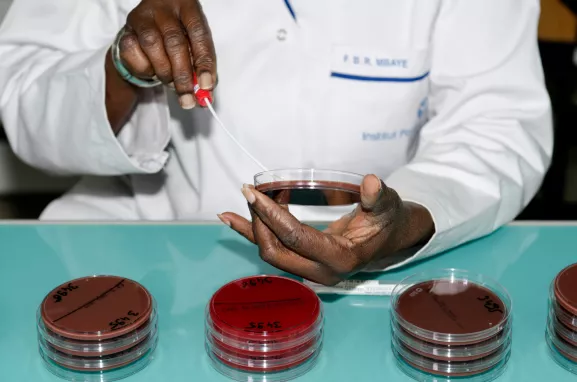
Fighting infectious diseases and resistance to anti-infective drugs (antibiotics, antivirals, antifungals, antiparasitics)
Infectious diseases and antimicrobial resistance are among the top global health threats.
Infectious diseases remain one of the world's main causes of death, killing around 15 million people every year according to the World Health Organization (WHO).
1 billion
neglected diseases cause 1 billion infections every year
Despite remarkable progress, a heavy toll is still taken on humanity by HIV/AIDS (630,000 deaths, 39 million infected individuals), tuberculosis (1.3 million deaths, 10 million new cases in 2022) and malaria (619,000 deaths, 247 million cases in 2022).
At the same time, neglected diseases cause 1 billion infections every year. The term "neglected diseases" relates to illnesses that mainly affect poor communities in tropical regions. They are caused by various pathogens (viruses, bacteria, parasites, fungi or toxins) and are linked to severe health, social and economic consequences. Examples include Buruli ulcers, Chagas disease, dengue and chikungunya, human African trypanosomiasis, leishmaniasis, leprosy and rabies. Just as alarming is the fact that antimicrobial resistance currently causes 1.27 million deaths per year, which could rise to 39 million by 2050.
Our aim at the Institut Pasteur is to identify, understand and monitor the pathogens responsible for these diseases, while contributing to the development of innovative treatments and vaccines capable of curbing them.
2 - Climate disruption and health: understanding the new risks

Understanding and responding to the impact of climate change and the environmental transition on health and diseases
WHO estimates that, between 2030 and 2050, climate change could lead to 250,000 additional deaths per year linked to malnutrition, malaria, diarrhea and heat stress, with projected economic costs of €24 billion per year.
700 000
Vector-borne diseases are already responsible for over 700,000 deaths per year
Vector-borne diseases, spread by carriers such as mosquitoes, ticks and flies, are already responsible for over 700,000 deaths per year, with approximately 80% of the world's population currently exposed to the risk of contracting one or more of these diseases. The tiger mosquito (Aedes albopictus), previously confined to tropical regions, has migrated to temperate climates, increasing the risk of disease transmission in Europe and North America. Its reproduction rate has risen by 40% since the 1950s.
Climate disruption is also exacerbating disruption to ecosystems, making diseases previously limited to animals more easily transmissible to humans. By 2070, at least 4,000 new instances of pathogens crossing the species barrier are expected worldwide, which will inevitably lead to future outbreaks.
Faced with the impact of climate disruption and the risks incurred by environmental upheaval, our aim is to understand and mitigate the effects of these two phenomena on human health.
3 - Severe chronic diseases: understanding their mechanisms to improve treatment
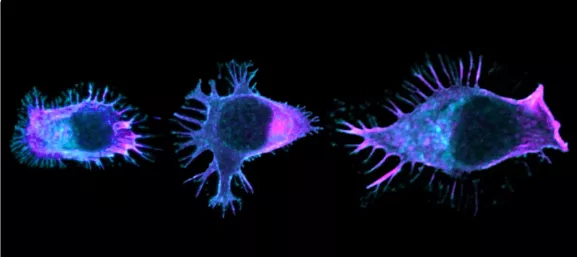
Investigating and acting on the mechanisms underlying severe chronic diseases and inflammatory diseases
The prevalence of chronic inflammatory diseases and non-communicable diseases (cancer, neurodegenerative diseases, diabetes, high blood pressure, etc.) is rising at an alarming rate in our societies.
35 million
35 million new cases of cancer will be diagnosed by 2030
According to WHO, 50% of the world's population could be affected by asthma or allergies by 2050. Cancer continues to take an increasingly heavy toll at global level and is already the second-leading cause of death worldwide, with almost 10 million deaths in 2020 (one in every six deaths). Its incidence is moreover set to skyrocket in the coming years. It is estimated that 35 million new cases of cancer will be diagnosed by 2030, an increase of 77% on 2022. And according to The Lancet, the cancer death rate is expected to almost double by 2050.
These diseases are partly linked to environmental, nutritional and infectious factors that lead to long-term disruption of the body's homeostasis, creating "tissue scarring" that increases vulnerability to severe pathologies. The Institut Pasteur is investigating the mechanisms underlying non-communicable and inflammatory diseases. Our aim is to understand the causes of these diseases to improve prevention and treatment.
4 - Child health and aging: targeted preventive and therapeutic approaches
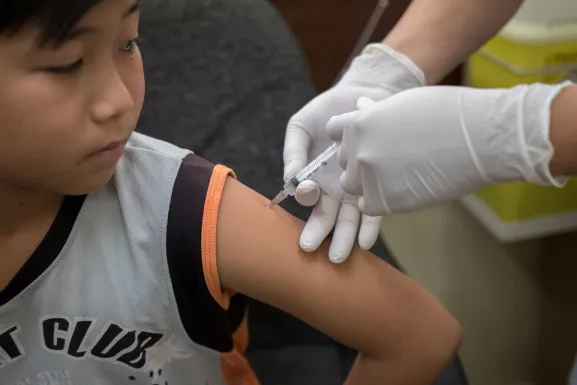
Exploring physiology and immune response at key life stages
Our scientists explore physiology and immune response at the key life stages of early development (focusing on the mother-child relationship) and aging. Any disruption of the mother-child relationship and the microbiome is linked to an increase in cases of asthma, eczema, obesity, diabetes and cognitive disorders.
At the other end of the age pyramid, WHO predicts that the population of people aged 60 and over will almost double between 2000 and 2050. An understanding of how our immune systems change with age (by becoming less responsive to vaccines, more susceptible to chronic inflammation, and less able to fight off infection) is essential for developing treatments tailored to older people.
We aim to develop targeted preventive and therapeutic approaches for these particularly vulnerable life stages.
Psst…! Are you a journalist?