Structural Biology and Chemistry

The structure of a molecule is intricately linked to its function. The units and technological platforms in the Department of Structural Biology and Chemistry focus their research on the 3-dimensional organization, dynamics and functions of macromolecular complexes and machineries in vitro and in cells. In addition, the department is involved in the synthesis of small molecules and biomolecules for applications, especially those relevant for human diseases, and developing transdisciplinary approaches and original methods with a focus on AI. This interdisciplinary research reveals vital information for the development of new therapeutics, diagnostics and vaccines. The research carried out in the department includes antimicrobial resistance, emerging infectious diseases, cancer and neurodegenerative diseases.
Our key research in 2025
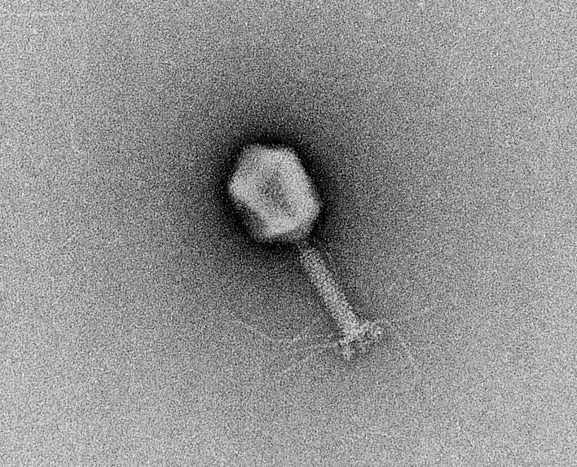
Phage structure and host attachment
We investigated the structure and function of the flagellotrophic bacteriophage using cryo-electron microscopy and machine learning. We highlighted the highly ordered structural core of the phage and the flexible capsid fibers that interact with the flagella of its host. Phage therapy is an emerging alternative to treat antibiotic-resistant pathogens.
Communications biology, 6 December 2025
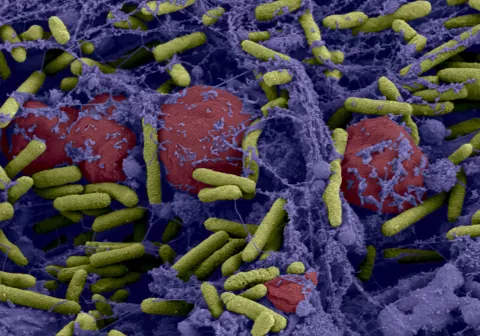
Interplay between Pseudomonas effectors in cells
Pseudomonas aeruginosa is a major opportunistic pathogen for humans. Using a molecular syringe, the bacterium injects effectors into host cells to promote infection. We revealed that these effectors interact with each other inside host cells and uncovered an unexpected mechanism that allows the bacterium to fine-tune the infection process.
Nature communications, 2 December 2025
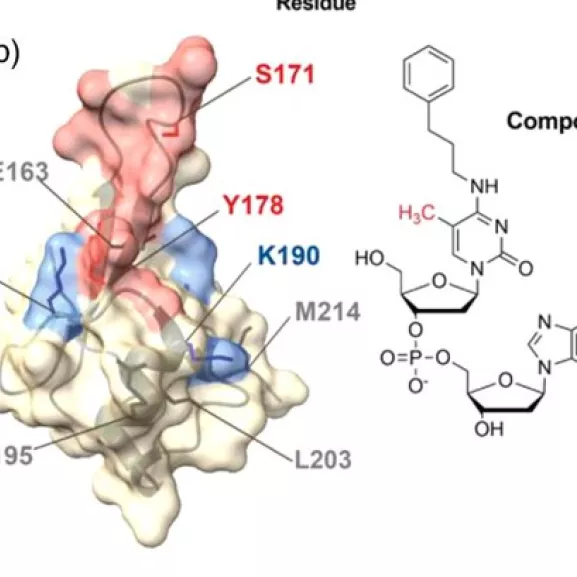
Hijacking methylated DNA readers targets silent genes
DNA methylation is a "chemical post-it" on DNA indicating whether genes should be read. The MBD2 protein reads these marks and silences genes, including tumor suppressors in cancer. Combining organic chemistry with biophysical assays, we obtained the first compounds blocking MBD2 binding to methylated DNA, opening avenues toward new therapeutic approaches.
Angewandte Chemie International Edition, 24 April 2025
Nos principaux travaux précédents
In 2024
Molecular motors to feed bacteria
Molecular motors use chemical energy to transport the nutrients key to the survival and pathogenicity of bacteria. Through a combination of structural biology and microbiology, this study has revealed their dynamics for the very first time. The findings have the potential to unlock new antimicrobial and biotechnological possibilities.
Nature communications, 6 January 2024
Advancing Cryo-EM Structural Modeling with EMMIVox
EMMIVox is a novel computational method that translates cryo-electron microscopy data into accurate structural models, balancing data accuracy with realistic physics. It captures structural variations often missed by other methods, improving model quality and helping scientists better understand complex biological structures and functions.
Plos Computational Biology, 15 July 2024
In 2023
Elucidation of the corynebacterial cell cycle
Joint work between the Institut Pasteur in Paris and Institut Pasteur de Montevideo led to a breakthrough in the understanding of the bacterial cell cycle vital for some bacterial pathogens, offering new potential tools to combat infectious diseases like tuberculosis, leprosy or diphtheria. The discovery shows that a metabolic protein conserved in all organisms acquired new functions in those pathogens to link the essential cell division and growth machineries, showcasing life's remarkable adaptability.
Nature Microbiology, 7 September 2023
Artificial codons for DNA synthesis
Polymerases are enzymes involved in DNA replication during which nucleotides, the building blocks of DNA, are added one by one by these enzymes. In this article, we explored the possibility of synthesizing modified DNA three-by-three using artificial trinucleotides. This approach is very promising to synthesize therapeutic oligonucleotides in a more efficient and sustainable manner and for applications in synthetic and chemical biology.
Chemical Communications, 15 November 2023
Molecular basis for proofreading by family-D DNA polymerases (or PolD)
Reliable, heat-stable DNA polymerases are required for PCR, a technique widely used in human health research. The team led by Ludovic Sauguet is investigating PolD, a DNA polymerase isolated in ocean hot springs. In collaboration with New England Biolabs, the scientists have determined the structure of PolD at atomic level, revealing a novel fidelity mechanism which paves the way for the design of new biotechnological tools.
Nature Communications, 14 December 2023