Genomes and Genetics

The department of Genomes and Genetics is developing an integrative approach to understand how genetic information is organized, regulated and evolves in living organisms. The department's scientists study the structure, dynamics and diversity of genomes to identify the mechanisms governing gene expression, organism adaptation and disease occurrence. The teams combine genomics, experimental genetics, bioinformatics and large-scale in silico data analysis to explore the workings of biological systems at the genome scale. The research activity of the department's 12 teams, including the Biomics core facility dedicated to high-throughput genomics approaches, focuses on three key areas:
- Organization and regulation of genomes
- Genetic diversity and evolution
- Genetics of diseases and host-pathogen interactions
Our key research in 2025
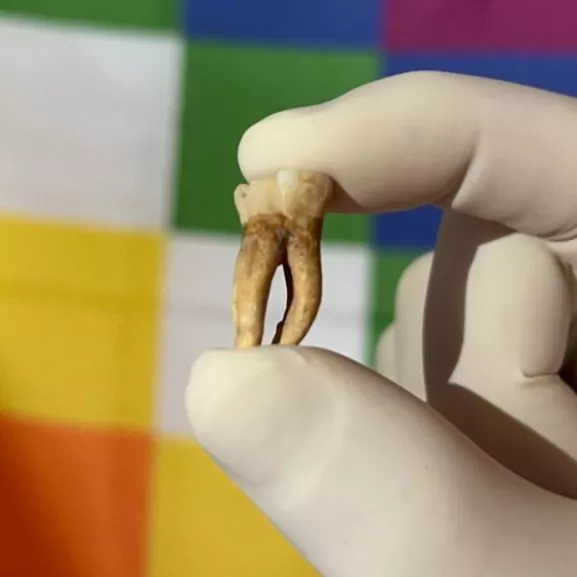
Another history of leprosy in the Americas
A study by the Microbial Paleogenomics Unit shows that a second species of bacteria responsible for leprosy – Mycobacterium lepromatosis – was already infecting humans more than 1,000 years ago in the Americas. The researchers analyzed the ancient and modern DNA, revealing that the disease may actually have a much older and more complex history on the American continent.
Science, 29 May 2025
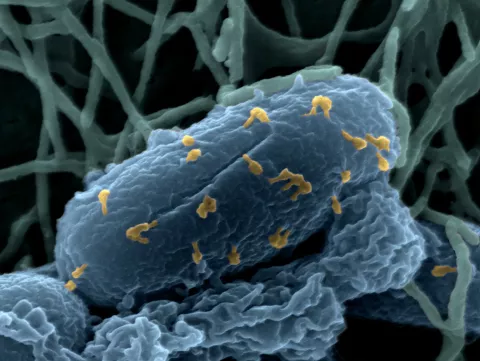
Integrons, reservoirs of bacterial immunity
Integrons – gene capture systems – enable bacteria to adapt quickly. Our studies have revealed that they represent a reservoir of compact and often previously unknown functional anti-phage systems. This discovery redefines the biological role of integrons in phage-bacteria coevolution dynamics and offers significant biotechnological potential.
Science, 8 May 2025
Foreign DNA submits to the rules of the host cell nucleus
We inserted bacterial chromosomes into the genome of yeasts – eukaryotic organisms – to show that the cellular machinery of the host spontaneously divides this foreign DNA into two types of chromatin, one active and the other silent, depending on its sequence composition. These two states do not intermingle in the nucleus, in a manner reminiscent of the nuclear compartments in metazoans.
Science, 6 February 2025
Our previous key research
In 2024
New integron insertion sites
Integrons are bacterial genetic elements that capture and express adaptation genes contained in cassettes. The integrase is a key enzyme that can insert these cassettes into a wide variety of sites of the bacterial genome outside of its classically known sites. These findings expand the role of integrons in bacterial evolution.
Nature Microbiology, 9 January 2024
Discovery of antiphage systems in humans
In comparing the evolutionary history of bacterial and human proteins, our laboratories identified novel human immune genes and confirmed their role through experiments.
Cell Host Microbe, 11 September 2024
In 2023
Who were the first ancestors of present-day fish?
Understanding the family tree of species is crucial for studying evolution. By analyzing the mutational and chromosome evolution patterns in newly sequenced genomes from early-branching fishes, we resolved a long-standing debate on the early evolution of teleost fishes, one of the most species-rich clades of vertebrates, including several model species for biomedical research (zebrafish, killifish).
Science, 9 February 2023
SARS-CoV-2, how the history of human populations influences their immune response
SARS-CoV-2 infection induces highly variable immune responses. Through single-cell RNA sequencing, this study reveals the role of cellular composition and genetic factors in this variability and enables the identification of variants under selection that contribute to disparities in the risk of severe COVID-19 between human populations.
Nature, 9 August 2023
Predisposition to Zika virus susceptibility
Zika virus is responsible for human infections with variable severity. To identify susceptibility genes, we used mice of the genetically diverse Collaborative Cross. By combining genetic mapping, RNAseq and the quantitative complementation test, we showed that the high susceptibility of the CC071 strain results from a mutation in the Irf3 gene and other loci under investigation.
Plos Pathogens, 21 September 2023