Microbiology

The department of Microbiology is studying the biological mechanisms governing the workings of bacteria, archaea and their viruses. Our research explores the function of prokaryotes and their viruses using mechanistic and integrative approaches. The department is structured around 16 research teams, three National Reference Centers and three collections, and focuses its research on five broad areas:
- Prokaryotic evolution and genetic biodiversity
- Cellular and molecular biology and microorganism physiology
- Virulence and environmental adaptation
- Microbiota role and dynamics
- Antimicrobial resistance and novel therapeutic strategies
Our key research in 2025
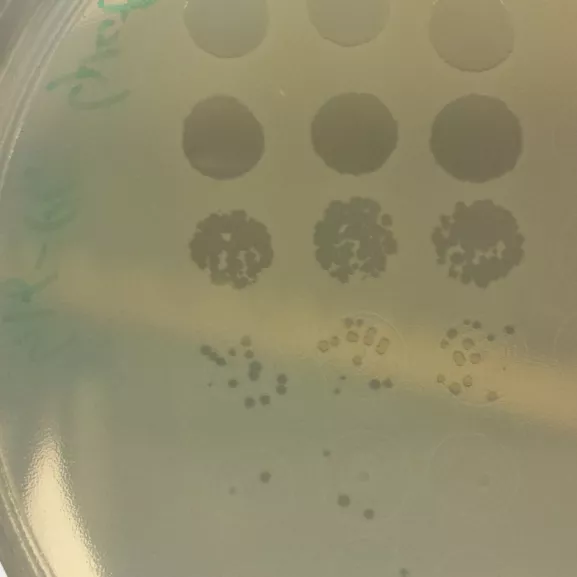
Macrophages negatively impact phage therapy efficacy
Phage therapy is an antibacterial approach that can help patients infected with antibiotic-resistant bacteria. Research by the Department of Microbiology's Bacteriophage, Bacterium, Host team showed that alveolar macrophages limit the efficacy of this treatment by attacking bacteriophages.
Nature communications, 1 July 2025
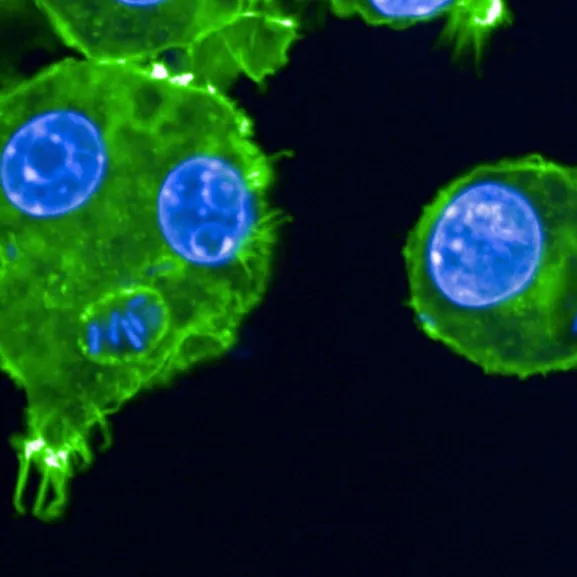
Plague evolved to facilitate spread
This article shows that late in the three major plague pandemics the bacterial pathogen Yersinia pestis carried the same mutation that attenuated its virulence, allowing it to persist in rodent populations that were more isolated and fragmented than at the start of the pandemics.
Science, 29 May 2025
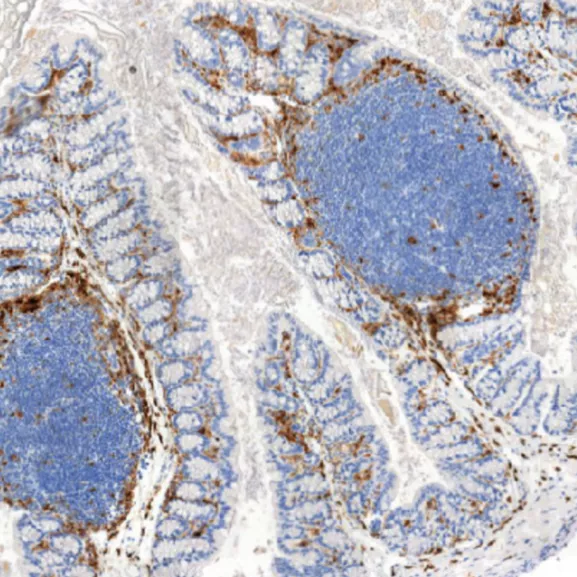
Is your microbiota sensitive to food additives?
Why do certain food additives make some people sick but not others? The answer lies in your gut microbiota! This study developed a way of predicting the sensitivity of a given gut microbiota to certain food additives. This is a significant discovery that highlights the need to adapt our diet and paves the way for personalized nutrition!
Gut, 27 January 2025
Our previous key research
In 2024
Discovery of a family of bacterial defense systems
A defense system was discovered in Escherichia coli bacteria by a PhD student and his supervisor Isabelle Rosinski-Chupin. In this system, the bacteria eliminate a DNA molecule carrying an antibiotic resistance gene, or plasmid, but not before the resistance gene has been integrated into the bacterial chromosome. In defending themselves, the bacteria establish antibiotic resistance. This discovery is a step towards improving understanding of the spread of antibiotic resistance, a major public health challenge.
Nature communications, 15 May 2024
Viral RNA neutralizes bacterial defenses
Phages are viruses infecting bacteria that defend themselves with immune systems such as PARIS. This system prevents the phage from producing its proteins by destroying a bacterial transfer RNA. But some phages outmaneuver this defense by producing a modified version of the RNA, enabling them to establish infection anyway.
Nature, 7 August 2024
In 2023
Off-target effects of Cas9 on bacterial gene expression
Powerful genetic manipulation tools derived from the CRISPR-Cas9 system can be used to modify gene expression. Gene specificity represents a key challenge, since so-called off-target effects can lead to non-specific effects, skewing the interpretation of experimental results. This study conducted on bacteria revealed an unexpected effect: Cas9 can block gene expression unpredictably by binding non-specifically upstream of genes.
Nucleic Acid Research, 24 April 2023
How the respiratory tract microbiome influences the severity of bacterial pneumonia
Scientists analyzed the inter-kingdom (bacteria, archaea, fungi, protozoa) diversity and composition of the respiratory tract microbiome (RTM) of patients with pneumonia due to Legionella pneumophila. After antibiotic treatment, the empty RTM niche is rapidly occupied by other bacteria. Thus, high biomass emerges as a biomarker for secondary/co-infections. The interplay of RTM equilibrium, pathogen load dynamics, and clinical interventions play a critical role in the recovery of pneumonia patients.
Cell Reports Medicine, 19 September 2023
A bridge for phospholipid traffic
Understanding how bacteria build and maintain their cell envelope is a major area of investigation in the fight against pathogens. However, current knowledge is mostly based on a handful of models. Using the diderm Firmicute V. parvula, scientists have identified a novel mechanism responsible for phospholipid trafficking that forms a trans-envelope bridge between the inner and outer membrane and is widely distributed in Gram-negative bacteria.
Nature Communications, 23 November 2023