Methane and the Microbiome: The Institut Pasteur Files a Patent for an Enzyme That Targets Archaea

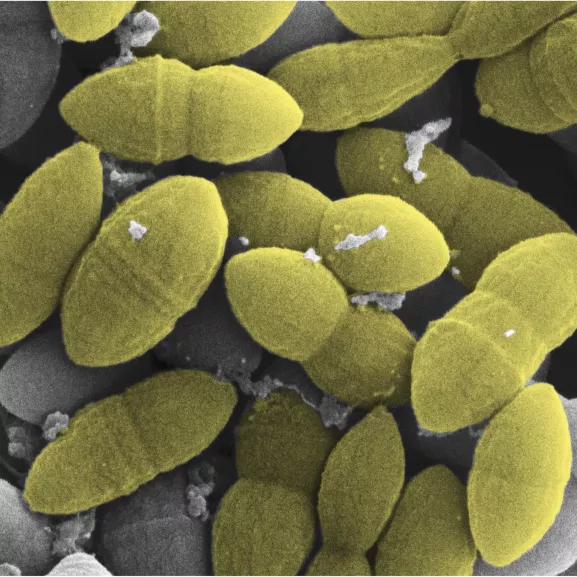
Archaea constitute a distinct domain of life, separate from bacteria and the cells that make up our own tissues. Although they were long mistaken for primitive bacteria because of their specific physiology and habitats, they are in fact profoundly different from bacteria and are more closely related to our own cells than to those of bacteria.
Archaea are inconspicuous microorganisms that are nonetheless ubiquitous in every environment:
- underwater volcanoes,
- oceans,
- soil,
- and even in our gut microbiota.
Among them, methanogenic archaea have a distinctive feature: they produce methane, a potent greenhouse gas, and play an active role in the carbon cycle.
Why was the cell wall of archaea so difficult to study?
Methanogenic archaea, which are capable of producing methane, possess a unique cell wall, historically referred to as pseudomurein—the archaeal equivalent of the peptidoglycan that surrounds bacteria. Its structure was first described nearly 50 years ago. But due to a lack of tools to break it down and analyze it precisely, this model remained poorly characterized.
How does the discovery of the ArmA enzyme change things?
The teams led by Simonetta Gribaldo and Ivo Gomperts Boneca at the Institut Pasteur have identified ArmA, the first enzyme capable of specifically targeting and cleaving archaeal peptidoglycan. This new molecular tool has thus made it possible to analyze the composition of the cell wall with unprecedented precision.
Working closely with Iñaki Guijarro’s team at the Pasteur Institute, the researchers discovered a new sugar, named ArmNAc, that had never been described before, and had to completely revise their understanding of the chemical organization of this cell wall. They also demonstrated that ArmA is essential for cell division: the enzyme ensures the separation of the two daughter cells during reproduction. The eponymous ArmA technology has led to a patent application.
A discovery that goes beyond basic biology
Methanogenic archaea are far from insignificant. They are stable components of the human and animal gut microbiota, and their role in our health is only just beginning to be explored. They also contribute to the global carbon cycle by naturally producing methane. Gaining a better understanding of their biology, growth, division, and the mechanisms governing their cell walls is a scientific priority.
By specifically targeting a structure unique to archaea, ArmA also opens up concrete avenues for application:
- controlling the production of methane, a potent greenhouse gas;
- optimizing biogas production;
- or modulating populations of methanogenic archaea in the animal and human microbiome.
This work is part of the “Human-Archaea” research project led by Simonetta Gribaldo, recipient of a Chair of Excellence in Biology and Health awarded to the Institut Pasteur in July 2025. This project aims to elucidate the mechanisms of growth and cell division in methanogenic archaea associated with humans—research that opens up a new field with direct implications for human and animal health.
Source:
A methanogen hydrolase reveals the structure of archaeal peptidoglycan, Nature, September 23, 2026. Robert Smith & Nika Pende, et al.
DOI: 10.1038/s41586-026-11028-y.
The scanning electron microscope image of M. smithii, shown earlier on this page, is taken from the scientific publication cited as the source.