How our microbiota affects our health
- #Virome
- #Microbiota
- #Microbiome

With approximately 40 trillion microorganisms, the gut microbiota is by far the most populous in our body. Yet, however dense this population may be, it is not immune to disruption: diet, stress, antibiotics, and pollutants all undermine its fragile balance. The resulting disorders have repercussions not only on our gut health but also, more surprisingly, on our mental health.
Insights into the gut microbiota
As Head of the Microbiome-Host Interactions laboratory, Benoit Chassaing explores mechanisms leading to gut microbiota disruption and their effects on our health, with a particular focus on the onset of certain chronic inflammatory diseases and colorectal cancers. His team has investigated the impact of emulsifiers, additives found in all types of food. These substances, used to improve the texture and extend the shelf life of processed products, are added to goods such as dairy and bakery products, ice cream and infant formula. "Our research clearly shows that emulsifiers bring about lasting changes in the quality of the gut microbiota. They play a role in reducing our microbial diversity and encouraging the development of certain types of "bad" bacteria. In an ambitious clinical trial, we recently demonstrated that in patients with Crohn's disease, reducing intake of these additives increased the chances of achieving remission," he explains.
The impact of these emulsifiers is by no means limited to individuals and can affect future generations. In mice, Benoit Chassaing's team demonstrated that emulsifier consumption during gestation can disrupt the gut microbiota of offspring from birth. This is thought to significantly increase susceptibility to chronic inflammatory gut disorders and obesity in adulthood.
See also


In vitro gut models shedding light on our microbiota
The laboratory developed an in vitro model consisting of 48 independent mini-microbiota reproducing conditions in the gut. This setup enabled Benoit Chassaing's team to observe variations in the sensitivity of these different gut ecosystems to carboxymethyl cellulose (CMC for those familiar), a very common emulsifier. Their research, published in Gut, revealed two major breakthrough findings: (1) we are not all born equal in our response to emulsifiers – some people are sensitive to them, while others are resistant; (2) a specific signature predictive of this sensitivity can be identified using a simple molecular assay.
"These discoveries could be used in the near future to determine an individual's sensitivity or resistance to emulsifiers so that everyone can be offered a personalized nutrition program," comments Benoit Chassaing.
An Ambitious Microbiome Program at Institut Pasteur: Integrative Microbiome Program at Pasteur (IM2P)
At Institut Pasteur, the study of host (ourselves, our body) and microbe interactions relies on a unique convergence of disciplines: molecular microbiology, infectious diseases, immunology, neuroscience and computational biology, among others. This multidisciplinary environment makes it possible to study microbiota and their host from the molecular scale to the whole organism, whether in a healthy individual or in a pathological context.
In order to coordinate these diverse activities across the Institut Pasteur campus and accelerate scientific progress, the Institut Pasteur launched its integrative microbiome program (Integrative Microbiome Program at Pasteur – IM2P). This new program will foster new scientific, industrial and philanthropic collaborations, and will consolidate integrative (from the molecule to the whole organism) and translational (from laboratory discovery to patient applications) research on the microbiome. Institut Pasteur is thus positioning itself as a world leader in research on this topic, at a time when the field is undergoing a major revolution: a transition to the clinic, driven by the wealth of accumulated and ongoing discoveries. This far-reaching program will also incorporate close collaborations with research institutes such as Institut Imagine, Institut Curie and Institut Gustave Roussy, as well as hospital institutions such as AP-HP. The ambitions and scope of this ambitious program will be presented at an international launch symposium to be held at the end of the year.
When our microbiota plays tricks with our brains
Could gut microbiota health affect brain function? For the team working on the "When Gut Bacteria Changes Brain Function" project led by Pierre-Marie Lledo, Head of the Institut Pasteur's Perception & Action Unit, this has been beyond question for the past several years.
Back in 2020, their research with Gérard Eberl's unit (Institut Pasteur) demonstrated in mice not only that the gut microbiota was linked with the brain, but it could also affect it through distinct biological mechanisms. More specifically, an imbalance in gut microbiota composition can lead to symptoms of depression by disrupting the endocannabinoid system or by causing tryptophan, an amino acid precursor to the "happiness" hormone serotonin, to virtually disappear. These chemical changes impair nerve activity in the hippocampus, the brain region behind memory formation and emotional regulation. The team's findings showed that in cases of gut dysbiosis (microbiota imbalance), removal of part of the vagus nerve, which connects the brain and gut, is sufficient to help guard against depression and cognitive decline.

In 2022, working alongside Gérard Eberl and Ivo Boneca's units (Institut Pasteur), the same team revealed "cross-talk" between gut bacteria and neurons in the hypothalamus (linked to appetite and body temperature regulation), with constant cross-talk between the gut and brain occurring under normal conditions. There is a risk of metabolic diseases (obesity, diabetes, etc.) if this axis is disrupted.
"All this research encourages us to explore brain functions not by focusing on the organ itself, as we have done for centuries, but by taking a much broader view of the complex and interdependent mechanisms underlying mental function based on interaction between the brain and the endocrine, metabolic or bacterial system," concludes Pierre-Marie Lledo.
Projects and Achievements
European efforts to tackle antimicrobial resistance
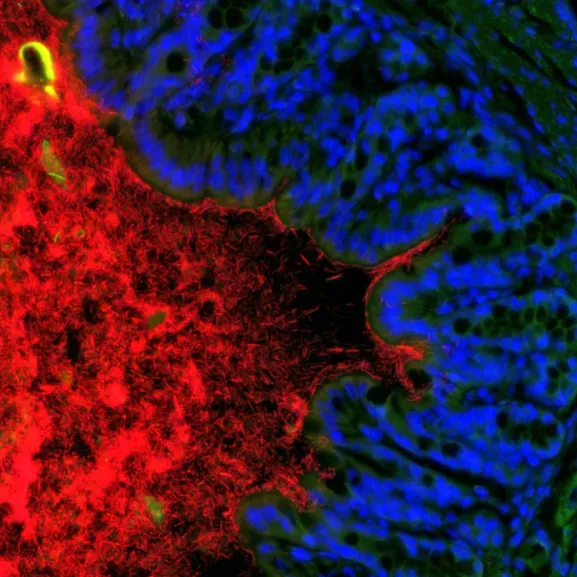
The Institut Pasteur and European Molecular Biology Laboratory (EMBL) have launched a large-scale initiative to advance interdisciplinary research in the field of infection biology. One project seeks to develop a new form of personalized therapy to limit the proliferation of antibiotic-resistant gut bacteria. It is coordinated by Till Strowig (Helmholtz Centre for Infection Research (HZI)) with the involvement of David Bikard (Synthetic Biology Unit, Institut Pasteur).

MADELEINE Project: an unprecedented Initiative to advance research on the vaginal microbiota
The Fondation PiLeJe, the Institut Pasteur (Paris) and the Institut Pasteur de Lille recently announced the launch of the MADELEINE project. This project centres notably on an unprecedented participatory study in France, based on the collection of 210 vaginal microbiota samples from women belonging to three generations of the same family (grandmothers, mothers and daughters), with the aim of exploring the mechanisms of microbiota transmission. Still largely underexplored, the vaginal microbiota plays a key role in women's intimate health, as well as in their fertility and overall well-being.
Mapping the microbiota
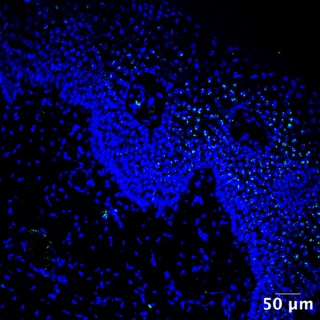
In November, the Institut Pasteur and INRAE unveiled their open-source software capable of analyzing gut, oral and skin microbiota with unprecedented precision. For the first time, using gene catalogs specific to each ecosystem, Meteor2 offers simultaneous multifaceted characterization of the species, strains and functions present. By breaking down analytical silos, the tool provides the means to gain a more comprehensive picture and therefore a better understanding of the role of microbiota in health.
Thin-skinned
Of all the microbiota, the skin microbiota, which forms an interface between our bodies and the outside world, may be among those whose disruptions manifest most visibly. But does that equate to them being fully understood? Several projects are under way at the Institut Pasteur to try and advance our knowledge of this highly sensitive environment.
In late December, a framework collaboration agreement was signed with L'Oréal to develop joint research projects in the fields of skin microbiota and skin immunology. The first project within the scope of this collaboration involved a study coordinated by Clarisse Ganier from the Meta-Organism Unit on the role of sex hormones in skin immunity. Some skin diseases affect more women than men, which may be partly attributable to estrogen, progesterone or testosterone.
Scientists from the same unit have recently published the findings of their study of the biological mechanisms of psoriasis. Their research has revealed a novel circuit connecting the immune system, skin microbiota and the skin's sensory nerves.
Lastly, a clinical trial was launched for a Stage 2 hidradenitis suppurativa treatment, since existing treatments still offer insufficient efficacy. Led by dermatologists Maïa Delage and Aude Nassif at the Institut Pasteur Medical Center and conducted at several hospitals in France, it seeks to demonstrate the efficacy of a novel combination of four antibiotics. The results are expected in 2028.
See also

Want to learn more about microbiomes?
Discover the Art & Science conference 'The Superpowers of the Microbes That Live Within Us' with Yasmine Belkaid, President of the Institut Pasteur, and painter Hervé Di Rosa.