Parasites and Insect Vectors

The department conducts research on three key eukaryotic parasites and their vectors that cause severe diseases, raise major public health challenges and impose a heavy economic burden on those living in poverty: Plasmodium – the causative agent of malaria, Leishmania – the agent of leishmaniasis, and Trypanosoma brucei – responsible for sleeping sickness. The Anopheles mosquito, the vector of various Plasmodium species and several viruses, is also studied together with the sandfly, the vector of Leishmania, and the tsetse fly, the vector of Trypanosoma. Within the department, we conduct fundamental research to unravel the biology of parasites and vectors, as well as their interactions with hosts. Our translational research aims to develop effective vaccines, drugs, and diagnostics to combat parasitic diseases.
Our key research in 2025
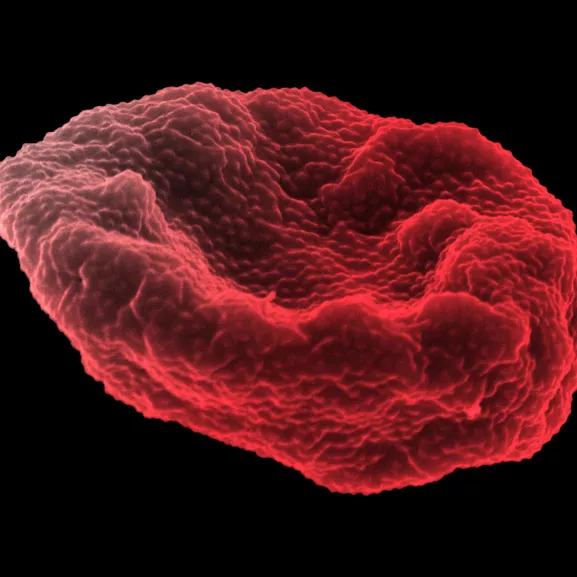
Differential rRNA expression in malaria parasites
How is the expression of distinct ribosomal RNA genes controlled across the different host and vector environments the malaria parasite encounters? We show how a switch between distinct energy-generating pathways during parasite development directly impacts the activity of a histone deacetylase, leading to different rDNA chromatin accessibility.
Nature communications, 19 December 2025
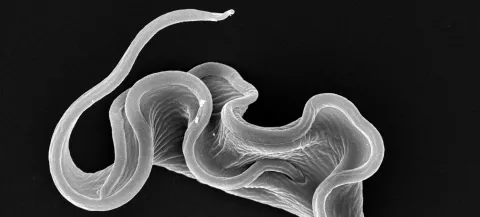
Field Surveillance of African Trypanosomes
This study introduces a highly sensitive diagnostic tool for detecting African trypanosome infections in domestic pigs from West Africa. The method allows rapid, sensitive, and field-adaptable identification of trypanosome species, improving eco-epidemiological surveillance and livestock disease control efforts.
eLife, 22 September 2025
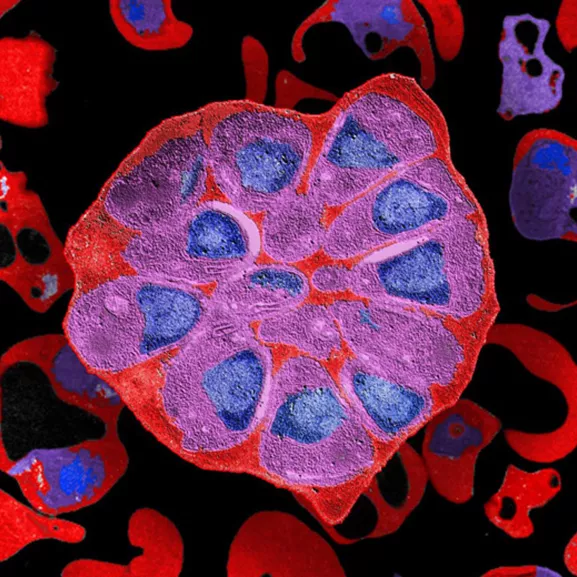
Malaria parasite genes coalesce in time and space
During the complex life cycle of the parasite that causes the most virulent form of human malaria, the genes needed for a specific parasite stage or function come together in space and time in the nucleus. The protein factors that facilitate this co-regulation and organization help to drive the life cycle and infection in the human host.
Nature Microbiology, 30 June 2025
Our previous key research
In 2024
A malaria vaccine that blocks blood stage infection
Plasmodium vivax remains a major public health problem in tropical countries. A vaccine for P. vivax based on the Duffy binding protein, PvDBPII, limits blood stage infection in a human challenge trial. The vaccine elicits strong inhibitory antibodies that block P. vivax interaction with the Duffy receptor on blood cells to prevent infection.
NPJ Vaccines, 6 January 2024
Leishmania hybrids: an emerging EU public health risk
In collaboration with the Italian reference center of leishmaniasis, the ParSig Unit applied a comparative genomics approach on Italian Leishmania field isolates, revealing an unusual L. infantum/L. donovani hybrid. These parasites cause disease in immuno-competent humans but not dogs, thus posing a novel, emerging public health threat in the EU.
mBIO, 17 July 2024
En 2023
How the Leishmania pathogen evolves inside the host insect
During insect infection, vector-borne pathogens show a reduction in population heterogeneity, which limits their adaptive potential. Conducting experimental sandfly infection with the protist pathogen Leishmania donovani, scientists provide the first evidence that these parasites regain genetic heterogeneity and thus evolvability inside their vector in response to DNA-damaging oxidants. These results may be applicable to other pathogens that infect insect hosts.
Proceedings of the National Academy of Sciences, 27 February 2023
How protective antibodies eliminate malaria parasites
Monoclonal antibodies hold promise for malaria prevention. This study shows that protective antibodies mainly target malaria parasites in the skin and can directly kill parasites. Notably, the researchers developed a novel in vitro assay that mimics skin protection and strongly correlates with protection, emerging as a promising tool to identify new potent prophylactic antibodies.
Cell Reports, 25 July 2023
Brain activity influences the vector competence of mosquitoes
The insect brain sodium channel, para, is a target of pyrethroid class insecticides. In this study, scientists show that normal para activity in the malaria mosquito vector, Anopheles coluzzii, limits development of the human malaria parasite, Plasmodium falciparum. These results pave the way for studying how the activity of the mosquito nervous system through its receptors could influence vector competence for Plasmodium or other microbes.
Scientific Reports, 4 September 2023