Department of Global Health

The department develops multidisciplinary approaches aimed at meeting the world's public health challenges for infectious diseases and antimicrobial resistance. Activities focus on epidemic, pathogen and emerging disease surveillance. The scientists work closely with teams from the Global South (including the Pasteur Network) and other international partners on every continent. Many projects follow the One Health approach that recognizes the interconnectedness of human, animal and environmental health. The department’s areas of expertise lie at the interface of epidemiology, mathematical modeling, genomic and molecular analysis, pathophysiology, medical anthropology, health surveillance, and ecology. The department houses National Reference Centers, WHO Collaborating Centers and European reference laboratories for public health.
Our key research in 2025
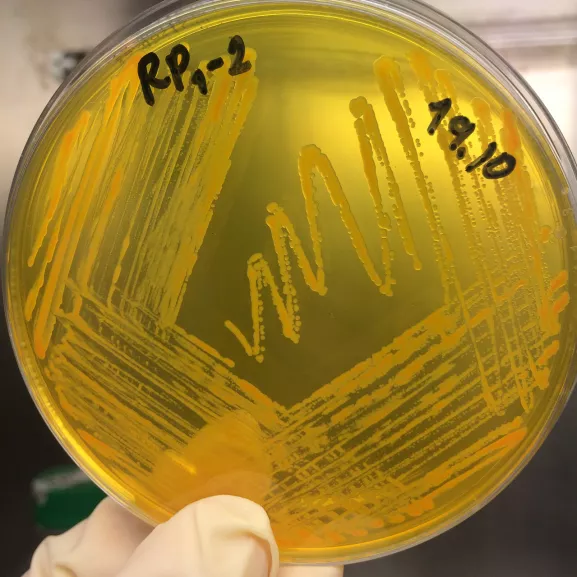
Resistant bacteria: low mother-to-child transmission
In Madagascar and Cambodia, monitoring was undertaken on 499 mother-neonate pairs to understand transmission of antibiotic-resistant gut bacteria that are often responsible for serious, hard-to-treat infections in infants. Maternal gut carriage accounts for only 16.5% of cases, suggesting that most cases originate from other sources.
Nature communications, 24 November 2025
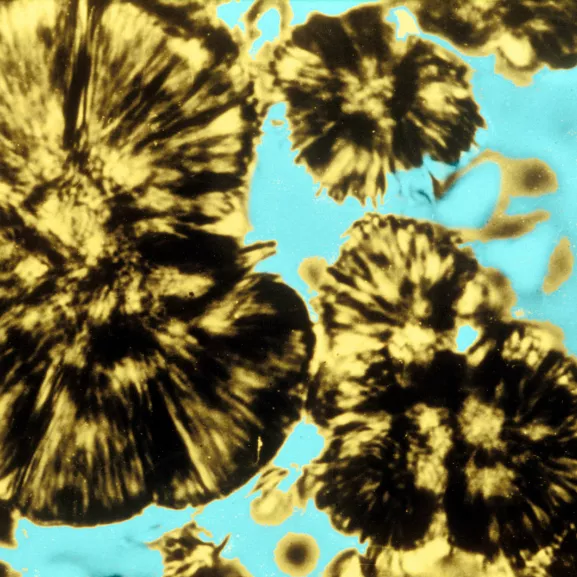
Animal bacteria linked to human diphtheria
Researchers compared hundreds of strains of C. ulcerans bacteria that sometimes spread from animals to humans. Some strains produce the toxin responsible for diphtheria. The study can help understand how animal and human infections are related and provide solutions for improving surveillance of emerging zoonotic diphtheria.
Nature communications, 24 May 2025
Eradicating malaria lying dormant in the liver
Researchers modeled the efficiency of treatments used to kill the malaria parasite Plasmodium vivax that can stay hidden in the liver and then reactivate. The drugs primaquine and tafenoquine were shown to greatly improve transmission reduction when used and monitored properly.
The Lancet Infectious Diseases, 13 January 2025
Our previous key research
In 2024
Hospital vulnerabilities to outbreaks caused by respiratory pathogens
Airborne transmission of viruses such as SARS-CoV-2 and influenza occurs very frequently in hospitals. We studied close proximity interactions using portable transponders distributed to all the individuals in 15 clinical departments in Paris, Lyon and Bordeaux from April to June 2020 (>2,000 participants). The data were used to simulate epidemic risk, which varied by a factor of up to twenty between the departments when new infections were introduced. The study opens up new avenues for research on the risk of airborne transmission of hospital-acquired infections.
Scientific reports, 14 February 2024
Using genomics to trace the evolution of Salmonella
Scientists used sequencing to study more than 500 strains of Salmonella Paratyphi B, the agent responsible for paratyphoid B fever, to trace its evolution since the first cases were identified in 1896. Paratyphoid B fever was common in Europe until the 1960s and remains present in some world regions. The study also led to the development of genomic tools to identify the pathogen more effectively and monitor its spread.
Nature communications, 10 December 2024
In 2023
The impact of variants and circumstances of infection on the COVID-19 incubation period
The ComCor study investigates the circumstances of SARS-CoV-2 infection. Using data from 20,000 individuals who had a single encounter with an infected person, scientists discovered that the COVID-19 incubation period was one day shorter for Omicron than for the historical variant, and when the contact person was symptomatic, suggesting that a higher infectious dose of the virus could shorten the incubation period.
The Lancet Microbe, 18 April 2023
Enteric viruses with similar genomes in humans and great apes
This study has revealed a high degree of convergence between the genomes of enteric eukaryotic viruses in humans and great apes in a Cameroonian forest. Fields were identified as a platform for viral sharing between humans and great apes in the central African forest. Observations made in the field in Cameroon were compared to a European zoo. This research was coordinated by Tamara Giles-Vernick in collaboration with the CNRS, the Pasteur Center in Cameroon and Saint-Louis Hospital.
Nature Communications, 21 June 2023
The SARS-CoV-2 virus can migrate within neurons and infect the brain
Scientists at the Institut Pasteur and Université Paris Cité have demonstrated a characteristic common to several SARS-CoV-2 variants: the ability to infect the central nervous system. The study also confirms that SARS-CoV-2 is capable of infecting human neurons in vitro and migrating into nerve cell projections that carry information.
Nature Communications, 26 July 2023