Vision and missions

The Institut Pasteur's philosophy: scientific excellence for the benefit of society
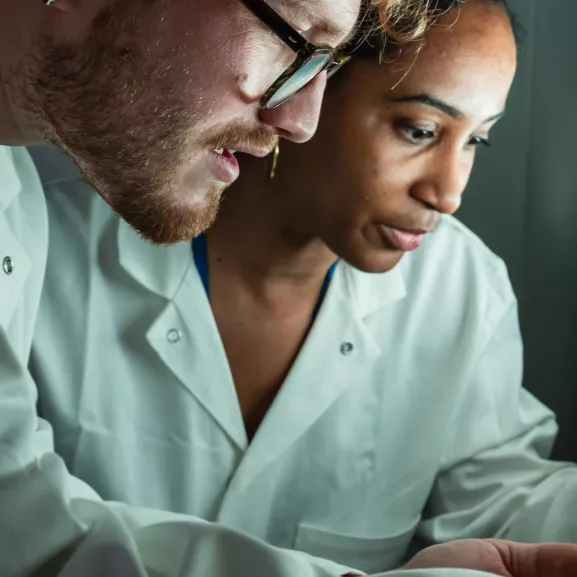
Ever since it was founded, the Institut Pasteur has been driven by the deep-seated conviction that science must serve humanity and provide effective medical solutions for those in need, whoever and wherever they may be.
A founding ethos: care without borders
You don't ask someone who is suffering, "What country are you from and what is your religion?" You simply say: "You are suffering – that is enough. I will help you and relieve your pain
This statement is the ethical basis underpinning all that we do.
- The Institut Pasteur advocates a fundamentally human-centered vision, rooted in the universal aim of protecting human health.
- The discovery of the rabies vaccine in 1885 ignited our commitment to understand the mechanisms underlying diseases with the aim of easing human suffering.
- Since our early days, we have adopted an international outlook, promoting knowledge transfer and the exchange of scientific expertise.
A founding ethos: care without borders
This statement is the ethical basis underpinning all that we do.
The Institut Pasteur advocates a fundamentally human-centered vision, rooted in the universal aim of protecting human health.
The discovery of the rabies vaccine in 1885 ignited our commitment to understand the mechanisms underlying diseases with the aim of easing human suffering. Since our early days, we have adopted an international outlook, promoting knowledge transfer and the exchange of scientific expertise.
A long-standing commitment to vulnerable populations
In keeping with our history, we pay particular attention to neglected diseases and vulnerable populations, firmly believing that medical progress should above all benefit those who need it the most.
Combating growing health disinformation in the fake news era
Over time, we have found ourselves taking on a new responsibility alongside our core vision, namely defending scientific facts in the face of rising disinformation and attacks against science.
At a time when fake news is spreading faster than germs, we are committed to producing rigorous, transparent science that is accessible to everyone.
Our key missions, which guide what we do day by day, are all grounded in our founding philosophy.
Combating growing health disinformation in the fake news era
- Over time, we have found ourselves taking on a new responsibility alongside our core vision, namely defending scientific facts in the face of rising disinformation and attacks against science.
- At a time when fake news is spreading faster than germs, we are committed to producing rigorous, transparent science that is accessible to everyone.
- Our key missions, which guide what we do day by day, are all grounded in our founding philosophy.
Our four missions for a healthier world
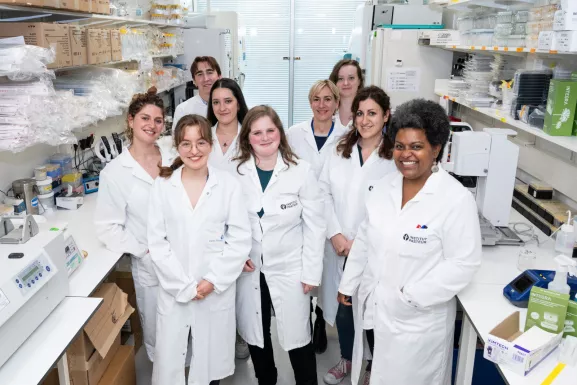
Our unique strength lies in our pursuit of four mutually reinforcing activities which create a positive dynamic and encourage the transformation of scientific discoveries into meaningful progress for society.
In our work to tackle diseases in France and worldwide, we are driven by four major missions that serve the public interest:
- research, to develop scientific knowledge in biology and health;
- education, to train up the scientists of the future;
- medicine and surveillance, to protect the health of populations and individuals;
- innovation, to turn academic discoveries into health products and services via translational research.
See our global health strategy
Our identity: medical research
The Institut Pasteur is an international center for medical research. The research conducted at the Institut Pasteur elucidates the fundamental mechanisms of life, advances scientific knowledge and leads to cutting-edge medical applications.
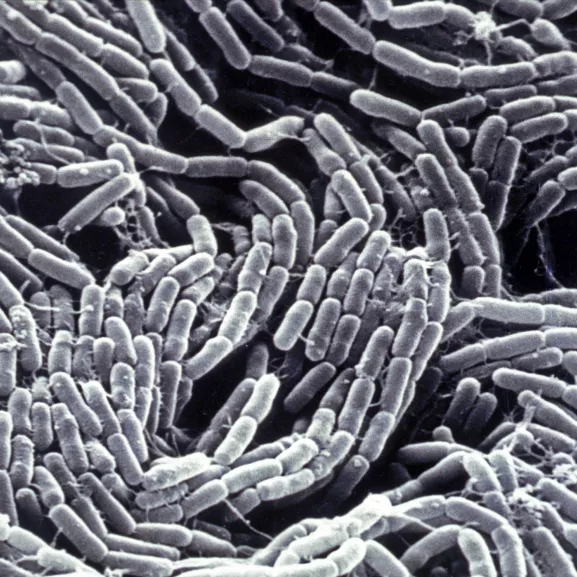
With 1,760 scientists working in 13 scientific departments, 143 laboratories and 32 core facilities, the Institut Pasteur is engaged in both basic research driven by scientific curiosity, and large-scale projects to address urgent health challenges. More than 160 pathogens (bacteria, viruses and fungi) are under study, with 80% of the research on campus focused on infectious diseases and microbiology.
-
1 760
scientists
-
13
scientific departments
-
143
laboratories
-
32
core facilities
-
14
National Reference Centers (CNRs)
-
8
WHO Collaborating Centers
-
50000
patients each year
Medicine and surveillance

Medicine and surveillance are the bridge between the lab and society. The Institut Pasteur and its international network put their scientific expertise to work for the health of populations and individuals.
- The Institut Pasteur manages 14 National Reference Centers (CNRs), which are a key part of France's surveillance system for infectious diseases. Eight WHO Collaborating Centers extend this role to the international level.
- Our Laboratory for Urgent Response to Biological Threats (CIBU) provides rapid intervention in areas affected by disease outbreaks across the world. It is capable of responding to microbiological emergencies 24/7 and identifying a wide range of pathogens, especially during unusual health events.
-
The Medical Center provides specialist care in infectious and tropical diseases, travel medicine, allergies and vaccination. It treats more than 50,000 patients each year.
A bridge between the lab and society
This clinical interface is directly linked with state-of-the-art research through close partnerships with specialist clinical research centers, especially the Child Brain Institute at Robert Debré Hospital, which focuses on neurodevelopmental disorders in children, and the Institut reConnect for hearing and speech difficulties.
Our integrative approach to clinical research has a twofold impact: basic research discoveries feed into treatments for patients, while clinical observations open up new avenues for research.
-
900
students
Each year, more than 900 students and professionals complete Master's and PhD courses, postdoctoral fellowships and specialized courses at the Institut Pasteur.
-
30,000
people
At global level, more than 30,000 people develop their knowledge through our MOOCs, webinars and online courses.
Education
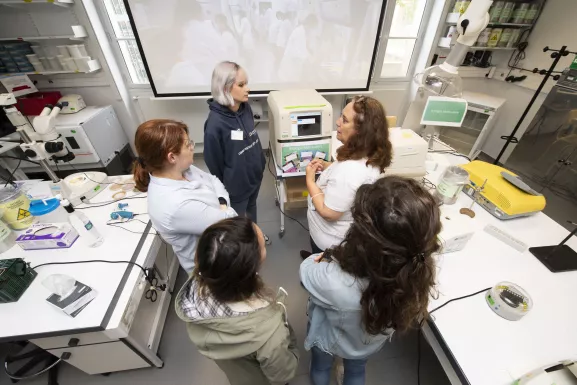
Our education activities are a way of passing on knowledge to future generations. Talented young scientists and professionals in science and medicine are drawn to the courses taught by leading experts at the Institut Pasteur.
- Each year, more than 900 students and professionals complete Master's and PhD courses, postdoctoral fellowships and specialized courses at the Institut Pasteur.
- At global level, more than 30,000 people develop their knowledge through our MOOCs, webinars and online courses.
- Several initiatives, such as the Amgen Scholars and Young Researchers programs, encourage those embarking on a career in science and create a global community of scientists driven by strong values.
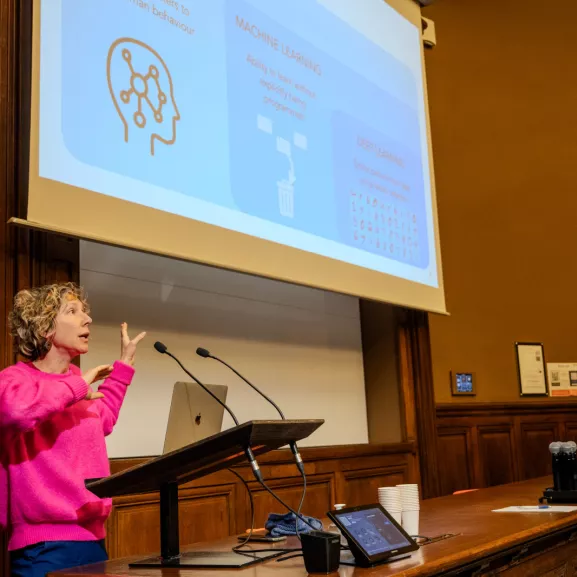
Innovation
Our aim is to turn knowledge and scientific discoveries into progress in terms of diagnosis, vaccines, therapies and technological solutions for patients.
The translational research pursued by our scientists has resulted in major medical breakthroughs that have led to novel products:
- HIV diagnosis: HIV-1 and HIV-2;
- screening for "high-risk" human papillomaviruses (HPVs);
- a hepatitis B vaccine;
- gene therapies to treat refractory acute lymphoblastic leukemia and cerebral adrenoleukodystrophy (CALD, a rapid neurodegenerative disease that affects boys);
- the first diagnostic test for dengue virus;
- and many more!
To this day, the Institut Pasteur continues to carry out research that offers promise and hope, including a candidate vaccine for chikungunya, a preclinical trial on postpartum breast cancer, a clinical trial for a gene therapy treatment for hearing loss in children, and AI-driven immune cell screening and selection.

See some of our success stories
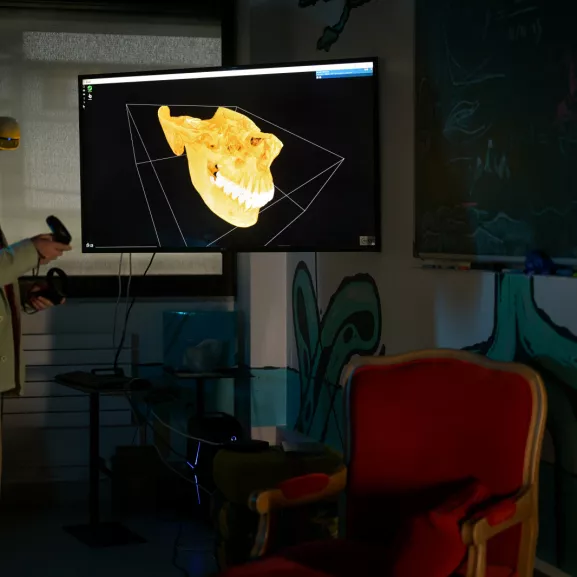
To make sure our innovations reach patients, we work in collaboration with more than a hundred industry partners worldwide, as well as NGOs and public funding bodies, so that technologies can be transferred to business and society.
The aim is to enable the commercialization of innovative health products and services developed from academic research, through industrial partnerships, licenses or the launch of startups. Since 1997, the Institut Pasteur has supported the development of more than 38 startups in the field of health.
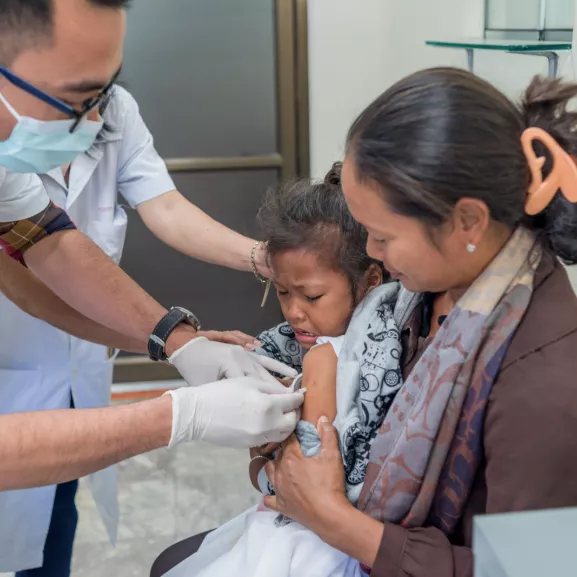
This collaboration takes place within a strict framework designed to maintain the Institut Pasteur's independence and ethical standards and to guarantee universal accessibility to the resulting products, including in low-income countries: non-exclusive licenses for diagnostics, conditional exclusivity for vaccines, an obligation to market products worldwide, especially in emerging countries, and an option to terminate operating licenses if manufacturers refuse to apply affordable prices or stop developing a product.
We adhere to the standards of the Medicines Patent Pool (MPP) and the FRAND (Fair, Reasonable and Non-Discriminatory) principles, and we reinvest revenue in research.