Mycology

The department of Mycology adopts an integrative approach to elucidate the biological mechanisms governing the diversity, physiology and pathogenicity of microscopic fungi responsible for human infections. In particular, the department's scientists are studying yeasts and filamentous fungi to shed light on the processes underlying fungal infections and interactions between these microorganisms and their host. The teams use a combination of genomics, cell biology, immunology and translational approaches in an effort to improve diagnosis, prevention and treatment of fungal infections. The research of its 5 teams and the National Reference Center for Invasive Mycoses and Antifungals focuses on three key areas:
- Biology and genetics of pathogenic fungi
- Host-fungus interactions and immunity
- Epidemiology, diagnosis and antifungal resistance
Our key research in 2025
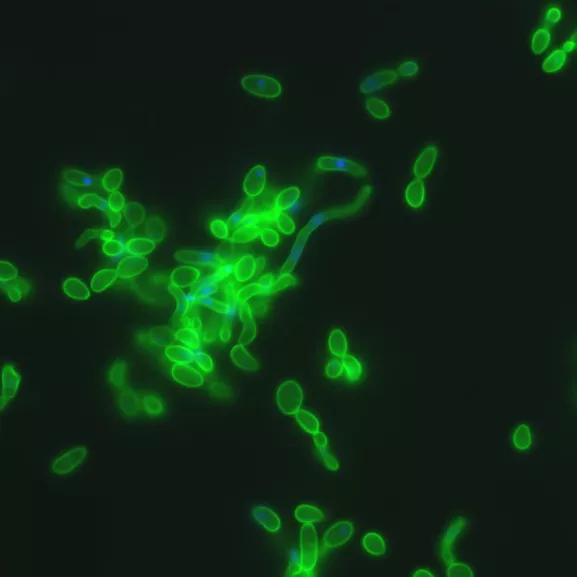
Immunity keeping Candida under control
This collaborative study reveals how immunity controls Candida albicans, a common resident of the oral microbiota. The Th17 immune response maintains the microbe in a non-pathogenic state. When this defense fails, the yeast becomes more invasive and can evolve to more aggressive variants.
Nature Microbiology, 12 December 2025
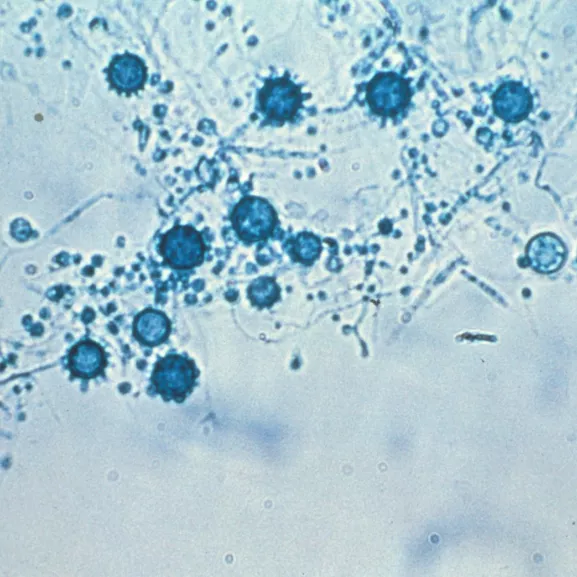
A fungal infection often overlooked in HIV care
Our study conducted in Côte d'Ivoire shows that histoplasmosis is common in advanced-stage HIV patients. This fungal infection is often confused with tuberculosis and goes undiagnosed. Better screening coverage could improve management of these patients.
Clinical Infectious Diseases, 15 November 2025
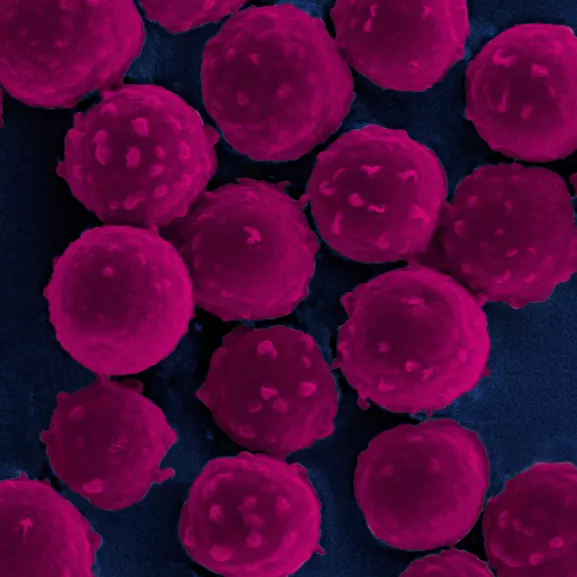
Tiny vesicles at the heart of infections
Fungal extracellular vesicles are emerging as powerful mediators of communication, virulence, and host interaction. This Perspective highlights the key unanswered questions surrounding their origin, cargo, and functions, and outlines the challenges that must be addressed to understand their roles in fungal biology and disease.
Nature Microbiology, 27 March 2025
Our previous key research
In 2024
Remodeling of perturbed chromatin can initiate de novo transcriptional and post-transcriptional silencing
This study reports three key results: it (1) identifies the role of ATRX in fungi, paving the way to better understand the function of this critical chromatin remodeler in other organisms; (2) shows that ATRX can also control the onset of RNA interference (RNAi); (3) proposes a new general mechanism by which gene silencing can be initiated de novo.
Proceedings of the National Academy of Sciences, 25 July 2024
Epidemiology and prognostic factors of mucormycosis in France (2012-2022): a cross-sectional study nested in a prospective surveillance program
Mucormycosis is a fatal invasive fungal infection recently listed as one of WHO’s priority pathogens. A French study from 2012 to 2022 revealed major epidemiological trends. The study found a new correlation between trauma, cutaneous-articular location and certain fungal species. PCR used as a novel diagnostic method considerably improved diagnosis, contributing to a reduction in mortality.
The Lancet Regional Health - Europe, 7 August 2024
In 2023
Regulation of extracellular vesicle production in Cryptococcus neoformans
Extracellular vesicles (EVs) are membrane-enveloped particles that are released by cells into the extracellular space. Fungal EVs can mediate community interactions and biofilm formation, but their functions remain poorly understood. Here, the scientists report the identification of the first regulators of EV production in the major fungal pathogen Cryptococcus neoformans, and they describe a novel role of EVs in modulating antifungal drug resistance.
mBio, 13 June 2023
A way of restoring antifungal drug activity
Fungi are responsible for over 1.5 billion infections each year worldwide. Unfortunately, fungi are increasingly resistant to commonly used drugs such as azoles. To address this issue, the scientists identified several small molecules that can restore the susceptibility of Candida isolates to antifungal drugs. Novel antifungal potentiators represent a powerful strategy for addressing the growing resistance of fungi to clinically approved drugs.
mBio, 16 June 2023
Gut aging clock correlated with health
Candida albicans is a commensal yeast present in the gut of most healthy individuals. In this study, scientists assess how the microbiota, lifestyle or genetics influence gut colonization by C. albicans in healthy adults. They show that the load of C. albicans in the gut correlates with certain genetic traits and dietary habits. Notably, the authors show that a higher load of C. albicans in the gut induces a stronger immune response to new challenges by this yeast, paving the way to new treatment strategies.
Gut Microbes, 28 November 2023