Department of Computational Biology

This department specializes in data science and computational modeling of biological processes. It combines expertise in mathematics, statistics, computer science and physics to address complex biological questions revolving around genomes, cells, cancers, neuron function and epidemiology. The teams develop quantitative methods and models to analyze and interpret data from sequencing, experimental biology, public health or clinical research. The department is currently strengthening its know-how in artificial intelligence and machine learning, an essential tool for furthering knowledge in biology and health.
Our key research in 2025
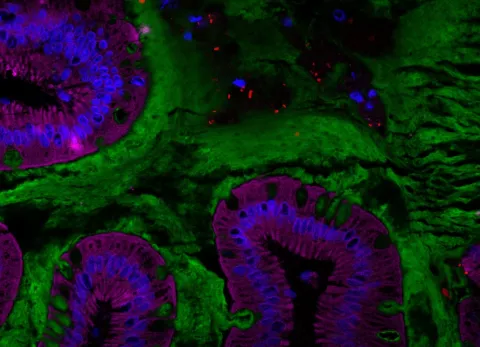
Lifestyle influences the gut microbiota
The gut microbiota is an ecosystem of complex bacterial interactions. Researchers applied the MANOCCA statistical method to almost 1,000 healthy people and showed the influence of age, smoking and body mass index on bacterial co-abundance in their gut microbiomes, and how our habits affect the microbial network.
Communicatons biology, 6 November 2025

Mapping cell fate across space and time
To trace differentiation trajectories – i.e. the progressive acquisition of specialized functions by cells – researchers developed STORIES, a method combining Optimal transport and Wasserstein gradient flow. These mathematical tools model the evolution of cells over time and show how environment shapes cell fate.
Nature methods, 3 November 2025
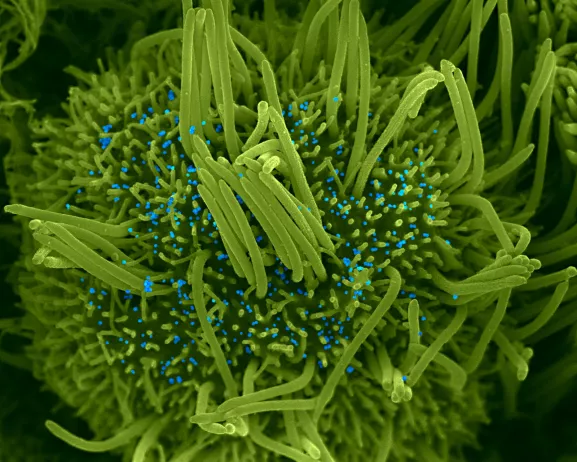
Using AI to understand the spread of novel pathogens
To determine how individuals contracted COVID 19, researchers analyzed over half a million online questionnaires in France. By combining machine learning, large language models and thematic classification, they automatically extracted information explaining the circumstances of infection. This study paves the way for a better understanding of routes of transmission for future epidemics.
Nature communications, 1 July 2025
Our previous key research
In 2024
Genes-environment interactions and impact on human health
A novel method was used to study how genes and the environment interact to influence certain complex phenotypic traits. Following analysis of large genetic databases, it highlighted interactions between certain genetic variations and cigarette smoking or alcohol drinking, influencing blood lipid levels. This breakthrough has improved understanding of the factors influencing human health.
Nature communications, 22 April 2024
AI for innovative single-cell data integration
The study presents scConfluence, an innovative method for integrating single-cell data from different technologies without losing biological information. The method efficiently aligns this data by combining autoencoders with Inverse Optimal Transport. Tested on different scenarios, it improves cell classification and opens up new avenues in cell biology.
Nature communications, 5 September 2024
In 2023
Diversity of vaginal microbiota and pregnancy
A healthy vaginal microbiota is generally a low-diversity environment populated primarily by lactic acid-producing Lactobacillus species. A study conducted on a diverse cohort of 749 women enrolled in the inSPIRe cohort in their final trimester of pregnancy revealed that lactobacilli, including L. crispatus, play a major role in maintaining low diversity, and that a decline in this key community is linked to premature delivery.
Scientific Reports, 4 June 2023
Pangenomics, an approach for comparing human genomes
For the first time, a sequence graph has been constructed in which around fifty human genomes are simultaneously represented. This enables variations in human genomes to be analyzed collectively, a new discipline known as pangenomics. This article outlines existing methods and presents analyses of genes linked to immunity.
Genome Biology, 30 November 2023
Identifying the origins of virulence
Sequencing technology has dramatically expanded the sources from where genomic data can be obtained. As a case in point, ancient DNA data has been obtained for a number of pathogens from thousands of years ago, and it has improved our understanding of when and how these pathogens emerge. This article describes novel advances in evolutionary modeling to uncover how pathogens become more virulent or transmissible over time. It showcases a key concept, the molecular clock of infectious microbes, a statistical technique that can estimate the precise time when pathogen lineages diverge from each other and acquire important traits, such as mutations that increase virulence.
Science, 14 December 2023